Hi friends!
¡Hola amigos!
Welcome back to Daily English Talk.
Bienvenidos de nuevo a Daily English Talk.
I'm Lily.
Soy Lily.
And I'm Tom.
Y soy Tom.
Good to see you again.
Qué bueno volver a verte.
If you're new here, welcome to the family.
Si eres nuevo aquí, te damos la bienvenida a la familia.
We're so happy you found us.
Estamos muy felices de que nos hayas encontrado.
And if you're not new, welcome back.
Y si no eres nuevo, bienvenido de nuevo.
You already know how this works.
Ya sabes cómo funciona esto.
Do you have a return ticket?
¿Tienes un billete de ida y vuelta?
What is the purpose of your trip?
¿Cuál es el propósito de tu viaje?
A return ticket?
¿Un billete de ida y vuelta?
No, I don't.
No, no tengo.
I'm going for fun.
Voy por diversión.
Every single day, we post a new English lesson to help you speak with more confidence.
Cada día publicamos una nueva lección de inglés para ayudarte a hablar con más confianza.
So if you want to learn real, natural English, hit that subscribe button right now.
Así que si quieres aprender un inglés real y natural, pulsa ese botón de suscripción ahora mismo.
It's free, it's daily, and it really helps the channel grow.
Es gratis, es diario y realmente ayuda a que el canal crezca.
Today, we have a fun one.
Hoy tenemos uno divertido.
We're going to teach you airport English.
Vamos a enseñarte inglés para el aeropuerto.
Yes, everything you need to say at the airport, from check-in all the way to passport control.
Sí, todo lo que necesitas decir en el aeropuerto, desde la facturación hasta el control de pasaportes.
And here's the best part.
Y aquí está lo mejor.
Last week, Tom and I actually took a real trip.
La semana pasada, Tom y yo hicimos un viaje real.
We flew from the United States to the United Kingdom.
Volamos de Estados Unidos al Reino Unido.
From the USA to the UK.
De EE. UU. al Reino Unido.
And let me tell you, a lot of things happened.
Y déjenme decirles que pasaron muchas cosas.
Oh, a lot of things happened to you, Tom.
Oh, te pasaron muchas cosas a ti, Tom.
That's true.
Es cierto.
That's very true.
Muy cierto.
Tom, we have a new member.
Tom, tenemos un nuevo miembro.
His name is Nguyen Suan Kwong.
Su nombre es Nguyen Suan Kwong.
Oh, I'm happy now.
Oh, ahora estoy feliz.
Congratulations, Nguyen Suan Kwong.
Felicidades, Nguyen Suan Kwong.
So today, you'll learn the words and phrases, and you'll hear a real story at the same time.
Hoy aprenderás las palabras y frases, y escucharás una historia real al mismo tiempo.
This is perfect for level A2 to B1.
Esto es perfecto para el nivel A2 a B1.
Let's go.
Vamos allá.
Okay, before we start the story, I have a question for all of you watching.
Bueno, antes de comenzar la historia, tengo una pregunta para todos ustedes que están viendo.
Uh-oh.
Oh, oh.
I think I know where this is going.
Creo que sé hacia dónde va esto.
At the airport in New York, Tom's suitcase was too heavy.
En el aeropuerto de Nueva York, la maleta de Tom era demasiado pesada.
Way too heavy.
Demasiado pesada.
So he had to pay extra money for it.
Así que tuvo que pagar dinero extra por ello.
Please don't tell them the number.
Por favor, no les digan la cantidad.
I won't tell them.
No se la diré.
That's the fun part.
Esa es la parte divertida.
Here's the question for you, everyone at home.
Aquí está la pregunta para ustedes, todos en casa.
How much extra money do you think Tom had to pay for his heavy bag?
¿Cuánto dinero extra creen que Tom tuvo que pagar por su maleta pesada?
It was a lot.
Fue una cantidad considerable.
I'll just say that.
Solo diré eso.
Take a guess and write it in the comments right now.
Adivinen y escríbanlo en los comentarios ahora mismo.
Was it $20, $50, $100, even more?
¿Fueron 20 dólares, 50 dólares, 100 dólares o incluso más?
More.
Más.
Tom, don't help them.
Tom, no los ayudes.
Sorry, sorry.
Lo siento, lo siento.
So put your guess in the comments.
Entonces, pongan su suposición en los comentarios.
We're not telling you the answer today.
Hoy no les diremos la respuesta.
We want to see who gets the closest.
Queremos ver quién se acerca más.
Ready?
¿Listos?
Let's hear the whole story.
Escuchemos la historia completa.
So, Tom, this was your first time flying to another country, right?
Entonces, Tom, esta fue tu primera vez volando a otro país, ¿verdad?
Yes, my very first big international trip.
Sí, mi primer gran viaje internacional.
I was so excited.
Estaba muy emocionado.
I packed my bag two weeks early.
Empacué mi maleta con dos semanas de antelación.
Two weeks early.
Dos semanas antes.
And that's the problem, isn't it?
Y ese es el problema, ¿no?
You're right.
Tienes razón.
When you pack early, you keep adding things.
Cuando empacas con anticipación, sigues agregando cosas.
A few shirts, then some shoes, then snacks.
Unas cuantas camisas, luego algunos zapatos y luego snacks.
So many snacks.
Tantos snacks.
Tom packed American snacks to share with our friends in London.
Tom empacó snacks americanos para compartir con nuestros amigos en Londres.
You're right.
Tienes razón.
They asked for them.
Ellos los pidieron.
Cookies, chips, candy.
Galletas, papas fritas, dulces.
I couldn't say no.
No pude decir que no.
It was very kind, but your bag became so heavy.
Fue muy amable, pero tu maleta se puso muy pesada.
I know.
Lo sé.
I couldn't even lift it at the end.
Ni siquiera podía levantarla al final.
And the airport was busy that day, too.
Y el aeropuerto también estaba lleno ese día.
So many people, so many bags.
Mucha gente, muchas maletas.
Huge lines everywhere.
Colas enormes por todas partes.
But honestly, the whole trip was amazing.
Pero honestamente, todo el viaje fue increíble.
The flight, the food, landing in London.
El vuelo, la comida, aterrizar en Londres.
It was a wonderful trip.
Fue un viaje maravilloso.
We had two small problems, but we learned so much.
Tuvimos dos pequeños problemas, pero aprendimos mucho.
Small problems.
Pequeños problemas.
One was my heavy bag, and the other one was at passport control.
Uno era mi maleta pesada y el otro fue en el control de pasaportes.
Oh, yes.
Ah, sí.
Tom and the passport officer.
Tom y el oficial de pasaportes.
We'll get to that.
Llegaremos a eso.
I'm not ready to talk about it, but okay.
No estoy listo para hablar de eso, pero está bien.
Don't worry, everyone.
No se preocupen, todos.
These problems are very common, and after this lesson, you'll know exactly what to do.
Estos problemas son muy comunes y después de esta lección, sabrás exactamente qué hacer.
Let's learn some grammar first.
Aprendamos algo de gramática primero.
Okay, let's talk about a useful grammar point for travel.
Bien, hablemos sobre un punto útil de gramática para viajar.
It's the present perfect.
Es el presente perfecto.
The present perfect.
El presente perfecto.
When do we use it?
¿Cuándo lo usamos?
We use it to talk about experiences in our life when we don't say the exact time.
Lo usamos para hablar de experiencias en nuestra vida cuando no decimos la hora exacta.
We make it like this.
Lo formamos así.
We use have or has plus the past participle of the verb.
Usamos have o has más el participio pasado del verbo.
Give us an example.
Danos un ejemplo.
I have been to England.
He estado en Inglaterra.
That means at some time in my life, I went there.
Eso significa que en algún momento de mi vida, fui allí.
Maybe last year, maybe ten years ago.
Quizás el año pasado, quizás hace diez años.
The time is not important.
La hora no es importante.
Oh, I like that one.
Oh, me gusta esa.
I have been to England.
He estado en Inglaterra.
Now I can finally say it.
Ahora por fin puedo decirlo.
Yes, you can.
Sí, puedes.
And we often ask people, have you ever been to another country?
Y a menudo preguntamos a la gente: ¿alguna vez has estado en otro país?
So I could say, have you ever flown on a plane?
Entonces yo podría decir: ¿alguna vez has volado en un avión?
Perfect.
Perfecto.
And before our trip, here's a true sentence.
Y antes de nuestro viaje, aquí hay una frase verdadera.
Tom had never traveled abroad before.
Tom nunca había viajado al extranjero antes.
We use never for zero experience.
Usamos 'never' para experiencias nulas.
Sad but true.
Triste pero cierto.
Zero experience.
Cero experiencia.
That's me.
Eso soy yo.
But listen, this is different from the past simple.
Pero escucha, esto es diferente del pasado simple.
When we say the exact time, we use the past simple.
Cuando decimos la hora exacta, usamos el pasado simple.
For example, last week we flew to London.
Por ejemplo, la semana pasada volamos a Londres.
That's a finished action with a clear time.
Esa es una acción terminada con un tiempo claro.
So present perfect for the experience and past simple for the exact time.
Entonces, presente perfecto para la experiencia y pasado simple para la hora exacta.
Exactly.
Exacto.
Let me show you both together.
Déjame mostrarte ambas juntas.
I have been to London.
He estado en Londres.
That's the experience.
Esa es la experiencia.
I went to London last week.
Fui a Londres la semana pasada.
That's the specific trip.
Ese es el viaje específico.
That's so clear.
Está muy claro.
Now, here's a question for everyone watching.
Ahora, aquí hay una pregunta para todos los que ven.
Have you ever traveled to another country?
¿Alguna vez has viajado a otro país?
Write, yes, I have, or no, I haven't in the comments.
Escribe 'sí, lo he' o 'no, no lo he' en los comentarios.
Practice the grammar with us.
Practica la gramática con nosotros.
Don't be shy.
No tengas vergüenza.
Try it.
Inténtalo.
Okay, now the most important part.
Bien, ahora la parte más importante.
Let's learn the real airport English, step by step, in the same order you use it at the airport.
Aprendamos el inglés real del aeropuerto, paso a paso, en el mismo orden en que lo usarás allí.
From the front door to the airplane.
Desde la puerta de entrada hasta el avión.
Let's do it.
Vamos a hacerlo.
First, you arrive at the airport and you go to the check-in desk.
Primero, llegas al aeropuerto y vas al mostrador de facturación.
This is where you give your bag and you get your boarding pass.
Aquí es donde entregas tu maleta y obtienes tu tarjeta de embarque.
And the boarding pass is the small ticket, right?
Y la tarjeta de embarque es el pequeño boleto, ¿verdad?
The one with your seat and your gate number.
Ese es el que tiene tu asiento y el número de puerta.
Exactly.
Exacto.
Let me show you a normal conversation.
Déjame mostrarte una conversación normal.
Listen.
Escucha.
Good morning.
Buenos días.
Here is my passport.
Aquí está mi pasaporte.
Thank you.
Gracias.
Where are you flying today?
¿A dónde vuelas hoy?
I'm flying to London.
Vuelo a Londres.
Great.
Genial.
Here is your boarding pass.
Aquí tienes tu tarjeta de embarque.
Your gate is number 22.
Tu puerta de embarque es la número 22.
See how simple that is?
¿Ves lo sencillo que es?
Just a few clear sentences.
Solo unas pocas frases claras.
You don't need difficult words.
No necesitas palabras complicadas.
Here is my passport.
Aquí está mi pasaporte.
I can remember that one.
Esa sí puedo recordarla.
Now, number two, this is Tom's favorite word, excess baggage.
Ahora, punto dos: esta es la palabra favorita de Tom, equipaje excesivo.
Oh, no.
Oh, no.
Excess baggage means your bag is too heavy or too big.
Equipaje excesivo significa que tu maleta es demasiado pesada o demasiado grande.
The airport word is overweight.
La palabra del aeropuerto es sobrepeso.
If your bag is overweight, you pay an extra fee.
Si tu maleta tiene sobrepeso, pagas una tarifa extra.
A fee is money you must pay.
Una tarifa es dinero que debes pagar.
And my bag was very overweight.
Y mi maleta tenía mucho sobrepeso.
Let's act it out.
Vamos a representarlo.
Listen carefully.
Escucha con atención.
Sir, I'm sorry, but your bag is overweight.
Disculpe, pero su maleta tiene sobrepeso.
Oh no.
Oh, no.
How heavy is it?
¿Cuánto pesa?
It's too heavy.
Es demasiado pesada.
You'll need to pay an extra fee or you can remove some items.
Tendrás que pagar una tarifa extra o puedes retirar algunos artículos.
So that was the moment.
Así que ese fue el momento.
I had to choose.
Tuve que elegir.
Pay the money or take things out of my bag.
Pagar el dinero o sacar cosas de mi maleta.
And remember, everyone, we're not telling you how much he paid.
Y recuerda, todos, no te diremos cuánto pagó.
Keep guessing in the comments.
Sigue adivinando en los comentarios.
Please be nice with your guesses.
Por favor, sé amable con tus suposiciones.
Number three.
Número tres.
There are two kinds of bags.
Hay dos tipos de maletas.
Your checked bag goes under the plane.
Tu maleta facturada va debajo del avión.
Your carry-on bag or hand luggage stays with you on the plane.
Tu equipaje de mano o maleta de cabina se queda contigo en el avión.
And here's my smart idea.
Y aquí está mi idea brillante.
To make my checked bag lighter, I put more things in my carry-on bag.
Para hacer más ligera mi maleta facturada, puse más cosas en mi equipaje de mano.
His carry-on was so full, he couldn't close it.
Su equipaje de mano estaba tan lleno que no podía cerrarlo.
It closed eventually.
Al final logró cerrarlo.
I sat on it.
Me senté sobre él.
He sat on his own bag in the middle of the airport.
Se sentó sobre su propia bolsa en medio del aeropuerto.
Lesson learned.
Lección aprendida.
Pack light, everybody.
Viaja ligero, todos.
Number four.
Número cuatro.
After check-in, you go to security.
Después del registro, vas a seguridad.
At security, they check you and your bags.
En seguridad, te revisan a ti y a tus bolsas.
They often say, please remove your laptop or please take off your belt.
A menudo dicen: por favor, saque su portátil o por favor, quítese el cinturón.
The belt.
El cinturón.
Oh, the belt.
Oh, el cinturón.
Tell him, Tom.
Dile eso, Tom.
I took off my belt for the security check, and then my pants started to fall down a little.
Me quité el cinturón para la revisión de seguridad y luego mis pantalones empezaron a bajarse un poco.
In front of everyone.
Delante de todo el mundo.
He was holding his pants with one hand and his bag with the other.
Sostenía sus pantalones con una mano y su bolsa con la otra.
It was not my best moment.
No fue mi mejor momento.
But the phrases are useful.
Pero las frases son útiles.
Please remove your laptop.
Por favor, saque su portátil.
Please take off your shoes.
Por favor, quítese los zapatos.
Now you'll understand the officer.
Ahora entenderás al oficial.
Number five.
Número cinco.
The gate is the door where you get on the plane.
La puerta de embarque es la entrada donde subes al avión.
When it's time to enter the plane, we say boarding.
Cuando es hora de entrar al avión, decimos embarque.
And what's a final call?
¿Y qué es una llamada final?
Good question.
Buena pregunta.
Final call means hurry.
Llamada final significa prisa.
This is the last chance to get on the plane.
Esta es tu última oportunidad para subir al avión.
You hear it on the speakers.
Lo escuchas por los altavoces.
And we almost missed it.
Y casi lo perdimos.
Because someone was buying more snacks.
Porque alguien estaba comprando más snacks.
I needed snacks for the flight.
Necesitaba snacks para el vuelo.
We heard final call for the flight to Linden and we ran to the gate.
Escuchamos la llamada final para el vuelo a Londres y corrimos hacia la puerta.
We ran so fast I dropped a bag of chips on the way.
Corrimos tan rápido que dejé caer una bolsa de papas fritas en el camino.
Rest in peace, chips.
Descansa en paz, papas.
Okay, number six.
Okay, número seis.
This is the big one.
Este es el más importante.
When you arrive in a new country, you go to passport control, also called immigration.
Cuando llegas a un país nuevo, vas al control de pasaportes, también llamado inmigración.
The officer checks your passport and asks you some questions.
El oficial revisa tu pasaporte y te hace algunas preguntas.
And this is where I had my problem.
Y aquí es donde tuve mi problema.
The officer usually asks two questions.
El oficial suele hacer dos preguntas.
First, what's the purpose of your visit?
Primero, ¿cuál es el propósito de su visita?
That means, why are you here?
Eso significa, ¿por qué estás aquí?
You can answer, I'm here on holiday.
Puedes responder: Estoy de vacaciones.
Or, I'm here for business.
O: Estoy aquí por negocios.
And the second question?
¿Y la segunda pregunta?
Clear.
Claro.
How long are you staying?
¿Cuánto tiempo se va a quedar?
You can answer, for one week.
Puedes responder: Por una semana.
Or, for ten days.
O: Por diez días.
Well, I got very nervous.
Bueno, me puse muy nervioso.
The officer looked at me and asked, How long are you staying?
El oficial me miró y preguntó: ¿Cuánto tiempo se va a quedar?
And what did you say?
¿Y qué dijiste?
I forgot every English word I ever learned.
Olvidé todas las palabras en inglés que alguna vez aprendí.
I just said, um, a few days, maybe a week.
Solo dije: um, unos pocos días, quizás una semana.
I don't know.
No sé.
Soon.
Pronto.
Thank you.
Gracias.
Soon.
Pronto.
Thank you.
Gracias.
That's not even an answer.
Eso ni siquiera es una respuesta.
The officer just looked at me so confused.
El oficial solo me miraba tan confundido.
But here's the lesson, everyone.
Pero aquí está la lección, todos.
Stay calm and answer clearly.
Mantén la calma y responde claramente.
I'm here on holiday for one week.
Estoy de vacaciones por una semana.
Short and simple.
Corto y simple.
Now I know.
Ahora lo sé.
Next time I'll be ready.
La próxima vez estaré listo.
And don't be afraid of passport control.
Y no tengas miedo del control de pasaportes.
The officer is just doing their job.
El oficial solo está haciendo su trabajo.
Speak slowly and stay relaxed.
Habla despacio y mantente relajado.
Number seven.
Número siete.
After you get your bags, you go through customs.
Después de recoger tus maletas, pasas por aduanas.
Sometimes an officer asks, do you have anything to declare?
A veces un oficial pregunta: ¿Tiene algo que declarar?
What does declare mean?
¿Qué significa declarar?
To declare means to tell the officer if you're carrying special things like a lot of food or expensive items.
Declarar significa decirle al oficial si llevas cosas especiales como mucha comida o artículos caros.
If you have nothing special, you just say, no, nothing to declare.
Si no tienes nada especial, solo di: No, nada que declarar.
But I had all those snacks, so I panicked and said, I have cookies.
Pero yo tenía todas esas golosinas, así que entré en pánico y dije: "Tengo galletas".
Is that bad?
¿Es eso malo?
Are cookies illegal?
¿Las galletas son ilegales?
He confessed to the cookies.
Confesé lo de las galletas.
I thought I was in big trouble for snacks.
Pensé que tendría problemas graves por las golosinas.
The officer just smiled and said it was fine.
El oficial solo sonrió y dijo que estaba bien.
But now you know the word declare.
Pero ahora ya conoces la palabra declarar.
Very useful.
Muy útil.
And number eight, the last one.
Y número ocho, el último.
After customs, you collect your checked bag at the baggage claim.
Después de la aduana, recoges tu equipaje facturado en la zona de recogida de equipaje.
The bags come out on a big moving belt called a carousel.
Las maletas salen por una gran cinta transportadora llamada carrusel.
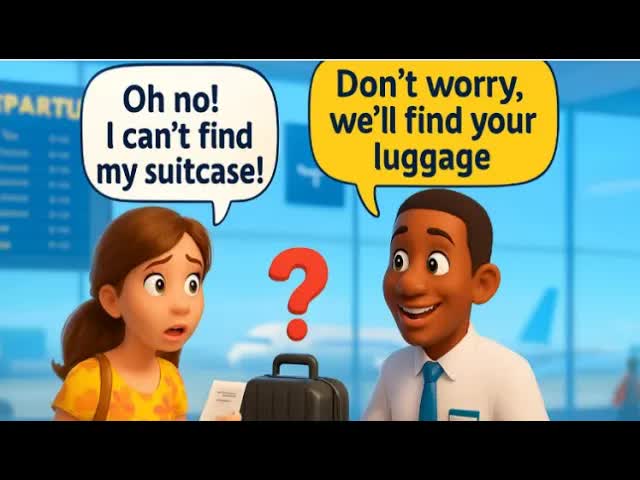
And we waited and waited for my heavy bag.
Y esperamos y esperamos a mi maleta pesada.
His bag was so heavy, it was the very last one to come out.
Su maleta era tan pesada que fue la última en salir.
I thought the airline lost it.
Pensé que la aerolínea la había perdido.
I was so worried.
Estaba muy preocupado.
But it arrived.
Pero llegó.
And finally, we were ready to enjoy London.
Y finalmente, estábamos listos para disfrutar de Londres.
Big Ben, here we come.
Gran Ben, aquí vamos.
Okay, let's review everything we learned today.
Bien, repasemos todo lo que aprendimos hoy.
You did great.
Lo hiciste genial.
Quick summary time.
Hora del resumen rápido.
First, you go to the check-in desk to get your boarding pass.
Primero, vas al mostrador de facturación para obtener tu tarjeta de embarque.
Then watch out for excess baggage.
Luego, cuidado con el exceso de equipaje.
Don't let your bag be overweight or you pay an extra fee.
No dejes que tu maleta pese demasiado o pagarás una tasa extra.
Remember the two bag types.
Recuerda los dos tipos de maleta.
The checked bag goes under the plane and the carry-on stays with you.
La maleta facturada va bajo el avión y la de mano se queda contigo.
At security, they may say, please remove your laptop or take off your belt.
En el control de seguridad, pueden decirte: por favor, saque su portátil o quítese el cinturón.
You wait at the gate and you listen for boarding and final call.
Esperas en la puerta de embarque y escuchas las llamadas de embarque y última llamada.
At passport control, answer clearly.
En el control de pasaportes, responde claramente.
I'm here on holiday for one week.
Estoy de vacaciones durante una semana.
At customs, you might hear anything to declare.
En la aduana, podrías escuchar: ¿tiene algo que declarar?
And you collect your bag at package claim.
Y recoges tu maleta en la zona de recogida de equipaje.
That's everything you need for a smooth trip.
Eso es todo lo que necesitas para un viaje tranquilo.
And remember the grammar.
Y recuerda la gramática.
Present perfect for experiences.
Presente perfecto para experiencias.
I have been to London.
He estado en Londres.
Past simple for the exact time.
Pasado simple para el tiempo exacto.
I went to London last week.
Fui a Londres la semana pasada.
You can do this.
Tú puedes hacerlo.
Travel English is not scary.
El inglés para viajar no da miedo.
It's just a few simple phrases.
Son solo unas pocas frases sencillas.
And that's our lesson for today.
Y esa es nuestra lección de hoy.
Thank you so much for learning with us.
Muchas gracias por aprender con nosotros.
Now don't forget our big question.
Ahora no olviden nuestra gran pregunta.
How much did I pay for my heavy bag?
¿Cuánto pagué por mi maleta pesada?
We're not telling you today.
No se la diremos hoy.
Put your guess in the comments and let's see who gets the closest.
Dejen su suposición en los comentarios y veamos quién se acerca más.
Be kind.
Sean amables.
It was a painful day for my wallet.
Fue un día doloroso para mi billetera.
If this lesson helped you, please hit that like button and subscribe to Daily English Talk.
Si esta lección te ayudó, haz clic en el botón de me gusta y suscríbete a Daily English Talk.
We post a brand new English lesson every single day.
Publicamos una nueva lección de inglés cada día.
Every day.
Cada día.
So you have a new way to practice your English all the time.
Así que tienes una nueva forma de practicar tu inglés todo el tiempo.
practice a little every day and your English will grow stronger and stronger.
Practica un poco cada día y tu inglés será cada vez más sólido.
We believe in you.
Creemos en ti.
You've got this.
Tú puedes.
Keep speaking, keep smiling, and we'll see you in the next lesson.
Sigue hablando, sigue sonriendo y nos vemos en la próxima lección.
Bye, everyone.
Adiós, a todos.
Bye.
Adiós.
Safe travels.
Buen viaje.