Hey there it's Hadar, and this is the Accent's Way.
Hola, soy Hadar y esto es The Accent's Way.
And today we're going to talk about how to pronounce the th sound.
Y hoy vamos a hablar sobre cómo pronunciar el sonido th.
Okay.
Vale.
So the th sound is a sneaky sound.
Así que el sonido th es un sonido astuto.
First of all, it's an uncomfortable sound for most non-native speakers.
En primer lugar, es un sonido incómodo para la mayoría de los hablantes no nativos.
Because you have to stick the tongue to make the th, which is indeed uncomfortable.
Porque tienes que sacar la lengua para hacer el th, lo cual es realmente incómodo.
We'll first talk about how to pronounce it, and then we'll talk about all the exceptions, and how much work you really need to put into this.
Primero hablaremos sobre cómo pronunciarlo, y luego hablaremos sobre todas las excepciones y cuánto trabajo realmente necesitas invertir en esto.
Okay?
¿Entendido?
So first of all, to make the th sound you want to stick the tongue out but just a bit like this, okay?
Así que, en primer lugar, para hacer el sonido th quieres sacar la lengua, pero solo un poco así, ¿vale?
Not too much, okay?
No demasiado, ¿vale?
Not too little.
Ni demasiado poco.
Because that may sound like a different sound, like a T, for example.
Porque eso puede sonar como un sonido diferente, como una T, por ejemplo.
"tanks" So to make the th sound the tongue needs to be out and allow the air to pass between the tongue and teeth creating this friction sound.
"tanks" Entonces, para producir el sonido th, la lengua debe asomarse y permitir que el aire pase entre la lengua y los dientes, creando este sonido de fricción.
Listen: th Do it with me!
Escuchen: th ¡Háganlo conmigo!
th Now we have two different th's.
th Ahora tenemos dos tipos diferentes de th.
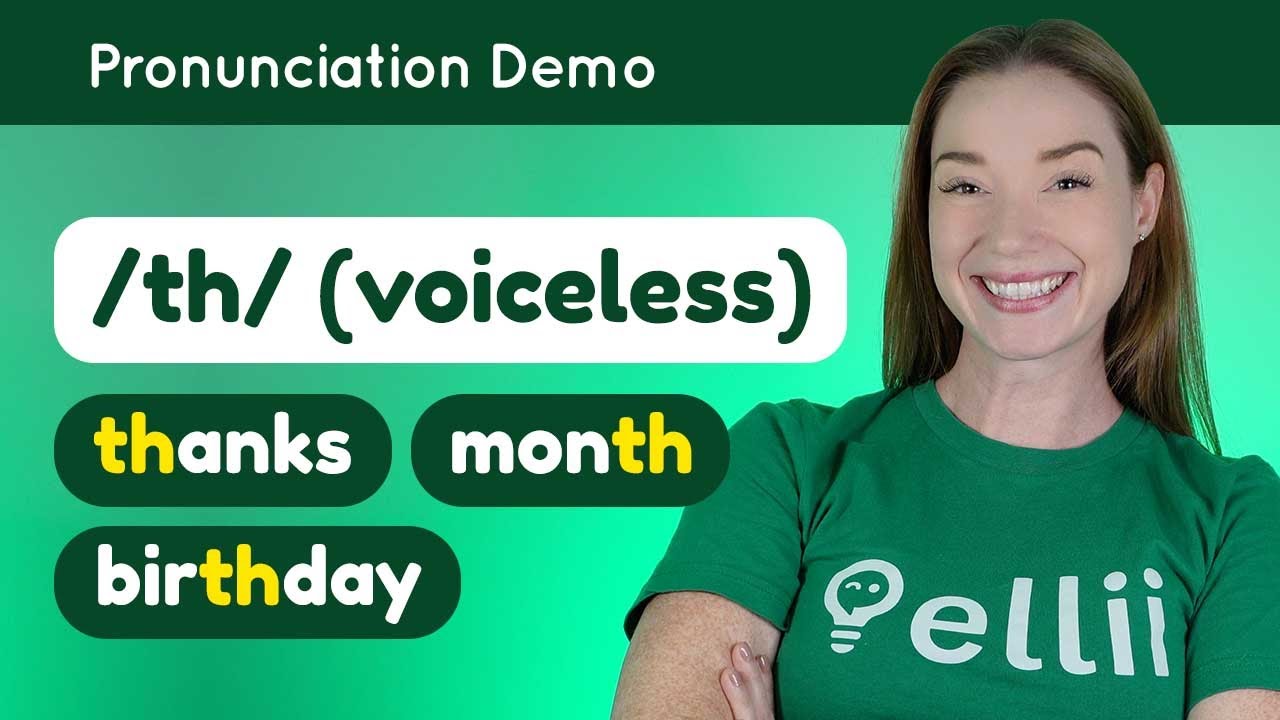
One, the voiceless th, and if you put your hands here and release air Right?
Uno, el th sordo; si ponen sus manos aquí y liberan aire, ¿verdad?
You don't feel anything here.
No sienten nada aquí.
You feel the air coming out and now try this with me: th Did you feel vibrations?
Sienten el aire saliendo y ahora prueben esto conmigo: th ¿Sintieron vibraciones?
Good.
Bien.
Because that's the voiced th.
Porque ese es el th sonoro.
Here it was air with the vocal cords vibrating.
Aquí era aire con las cuerdas vocales vibrando.
Now we haven't changed anything here.
Ahora no hemos cambiado nada aquí.
For both the tongue was out in the air was passing between the tongue and teeth.
Para ambos, la lengua estaba afuera y el aire pasaba entre la lengua y los dientes.
Now two things you want to pay attention to.
Ahora hay dos cosas a las que deben prestar atención.
1.
1.
You want to make sure that the tongue is out.
Quieren asegurarse de que la lengua esté afuera.
Because otherwise it's gonna sound like a different sound.
Porque de lo contrario sonará como un sonido diferente.
Like a T 'tink', like a T or maybe 's-sink' like an S if the tongue is too far back.
Como una T 'tink', como una T o tal vez 's-sink' como una S si la lengua está demasiado atrás.
So you want to make sure it's out.
Así que quieren asegurarse de que esté afuera.
Not too far out, right.
No demasiado afuera, ¿verdad.
Also you want to make sure that the tongue is relaxed: th If it's too tight of if the body of the tongue is going to block the air inside the mouth it's still gonna sound like a T, 'tink'.
También quieren asegurarse de que la lengua esté relajada: th Si está demasiado tensa o si el cuerpo de la lengua va a bloquear el aire dentro de la boca, aún sonará como una T, 'tink'.
Even though my tongue is out.
Aunque mi lengua esté afuera.
That doesn't serve me, right.
Eso no me sirve, ¿verdad.
So you want to relax your tongue th and feel the air passing: th It should feel like an F sound but make sure that if you tend to substitute the th with an F sound, make sure that it's not the bottom lip that touches the the teeth but your tongue.
Así que quieren relajar su lengua th y sentir el aire pasando: th Debería sentirse como un sonido F, pero asegúrense de que, si tienden a sustituir el th por un sonido F, se aseguren de que no sea el labio inferior el que toque los dientes, sino su lengua.
And by the way how do you know that your tongue is not too far out.
Y por cierto, ¿cómo saben que su lengua no está demasiado afuera?
You can put your finger here on your teeth: think thought and say a few words with a th.
Pueden poner su dedo aquí sobre sus dientes: think thought y decir unas pocas palabras con un th.
And you want to feel the tongue just slightly touching your finger not pushing against it because if you feel your tongue pushing against your finger then your tongue is too far out, okay?
Y quieren sentir que la lengua solo toca ligeramente su dedo, sin empujar contra él, porque si sienten que su lengua empuja contra su dedo, entonces su lengua está demasiado afuera, ¿vale?
Good.
Bien.
So let's practice a few words: theory authentic
Así que practiquemos algunas palabras: theory authentic
path Voiced th: they Make sure it doesn't sound like 'day', alright.
path Th sonoro: they Asegúrense de que no suene como 'day', ¿de acuerdo.
Or is a 'zay' they another my brother and mother my brother and mother each other Okay, good.
O es un 'zay' they another my brother and mother my brother and mother each other Okay, good.
Now when it comes to functional words with th like the, this, that, those.
Ahora, cuando se trata de palabras funcionales con th como the, this, that, those.
First of all, these are sneaky words because you don't think about them and then automatically your mouth would want to say something like "the", this", "that", "those".
Primero que nada, estas son palabras engañosas porque no piensan en ellas y luego automáticamente su boca querrá decir algo como "the", "this", "that", "those".
Now here it's okay to cheat.
Ahora aquí está bien hacer trampa.
Generally, we are in favor of cheating, okay.
Generalmente, estamos a favor de hacer trampa, ¿vale.
So whenever you don't have to pronounce the full sound, don't.
Así que siempre que no tengan que pronunciar el sonido completo, no lo hagan.
Okay?
¿De acuerdo?
I'm telling you it's okay.
Les digo que está bien.
So, for example, for words like "the," "this," "that," "those" you can stick, like you don't have to stick the tongue out.
Por ejemplo, para palabras como "the", "this", "that" y "those", puedes colocar la lengua sin necesidad de sacarla.
You can place it on the back of your teeth, the top teeth.
Puedes colocarla en la parte posterior de tus dientes, los dientes superiores.
the the the this this So it sounds like a D, but it's not "dis," "de" but this this this So you can't see my tongue coming out, but again it's not a D sound.
the the the this this Suena como una D, pero no es "dis" ni "de", sino this this this. No puedes ver mi lengua salir, pero nuevamente, no es un sonido de D.
It's "a D on the teeth."
Es una "D sobre los dientes".
And then it's totally fine.
Y entonces está totalmente bien.
So it's a lot easier to pronounce, especially when you need to transition between sounds like the-car, the-sun, right.
Así que es mucho más fácil de pronunciar, especialmente cuando necesitas hacer transiciones entre sonidos como "the-car" o "the-sun", ¿verdad?
It's harder to do the-sun.
Es más difícil hacer "the-sun".
So if you put it behind the teeth: the-sun.
Así que si lo pones detrás de los dientes: "the-sun".
It's easier.
Es más fácil.
And still it doesn't have that strong sound of D that some speakers have.
Y aún así no tiene ese sonido fuerte de D que tienen algunos hablantes.
Not that it's a big deal cuz you're still gonna be clear, okay.
No es que sea un gran problema porque seguirás siendo claro, ¿vale?
Also, you need to remember that when you practice sounds, you need to focus on your highest priorities.
Además, debes recordar que cuando practicas sonidos, necesitas centrarte en tus prioridades más altas.
So if your th sounds like a T or D everyone will probably understand you.
Así que si tu th suena como una T o una D, todos probablemente te entenderán.
if you want to improve and if you want it to be a non-issue then definitely work on improving that, okay?
Si quieres mejorar y quieres que deje de ser un problema, entonces definitivamente trabaja en mejorarlo, ¿vale?
Let's my few more words: authentic them tell them is that Now I want you to remember that when it comes to the th it might be easier in words but then in sentences or phrases it gets a little more challenging because you need to work quickly between the two sounds.
Practiquemos unas pocas palabras más: authentic, them, tell them, is that. Ahora quiero que recuerdes que cuando se trata del th, puede ser más fácil en palabras, pero luego en oraciones o frases se vuelve un poco más desafiante porque necesitas trabajar rápidamente entre los dos sonidos.
So, for example, to say something like "the" may be easy but then to say "the-sun" might be more challenging.
Por ejemplo, decir algo como "the" puede ser fácil, pero luego decir "the-sun" podría ser más desafiante.
Or "the theater": two th's together!
O "the theater": ¡dos ths juntos!
So you always want to anticipate the following sound.
Así que siempre debes anticipar el siguiente sonido.
So let's say you have a sound like an L that has a th right after, like "will they."
Digamos que tienes un sonido como una L que tiene un th justo después, como en "will they".
So what you want to do is to anticipate the sound and stick the tongue out before the th.
Lo que quieres hacer es anticipar el sonido y sacar la lengua antes del th.
will they Same thing with N before th on-the Right, so you bring the tongue out for the N and then you're relaxing it into the TH so you don't have to push the tongue out.
will they. Lo mismo con la N antes del th en "on-the". Correcto, así que sacas la lengua para la N y luego la relajas hacia el TH, por lo que no tienes que empujar la lengua hacia afuera.
Anticipating the th that will help you with the transition: on-the in-the will-they all-that at-the: t-th So here I brought the tongue up for the T instead of keeping it behind the teeth: at, at Doesn't change the sound.
Anticipar el th te ayudará con la transición: on-the, in-the, will-they, all-that, at-the: t-th. Aquí subí la lengua para la T en lugar de mantenerla detrás de los dientes: at, at. No cambia el sonido.
Anyway it's a held T: at at-relaxing it to a th-the at-the get them and backwards as well: bath-time So, I want to think about this transition and if it's difficult, then I want to work on this transition over and over again, okay.
De todos modos, es una T sostenida: at, relajándola hacia un th-the, at-the, get them y también al revés: bath-time. Así que quiero pensar en esta transición y si es difícil, entonces quiero trabajar en esta transición una y otra vez, ¿vale?
Let's try another one: is-that: z-th Raise your hand if you want to turn off this video right now!
Probemos otra: is-that: z-th. Levanta la mano si quieres apagar este video ahora mismo.
is that Right.
is that. Correcto.
So here there's no cheating.
Aquí no hay atajos.
You just have to work quickly.
Solo tienes que trabajar rápido.
Now you might be doing something like "iz-at" or "ivat".
Ahora podrías estar diciendo algo como "iz-at" o "ivat".
That's totally fine.
Eso está totalmente bien.
Just make sure that you're not merging the two sounds.
Simplemente asegúrate de no fusionar los dos sonidos.
Two different sounds, focus on them: is - the Z is inside - that, th out.
Sonidos diferentes, concéntrate en ellos: is - la Z está adentro - that, th afuera.
So you want to transition and really visualize your tongue going from the inside to the outside.
Así que quieres hacer la transición y visualizar realmente tu lengua moviéndose desde adentro hacia afuera.
is that After all your tongue is a muscle, you control it, right.
is that Después de todo, tu lengua es un músculo, tú la controlas, ¿verdad?
It's not like this...
No es como esto...
I always compare it to a sneaky little brat that is just like running around and you're like: "Wait just a minute, wait, look, come here come here".
Siempre lo comparo con un travieso pequeño y astuto que corre por ahí y tú dices: "Espera un minuto, espera, mira, ven aquí, ven aquí".
So that's your tongue and you need to teach it to listen to you, especially when it comes to the TH transitions.
Así que esa es tu lengua y necesitas enseñarle a escucharte, especialmente cuando se trata de las transiciones del TH.
So what you can do is create those lists of transitions, right.
Así que lo que puedes hacer es crear esas listas de transiciones, ¿verdad?
Every time you come across a tricky transition or just a lot of words with TH's and repeat them over and over again.
Cada vez que te encuentres con una transición complicada o simplemente muchas palabras con TH y repítelas una y otra vez.
Repetition is the only thing that will help you make it your own and make it spontaneous, okay.
La repetición es lo único que te ayudará a hacerlo tuyo y a que sea espontáneo, ¿vale?
So it's not enough to listen to this video and to just like try it out a few times.
Así que no basta con escuchar este video y probarlo unas pocas veces.
You've got to do it on a daily basis even if it's just five minutes a day and then it will become a part of you, and then you'll develop the muscle memory.
Tienes que hacerlo a diario, incluso si son solo cinco minutos al día, y entonces se convertirá en parte de ti, y desarrollarás la memoria muscular.
You'll rewire all the connections in your brain, and you won't go back to the 'comfortable place' which is all the other sounds, okay.
Reconectarás todas las conexiones en tu cerebro, y no volverás al 'lugar cómodo' que son todos los otros sonidos, ¿vale?
So let's start a list in the comments below put all the possible transitions or tricky transitions of th and other sounds and we'll practice together.
Así que empecemos una lista en los comentarios a continuación; pon todas las posibles transiciones o transiciones complicadas de th y otros sonidos y practiquemos juntos.
I hope this was helpful, THIS was helpful.
Espero que esto haya sido útil, ESTO fue útil.
Have a beautiful week!
¡Que tengas una hermosa semana!
Don't forget to subscribe to my YouTube channel and comment over to my website Because I have a lot of great stuff for you over there and free stuff.
No olvides suscribirte a mi canal de YouTube y visitar mi sitio web. Porque tengo mucha buena información para ti allí y material gratuito.
So why not?
¿Entonces por qué no?
Come check it out theaccentsway.com Have a beautiful day, and I'll see you next week in the next video.
Ven a verlo theaccentsway.com. Que tengas un hermoso día, y nos vemos la próxima semana en el próximo video.
Bye!
¡Adiós!