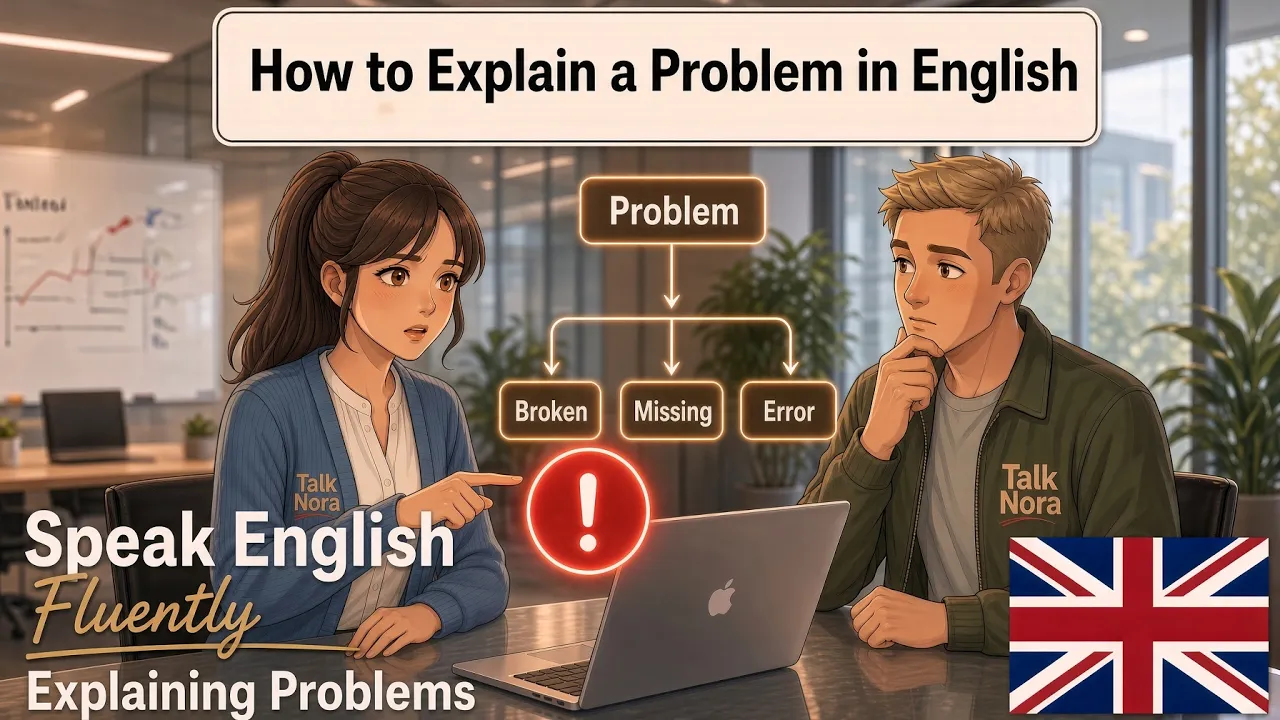
Hello everyone and welcome back to Rakesh Talks English.
नमस्ते सभी, और रॉकेष टॉल्स इंग्लिश में वापसी पर स्वागत है।
I hope you are doing well and feeling excited to improve your English communication skills.
मुझे आशा है कि आप अच्छे हैं और अपनी इंग्लिश संचार कौशल को बेहतर बनाने के लिए उत्साहित महसूस कर रहे हैं।
Today, we are going to learn an important communication skill that we use almost every day.
आज, हम एक महत्वपूर्ण संचार कौशल सीखेंगे जिसका उपयोग हम लगभग हर दिन करते हैं।
Our topic is how to explain a problem clearly in English.
हमारा विषय है कि इंग्लिश में किसी समस्या को स्पष्ट रूप से कैसे समझाया जाए।
Have you ever faced a situation where you wanted to explain a problem?
क्या आपने कभी ऐसी स्थिति का सामना किया है जहाँ आप किसी समस्या को समझाना चाहते थे?
But you could not find the right English words.
लेकिन आप सही इंग्लिश शब्द नहीं ढूंढ पाए।
Have you ever tried to describe something that happened, but the other person could not understand your point?
क्या आपने कभी कुछ ऐसा वर्णन करने की कोशिश की है जो हुआ था, लेकिन दूसरा व्यक्ति आपके बिंदु को नहीं समझ पाया?
Perhaps you knew exactly what the problem was, but you struggled to explain it in English.
शायद आपको ठीक-ठीक पता था कि समस्या क्या थी, लेकिन आप इसे इंग्लिश में समझाने में संघर्ष कर रहे थे।
If you have experienced something like this, today's lesson will be very useful for you.
यदि आपने इस तरह की कोई अनुभव प्राप्त किया है, तो आज की पाठ आपको बहुत उपयोगी होगी।
Explaining a problem is an important part of everyday communication.
किसी समस्या को समझाना दैनिक संचार का एक महत्वपूर्ण हिस्सा है।
We need this skill at home, at school, in the workplace, while traveling and even when talking to friends.
हमें इस कौशल की आवश्यकता घर पर, स्कूल में, कार्यस्थल पर, यात्रा करते समय और दोस्तों से बात करते समय भी होती है।
For example, imagine that your mobile phone is not working properly.
उदाहरण के लिए, कल्पना करें कि आपका मोबाइल फोन ठीक से काम नहीं कर रहा है।
You want to explain the issue to a shopkeeper or a customer service representative.
आप दुकानदार या ग्राहक सेवा प्रतिनिधि को समस्या समझाना चाहते हैं।
You cannot simply say that something is wrong.
आप बस यह नहीं कह सकते कि कुछ गड़बड़ है।
You need to explain what happened, when it started and what kind of difficulty you are facing.
आपको यह समझाना होगा कि क्या हुआ, यह कब शुरू हुआ और आपको किस प्रकार की कठिनाई का सामना करना पड़ रहा है।
that is why learning to explain problems clearly can make your communication more effective so let's understand how we can do this in simple english the first thing you should remember is to start with the main problem do not begin with unnecessary information tell the listener directly what the issue is you can use simple expressions like i have a problem with my internet connection You can also say, there's an issue with my computer.
इसीलिए समस्याओं को स्पष्ट रूप से समझाना सीखने से आपकी संचार अधिक प्रभावी हो सकती है, इसलिए आइए समझें कि हम इसे सरल अंग्रेजी में कैसे कर सकते हैं। आपको याद रखने वाली पहली बात यह है कि मुख्य समस्या से शुरू करें। अनावश्यक जानकारी के साथ शुरुआत न करें। श्रोता को सीधे बताएं कि समस्या क्या है। आप सरल अभिव्यक्तियों का उपयोग कर सकते हैं जैसे 'मेरे इंटरनेट कनेक्शन के साथ एक समस्या है'। आप यह भी कह सकते हैं, 'मेरे कंप्यूटर के साथ एक मुद्दा है।'
Another useful sentence is, I am facing a problem with my bank account.
एक और उपयोगपूर्ण वाक्य है, 'मैं अपने बैंक खाते के साथ समस्या का सामना कर रहा हूं।'
These sentences are simple, natural and easy to understand.
ये वाक्य सरल, स्वाभाविक और समझने में आसान हैं।
When you begin with the main issue, the listener immediately understands what you want to discuss.
जब आप मुख्य मुद्दे से शुरू करते हैं, तो श्रोता तुरंत समझ जाता है कि आप किस बारे में चर्चा करना चाहते हैं।
Now, let's learn how to describe what happened.
अब, आइए सीखें कि घटना का वर्णन कैसे करें।
After introducing the problem, explain the situation in a little more detail.
समस्या का परिचय देने के बाद, स्थिति को थोड़ा और विस्तार से समझाएं।
You can use expressions such as, The problem started this morning.
आप ऐसे अभिव्यक्तियों का उपयोग कर सकते हैं, 'समस्या आज सुबह शुरू हुई थी।'
You can say, It happened when I was using my phone.
आप कह सकते हैं, 'यह हुआ जब मैं अपना फोन इस्तेमाल कर रहा था।'
You can also say, I noticed this issue yesterday evening.
आप यह भी कह सकते हैं, 'मैंने यह मुद्दा कल शाम को देखा था।'
These expressions help you explain the background of the problem.
ये अभिव्यक्तियां आपको समस्या की पृष्ठभूमि समझाने में मदद करती हैं।
Remember that you do not need complicated English to explain something properly.
याद रखें कि कुछ को ठीक से समझाने के लिए आपको जटिल अंग्रेजी की आवश्यकता नहीं है।
Simple sentences can communicate your message very effectively.
सरल वाक्य आपका संदेश बहुत प्रभावी ढंग से संप्रेषित कर सकते हैं।
The next important step is to explain how the problem affects you.
अगला महत्वपूर्ण कदम यह समझाना है कि समस्या आपके ऊपर कैसे असर डाल रही है।
Sometimes, simply describing the issue is not enough.
कभी-कभी, केवल मुद्दे का वर्णन करना पर्याप्त नहीं होता है।
The other person also needs to understand why it is creating difficulty for you.
दूसरे व्यक्ति को यह भी समझने की आवश्यकता होती है कि यह आपके लिए कठिनाई क्यों पैदा कर रहा है।
For example, you can say, because of this problem, I cannot complete my work.
उदाहरण के लिए, आप कह सकते हैं, 'इस समस्या के कारण, मैं अपना काम पूरा नहीं कर सकता।'
You can say, this issue is affecting my daily routine.
आप कह सकते हैं, 'यह मुद्दा मेरी दैनिक दिनचर्या को प्रभावित कर रहा है।'
Another useful expression is, I am unable to access my important documents.
एक और उपयोगपूर्ण अभिव्यक्ति है, 'मैं अपने महत्वपूर्ण दस्तावेज़ों तक पहुंचने में असमर्थ हूं।'
These sentences explain the effect of the problem.
ये वाक्य समस्या के प्रभाव को समझाते हैं।
They help the listener understand why you need assistance.
ये श्रोता को समझने में मदद करते हैं कि आपको सहायता की आवश्यकता क्यों है।
Now, let's learn some useful English expressions for explaining different problems.
अब, आइए विभिन्न समस्याओं को समझाने के लिए कुछ उपयोगपूर्ण अंग्रेजी अभिव्यक्तियां सीखें।
Suppose you are having difficulty understanding something.
मान लीजिए कि आपको किसी चीज को समझने में कठिनाई हो रही है।
You can say, I am having trouble understanding this topic.
आप कह सकते हैं, 'मुझे इस विषय को समझने में परेशानी हो रही है।'
If you cannot complete a task, you can say, I am facing some difficulties completing this work.
यदि आप कोई कार्य पूरा नहीं कर सकते, तो आप कह सकते हैं, 'मैं इस काम को पूरा करने में कुछ कठिनाइयों का सामना कर रहा हूं।'
If your plans have changed unexpectedly, you can say, Something unexpected has happened and I need to change my plans.
यदि आपकी योजनाएं अप्रत्याशित रूप से बदल गई हैं, तो आप कह सकते हैं, 'कुछ अप्रत्याशित हुआ है और मुझे अपनी योजनाएं बदलनी हैं।'
If you are unable to reach a particular place, you can say, I am having difficulty finding the correct location.
यदि आप किसी विशेष स्थान तक नहीं पहुंच पा रहे हैं, तो आप कह सकते हैं, 'मैं सही स्थान खोजने में कठिनाई का सामना कर रहा हूं।'
These expressions are useful in different everyday situations.
ये अभिव्यक्तियां विभिन्न दैनिक स्थितियों में उपयोगी हैं।
You can practice them and use them whenever you need them.
आप उनका अभ्यास कर सकते हैं और जब भी उन्हें उपयोग करने की आवश्यकता हो, तब उपयोग कर सकते हैं।
Now, let's talk about something important.
अब, आइए कुछ महत्वपूर्ण बातों के बारे में बात करें।
When explaining a problem, always try to follow a proper sequence.
किसी समस्या की व्याख्या करते समय, हमेशा एक उचित क्रम का पालन करने की कोशिश करें।
First, explain what happened.
पहले, यह बताएं कि क्या हुआ।
Second, tell the listener when it happened.
दूसरा, श्रोता को बताएं कि यह कब हुआ।
Third, describe the difficulty you are facing.
तीसरा, उस कठिनाई का वर्णन करें जिसका आप सामना कर रहे हैं।
Finally, explain what kind of help or solution you need.
अंत में, बताएं कि आपको किस प्रकार की मदद या समाधान की आवश्यकता है।
This simple structure makes your explanation organized and understandable.
यह सरल संरचना आपकी व्याख्या को व्यवस्थित और समझने योग्य बनाती है।
For example, imagine that you are unable to attend an important meeting.
उदाहरण के लिए, कल्पना करें कि आप एक महत्वपूर्ण बैठक में शामिल नहीं हो पा रहे हैं।
You can explain the situation like this.
आप इस तरह से स्थिति की व्याख्या कर सकते हैं।
I am sorry, but I will not be able to attend today's meeting.
मुझे खेद है, लेकिन मैं आज की बैठक में शामिल नहीं हो पाऊंगा।
My bus has been delayed because of heavy traffic.
भारी भीड़ के कारण मेरी बस देर से आई है।
As a result, I may reach the office later than expected.
परिणामस्वरूप, मुझे कार्यालय निर्धारित समय से बाद में पहुंचने की संभावना है।
Could you please share the important points discussed in the meeting?
कृपया बैठक में चर्चित महत्वपूर्ण बिंदु साझा करें?
Notice how each sentence gives useful information.
ध्यान दें कि प्रत्येक वाक्य उपयोगी जानकारी कैसे प्रदान करता है।
The listener can understand the situation without asking too many questions.
श्रोता बहुत सारे प्रश्न किए बिना ही स्थिति को समझ सकता है।
This is what clear communication means.
यही स्पष्ट संचार का अर्थ है।
Now, imagine another situation.
अब, एक अन्य स्थिति की कल्पना करें।
You are working on an important assignment, but your computer suddenly stops working.
आप किसी महत्वपूर्ण कार्य पर काम कर रहे हैं, लेकिन आपका कंप्यूटर अचानक काम करना बंद कर देता है।
How can you explain this problem to your colleague?
आप अपने सहकर्मी को इस समस्या के बारे में कैसे बता सकते हैं?
You can say, I am facing a technical problem with my computer.
आप कह सकते हैं, मेरे कंप्यूटर के साथ तकनीकी समस्या आ रही है।
It was working properly a few minutes ago.
कुछ मिनट पहले यह ठीक चल रहा था।
Suddenly, the screen stopped responding.
अचानक, स्क्रीन ने प्रतिक्रिया करना बंद कर दिया।
I have tried restarting the computer, but the problem is still there.
मैंने कंप्यूटर को रीस्टार्ट करने की कोशिश की है, लेकिन समस्या अभी भी वहां है।
Could you please help me check what is wrong?
कृपया मेरी मदद करें कि क्या गड़बड़ है, यह जांचने में?
This is a natural way to explain a technical problem.
यह किसी तकनीकी समस्या की व्याख्या करने का एक प्राकृतिक तरीका है।
You do not need advanced vocabulary.
आपको उन्नत शब्दावली की आवश्यकता नहीं है।
You only need the right sentences in the right order.
आपके पास बस सही वाक्यों की सही क्रम में आवश्यकता है।
Let's move to another everyday situation.
आइए एक अन्य दैनिक स्थिति पर चलते हैं।
Imagine that you ordered something online, but you received a different product.
कल्पना करें कि आपने ऑनलाइन कुछ ऑर्डर किया था, लेकिन आपको एक अलग उत्पाद मिला।
You want to contact customer support.
आप ग्राहक सेवा से संपर्क करना चाहते हैं।
You can say, I recently placed an order through your website.
आप कह सकते हैं, मैंने हाल ही में आपके वेबसाइट के माध्यम से एक ऑर्डर दिया था।
However, I received a different product.
हालांकि, मुझे एक अलग उत्पाद मिला।
The product I received does not match my original order.
जो उत्पाद मुझे मिला है, वह मेरे मूल ऑर्डर से मेल नहीं खाता है।
Could you please help me resolve this issue?
कृपया इस मुद्दे को हल करने में मेरी मदद करें?
This is a polite and clear way to communicate your problem.
यह अपनी समस्या को संचारित करने का एक विनम्र और स्पष्ट तरीका है।
Always remember that explaining a problem politely is just as important as explaining it correctly.
हमेशा याद रखें कि किसी समस्या की विनम्रता से व्याख्या करना इसे सही ढंग से व्याख्या करने के जितना ही महत्वपूर्ण है।
Your tone should be calm and respectful.
आपका टोन शांत और सम्मानजनक होना चाहिए।
Avoid becoming unnecessarily angry while describing a situation.
स्थिति का वर्णन करते समय बेकार में गुस्से में न आएं।
Speak clearly, give the necessary information and allow the other person to respond.
स्पष्ट रूप से बोलें, आवश्यक जानकारी दें और दूसरे व्यक्ति को प्रतिक्रिया देने का अवसर दें।
Now, let's learn how to explain a problem when you do not know its exact cause.
अब, आइए सीखें कि जब आपको इसका सटीक कारण नहीं पता होता है तो समस्या की व्याख्या कैसे करें।
Sometimes we experience a difficulty but we do not understand why it is happening.
कभी-कभी हम एक कठिनाई का अनुभव करते हैं लेकिन हमें यह नहीं समझ आता कि यह क्यों हो रहा है।
In such situations, you can use expressions like, I am not sure what caused this problem.
ऐसी स्थितियों में, आप इस प्रकार के वाक्य का उपयोग कर सकते हैं: मुझे यकीन नहीं है कि इस समस्या का कारण क्या है।
You can also say, I do not know why this is happening.
आप यह भी कह सकते हैं: मुझे नहीं पता कि यह क्यों हो रहा है।
Another useful sentence is, everything was working fine earlier but now something seems to be wrong.
एक और उपयोगी वाक्य यह है: पहले सब कुछ ठीक चल रहा था, लेकिन अब कुछ गड़बड़ लग रही है।
These sentences help you communicate honestly without guessing.
ये वाक्य आपको बिना अनुमान लगाए ईमानदारी से संवाद करने में मदद करते हैं।
You do not need to know every answer before explaining a problem.
समस्या को समझाने से पहले आपको हर जवाब जानने की जरूरत नहीं है।
You simply need to describe what you have noticed.
आपको बस वही वर्णन करना है जो आपने देखा है।
Another useful communication skill is asking for clarification.
एक और उपयोगी संचार कौशल है स्पष्टीकरण मांगना।
Sometimes the listener may not understand your explanation completely.
कभी-कभी श्रोता आपकी व्याख्या को पूरी तरह से नहीं समझ पाते हैं।
They may ask you additional questions.
वे आपसे अतिरिक्त प्रश्न पूछ सकते हैं।
Do not feel nervous in that situation.
उस स्थिति में घबराहट महसूस न करें।
You can calmly explain the same thing using different words.
आप शांति से अलग शब्दों का उपयोग करके उसी बात को समझा सकते हैं।
For example, you can say, let me explain it in another way.
उदाहरण के लिए, आप कह सकते हैं: मुझे इसे दूसरे तरीके से समझने दें।
You can also say, what I mean is that the problem started after I changed the settings.
आप यह भी कह सकते हैं: मेरा मतलब है कि समस्या तब शुरू हुई जब मैंने सेटिंग्स बदली थीं।
Another useful expression is, to make it clearer, the main issue is, these expressions help you continue the conversation naturally.
एक और उपयोगी अभिव्यक्ति है: स्पष्टता के लिए, मुख्य मुद्दा यह है; ये अभिव्यक्तियाँ आपको संवाद को प्राकृतिक रूप से जारी रखने में मदद करती हैं।
They also show that you are trying to communicate your message properly.
यह यह भी दर्शाता है कि आप अपनी बात को उचित ढंग से व्यक्त करने का प्रयास कर रहे हैं।
Now, let's discuss some common mistakes people make while explaining problems in English.
अब, आइए उन सामान्य गलतियों पर चर्चा करें जो लोग अंग्रेजी में समस्याओं को समझाते समय करते हैं।
The first mistake is speaking too quickly.
पहली गलती बहुत तेज़ बोलना है।
When we feel nervous, we sometimes speak faster than usual.
जब हम घबराहट महसूस करते हैं, तो कभी-कभी हम सामान्य से तेज़ बोल देते हैं।
As a result, our words become unclear and the listener may miss important information.
परिणामस्वरूप, हमारे शब्द अस्पष्ट हो जाते हैं और श्रोता महत्वपूर्ण जानकारी छूट सकता है।
So, take your time and speak at a comfortable speed.
तो, अपना समय लें और एक सहज गति पर बोलें।
The second mistake is using too many unnecessary details.
दूसरी गलती बहुत अधिक अनावश्यक विवरणों का उपयोग करना है।
You do not have to explain every small thing that happened.
आपको हुए हर छोटे मामले को समझाने की आवश्यकता नहीं है।
Focus on the information that is directly related to the problem.
उन जानकारी पर ध्यान केंद्रित करें जो सीधे समस्या से संबंधित हैं।
The third mistake is using difficult words when simple words are enough.
तीसरी गलती यह है कि जब सरल शब्द काफी हैं, तो कठिन शब्दों का उपयोग करना।
Remember, good communication is not about using complicated vocabulary.
याद रखें, अच्छा संवाद जटिल शब्दावली का उपयोग करने के बारे में नहीं है।
It is about making your message easy to understand.
यह आपकी बात को समझने में आसान बनाने के बारे में है।
The fourth mistake is forgetting to explain what you need.
चौथी गलती यह भूल जाना है कि आपको किस चीज़ की आवश्यकता है, इसका वर्णन करना।
After describing your problem, tell the listener what kind of assistance you are looking for.
अपनी समस्या का वर्णन करने के बाद, श्रोता को बताएं कि आप किस प्रकार की सहायता की तलाश में हैं।
For example, you can ask, could you please guide me?
उदाहरण के लिए, आप पूछ सकते हैं: क्या आप कृपया मार्गदर्शन कर सकते हैं?
You can say, can you help me find a solution?
आप कह सकते हैं: क्या आप मुझे कोई समाधान खोजने में मदद कर सकते हैं?
You can also ask, what should I do next?
आप यह भी पूछ सकते हैं: मुझे आगे क्या करना चाहिए?
These questions help move the conversation towards a solution.
ये प्रश्न संवाद को समाधान की ओर ले जाने में मदद करते हैं।
Now, let's practice a few useful sentences together.
अब, आइए कुछ उपयोगी वाक्यों का साथ में अभ्यास करें।
Listen carefully and repeat each sentence after me.
ध्यान से सुनें और मेरे बाद प्रत्येक वाक्य को दोहराएं।
I am facing a small problem.
मैं एक छोटी सी समस्या का सामना कर रहा हूं।
The issue started this morning.
यह मुद्दा आज सुबह शुरू हुआ।
I am unable to complete this task.
मैं इस कार्य को पूरा करने में असमर्थ हूं।
Something is not working properly.
कुछ ठीक से काम नहीं कर रहा है।
I have already tried to fix the problem.
मैंने समस्या को ठीक करने का प्रयास किया है।
Unfortunately, the issue is still there.
दुर्भाग्य से, समस्या अभी भी वही है।
Could you please help me understand situation?
क्या आप कृपया स्थिति समझने में मेरी मदद कर सकते हैं?
I would appreciate your assistance.
मुझे आपकी सहायता का आभार होगा।
Let me explain what happened.
मुझे बताइए कि क्या हुआ था।
I hope we can find a solution soon.
मुझे उम्मीद है कि हम जल्द ही कोई समाधान खोज लेंगे।
Excellent!
बहुत बढ़िया!
Practice these sentences regularly until they become familiar to you.
जब तक ये वाक्य आपको परिचित न हो जाएं, इनका नियमित अभ्यास करें।
Now, let's learn how to explain a personal problem in a respectful way.
अब, हम सीखते हैं कि सम्मानजनक तरीके से एक व्यक्तिगत समस्या को कैसे समझाएं।
Sometimes, we need to explain a situation to a friend, family member or colleague.
कभी-कभी, हमें किसी दोस्त, परिवार के सदस्य या सहकर्मी को स्थिति समझानी पड़ती है।
For example, imagine that you cannot complete a responsibility because you have several other commitments.
उदाहरण के लिए, कल्पना करें कि आप एक जिम्मेदारी पूरी नहीं कर पा रहे हैं क्योंकि आपके पास कई अन्य प्रतिबद्धताएं हैं।
You can say, I wanted to complete this work today but I have some other responsibilities.
आप कह सकते हैं, मैं आज यह काम पूरा करना चाहता था लेकिन मुझे कुछ अन्य जिम्मेदारियां हैं।
I am finding it difficult to manage everything at the moment.
मैं वर्तमान में सब कुछ संभालने में कठिनाई महसूस कर रहा हूं।
I may need a little more time to finish this task.
मुझे इस कार्य को पूरा करने में थोड़ा और समय लग सकता है।
This is a clear and respectful way to explain your situation.
यह अपनी स्थिति समझाने का एक स्पष्ट और सम्मानजनक तरीका है।
You are communicating your difficulty without making unnecessary excuses.
आप बिना किसी अनावश्यक बहाने बनाए अपनी कठिनाई को व्यक्त कर रहे हैं।
Similarly, if you misunderstand someone's message, you can say, I think there has been a misunderstanding.
इसी तरह, यदि आप किसी के संदेश को गलत समझ लेते हैं, तो आप कह सकते हैं, मुझे लगता है कि कोई गलतफहमी हुई है।
Perhaps I did not understand your point correctly.
शायद मैंने आपका मतलब सही से नहीं समझा।
Could you please explain what you meant?
क्या आप कृपया बताएं कि आपका क्या मतलब था?
Such expressions help prevent confusion and improve communication.
ऐसे वाक्यांश भ्रम को रोकने और संचार को बेहतर बनाने में मदद करते हैं।
Now, here is another important point.
अब, यहाँ एक और महत्वपूर्ण बात है।
Do not be afraid of making small grammar mistakes while explaining a problem.
समस्या समझाते समय छोटे व्याकरणिक भूल करने से डरें नहीं।
Your main goal should be to communicate your message.
आपका मुख्य उद्देश्य अपना संदेश संप्रेषित करना होना चाहिए।
Of course, learning correct grammar is important.
बेशक, सही व्याकरण सीखना महत्वपूर्ण है।
However, you should not stop speaking just because you are unsure about one particular sentence.
हालाँकि, आपको बस इसलिए बोलना नहीं रोकना चाहिए क्योंकि आपको किसी विशेष वाक्य के बारे में अनिश्चितता है।
Start with the words you know.
उन शब्दों से शुरू करें जो आपको पता हैं।
Make short sentences.
छोटे वाक्य बनाएं।
Connect those sentences naturally.
इन वाक्यों को स्वाभाविक रूप से जोड़ें।
With regular practice, your ability to explain situations will improve.
नियमित अभ्यास के साथ, स्थितियों को समझाने की आपकी क्षमता में सुधार आएगा।
Let me share a simple practice method with you.
मुझे आपके साथ एक सरल अभ्यास विधि साझा करनी है।
Every day, choose one ordinary problem or situation and try to explain it in English.
रोज़ाना, एक सामान्य समस्या या स्थिति चुनें और उसे अंग्रेजी में समझाने का प्रयास करें।
For example, you can describe why you were late.
उदाहरण के लिए, आप वर्णन कर सकते हैं कि आप देरी क्यों कर गए।
You can explain why your internet connection was not working.
आप समझा सकते हैं कि आपका इंटरनेट कनेक्शन क्यों काम नहीं कर रहा था।
You can talk about a difficulty you experienced while completing your daily work.
आप अपने दैनिक काम पूरे करते समय अनुभव की गई किसी कठिनाई के बारे में बात कर सकते हैं।
You can even explain a problem related to traveling or shopping.
आप यात्रा या शॉपिंग से संबंधित किसी समस्या को भी समझा सकते हैं।
Try to speak for one or two minutes without stopping.
कोई रुके बिना एक या दो मिनट तक बोलने का प्रयास करें।
First, focus on expressing your ideas clearly, gradually.
पहले, धीरे-धीरे अपने विचारों को स्पष्ट रूप से व्यक्त करने पर ध्यान दें।
work on improving your grammar, vocabulary and pronunciation.
अपने व्याकरण, शब्दावली और उच्चारण को सुधारने पर काम करें।
You can also record your voice and listen to it later.
आप अपनी आवाज को रिकॉर्ड भी कर सकते हैं और बाद में इसे सुन सकते हैं।
Notice whether your explanation is easy to understand.
ध्यान दें कि क्या आपकी व्याख्या समझने में आसान है।
Check whether you have included the important details.
जांचें कि क्या आपने महत्वपूर्ण विवरण शामिल किए हैं।
This small activity can help you become more comfortable with everyday English communication.
यह छोटी सी गतिविधि आपको दैनिक अंग्रेजी संवाद में अधिक सहज बनने में मदद कर सकती है।
Always remember that communication is a practical skill.
सदैव याद रखें कि संवाद एक व्यावहारिक कौशल है।
You cannot improve it only by reading grammar rules.
आप केवल व्याकरण नियम पढ़कर इसमें सुधार नहीं कर सकते।
You also need to use English while describing real situations.
वास्तविक स्थितियों का वर्णन करते समय आपको अंग्रेजी का उपयोग करना भी आवश्यक है।
The more situations you practice, the more naturally you will be able to express yourself.
जितनी अधिक स्थितियों का आप अभ्यास करेंगे, उतना ही स्वाभाविक रूप से आप अपने विचार व्यक्त कर पाएंगे।
So, whenever you face a difficulty, think about how you would explain it in English.
इसलिए, जब भी आप किसी कठिनाई का सामना करें, तो सोचें कि आप इसे अंग्रेजी में कैसे समझाएंगे।
Try to find simple words, organize your thoughts and speak with confidence.
सरल शब्द खोजने, अपने विचारों को व्यवस्थित करने और आत्मविश्वास के साथ बोलने का प्रयास करें।
Before we finish today's lesson, let's quickly remember what we have learned.
आज की पाठ समाप्त करने से पहले, आइए जल्दी से याद करें कि हमने क्या सीखा है।
We learned how to introduce a problem clearly.
हमने यह सीखा कि समस्या को स्पष्ट रूप से कैसे प्रस्तुत करें।
We learned how to describe what happened and when it happened.
हमने यह सीखा कि क्या हुआ और कब हुआ, इसका वर्णन कैसे करें।
We also learned how to explain the effects of a problem.
हमने यह भी सीखा कि समस्या के प्रभावों को कैसे समझाएं।
We practiced useful expressions for asking questions and requesting assistance.
हमने प्रश्न पूछने और सहायता मांगने के लिए उपयोगी वाक्यांशों का अभ्यास किया।