Hi friends!
みなさん、こんにちは!
Welcome back to Daily English Talk.
デイリー・イングリッシュ・トークへようこそ。
I'm Lily.
リリーです。
And I'm Tom.
そしてトムです。
Good to see you again.
またお会いできて嬉しいです。
If you're new here, welcome to the family.
ここが初めての方は、ファミリーへようこそ。
We're so happy you found us.
私たちを見つけてくれて本当に嬉しいです。
And if you're not new, welcome back.
そして、すでに馴染みの方にはまたお会いできて嬉しいです。
You already know how this works.
もう仕組みはご存知ですよね。
Do you have a return ticket?
往復チケットをお持ちですか?
What is the purpose of your trip?
旅行の目的は何ですか?
A return ticket?
往復チケット?
No, I don't.
いいえ、持っていません。
I'm going for fun.
遊びに行くんです。
Every single day, we post a new English lesson to help you speak with more confidence.
毎日新しい英語レッスンを投稿して、自信を持って話せるようにお手伝いしています。
So if you want to learn real, natural English, hit that subscribe button right now.
だから、本物の自然な英語を学びたいなら、今すぐ購読ボタンを押してください。
It's free, it's daily, and it really helps the channel grow.
無料だし、毎日更新され、チャンネルの成長にも本当に役立ちます。
Today, we have a fun one.
今日は楽しいテーマがあります。
We're going to teach you airport English.
空港英語をお教えします。
Yes, everything you need to say at the airport, from check-in all the way to passport control.
はい、チェックインからパスポートコントロールまで、空港で必要なすべてをお伝えします。
And here's the best part.
そして、ここが一番良いところです。
Last week, Tom and I actually took a real trip.
先週、トムと私は実際に旅行に行ってきました。
We flew from the United States to the United Kingdom.
アメリカ合衆国からイギリスへ飛行機で移動しました。
From the USA to the UK.
米国から英国へ。
And let me tell you, a lot of things happened.
そして、たくさんあったよ。
Oh, a lot of things happened to you, Tom.
ああ、トム、あなたにはたくさんありましたね。
That's true.
本当です。
That's very true.
本当にその通りです。
Tom, we have a new member.
トム、新しいメンバーがいます。
His name is Nguyen Suan Kwong.
彼の名前はNguyen Suan Kwongです。
Oh, I'm happy now.
おっと、今嬉しくなりました。
Congratulations, Nguyen Suan Kwong.
おめでとうございます、Nguyen Suan Kwongさん。
So today, you'll learn the words and phrases, and you'll hear a real story at the same time.
今日は単語やフレーズを学びながら、実際のストーリーも聞けます。
This is perfect for level A2 to B1.
これはA2からB1レベルにぴったりです。
Let's go.
行きましょう。
Okay, before we start the story, I have a question for all of you watching.
では、ストーリーを始める前に、視聴者の皆さんに質問があります。
Uh-oh.
あー、まずい。
I think I know where this is going.
どこに向かっているかわかる気がします。
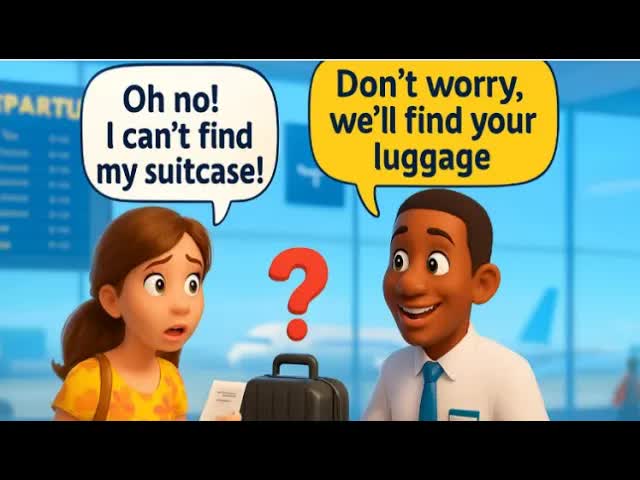
At the airport in New York, Tom's suitcase was too heavy.
ニューヨークの空港で、トムのスーツケースが重すぎました。
Way too heavy.
かなり重すぎました。
So he had to pay extra money for it.
それで追加料金を支払うはめになりました。
Please don't tell them the number.
金額は言わないでくださいね。
I won't tell them.
言いませんよ。
That's the fun part.
それが面白いところなんです。
Here's the question for you, everyone at home.
ここで質問です、みなさん。
How much extra money do you think Tom had to pay for his heavy bag?
重い荷物のためにトムはいくらの追加料金を払ったと思いますか?
It was a lot.
結構な額でした。
I'll just say that.
それだけ言っておきます。
Take a guess and write it in the comments right now.
予想を書いて、今すぐコメント欄に投稿してください。
Was it $20, $50, $100, even more?
20ドル?50ドル?100ドル?もっと?
More.
もっと。
Tom, don't help them.
トム、答えちゃダメだよ。
Sorry, sorry.
ごめん、ごめん。
So put your guess in the comments.
だから予想をコメントに書いてね。
We're not telling you the answer today.
今日の正解は教えません。
We want to see who gets the closest.
一番近い予想をした人を見てみたいんです。
Ready?
準備はいい?
Let's hear the whole story.
全体のお話を聞きましょう。
So, Tom, this was your first time flying to another country, right?
さて、トム、これが海外への初めてのフライトだったんだよね?
Yes, my very first big international trip.
ええ、まさに初めての大きな国際旅行でした。
I was so excited.
すごく興奮していました。
I packed my bag two weeks early.
2週間も早く荷物を詰め始めました。
Two weeks early.
2週間も前だったのに
And that's the problem, isn't it?
それが問題なんですよね、对吧?
You're right.
その通りです。
When you pack early, you keep adding things.
早めに荷造りすると、どんどん物が増えていくんです。
A few shirts, then some shoes, then snacks.
シャツを数枚、靴をいくつか、そしてスナック菓子。
So many snacks.
こんなに多くのスナック菓子。
Tom packed American snacks to share with our friends in London.
トムはロンドンの友達と分け合うために、アメリカのスナック菓子を詰め込みました。
You're right.
その通りです。
They asked for them.
彼らに頼まれたので。
Cookies, chips, candy.
クッキー、チップス、キャンディ。
I couldn't say no.
断ることができませんでした。
It was very kind, but your bag became so heavy.
親切な気持ちはとても良いですが、あなたのバッグがすごく重くなってしまいましたね。
I know.
わかります。
I couldn't even lift it at the end.
最後には持ち上げることもできませんでしたよ。
And the airport was busy that day, too.
その日は空港も混んでいたしね。
So many people, so many bags.
人が多くて、荷物もたくさんで。
Huge lines everywhere.
あちこちに長い列ができていたわ。
But honestly, the whole trip was amazing.
でも正直に言うと、旅行全体は素晴らしかったよ。
The flight, the food, landing in London.
フライトも、食事も、ロンドンへの着陸も。
It was a wonderful trip.
本当に素晴らしい旅でした。
We had two small problems, but we learned so much.
小さな問題が2つあったけど、たくさんのことを学んだよ。
Small problems.
小さな問題ね。
One was my heavy bag, and the other one was at passport control.
一つは私の重いバッグで、もう一つはパスポートコントロールでのことでした。
Oh, yes.
ああ、そうね。
Tom and the passport officer.
トムとパスポート係官のこと。
We'll get to that.
それは後で触れるわ。
I'm not ready to talk about it, but okay.
それについては話す準備がまだできてないんだけど、いいよ。
Don't worry, everyone.
みんな、心配しないで。
These problems are very common, and after this lesson, you'll know exactly what to do.
これらの問題は非常に一般的で、このレッスンの後なら、どうすべきか正確に分かるようになりますよ。
Let's learn some grammar first.
まずは文法を学びましょう。
Okay, let's talk about a useful grammar point for travel.
では、旅行に役立つ文法のポイントについて話しましょう。
It's the present perfect.
現在完了形です。
The present perfect.
現在完了形。
When do we use it?
いつ使いますか?
We use it to talk about experiences in our life when we don't say the exact time.
正確な時間を言わない場合の、人生での経験について話すときに使います。
We make it like this.
このように作ります。
We use have or has plus the past participle of the verb.
動詞の過去分詞の前に have または has を使います。
Give us an example.
例を出してください。
I have been to England.
私はイギリスに行ったことがあります。
That means at some time in my life, I went there.
つまり、私の人生のある時点で、そこへ行ったということです。
Maybe last year, maybe ten years ago.
去年かもしれないし、10年前かもしれない。
The time is not important.
いつかは重要ではありません。
Oh, I like that one.
お、その表現いいですね。
I have been to England.
私はイギリスに行ったことがあります。
Now I can finally say it.
やっと言えるようになりました。
Yes, you can.
はい、言えますね。
And we often ask people, have you ever been to another country?
そして私たちはよく人にこう尋ねます。「他の国に行ったことがありますか?」
So I could say, have you ever flown on a plane?
だから「飛行機に乗ったことがありますか?」と言うこともできます。
Perfect.
完璧です。
And before our trip, here's a true sentence.
そして私たちの旅の前に、真実の文があります。
Tom had never traveled abroad before.
トムは以前海外に旅行したことがありませんでした。
We use never for zero experience.
経験ゼロには never を使います。
Sad but true.
悲しいけど事実です。
Zero experience.
経験ゼロ。
That's me.
それが私です。
But listen, this is different from the past simple.
でも聞いてください、これは過去形とは違います。
When we say the exact time, we use the past simple.
正確な時間を言うときは、過去形を使います。
For example, last week we flew to London.
例えば、先週ロンドンへ飛びました。
That's a finished action with a clear time.
それは明確な時間のある完了した動作です。
So present perfect for the experience and past simple for the exact time.
つまり、経験には現在完了形を、正確な時間には過去形を使うのです。
Exactly.
その通りです。
Let me show you both together.
両方一緒に見てみましょう。
I have been to London.
私はロンドンに行ったことがあります。
That's the experience.
これが経験です。
I went to London last week.
私は先週ロンドンへ行きました。
That's the specific trip.
それが特定の旅行です。
That's so clear.
とても分かりやすいですね。
Now, here's a question for everyone watching.
さて、ここで皆様に質問です。
Have you ever traveled to another country?
他の国へ旅行したことがありますか?
Write, yes, I have, or no, I haven't in the comments.
コメント欄に「はい、あります」または「いいえ、ありません」と書いてください。
Practice the grammar with us.
私たちと一緒に文法を練習しましょう。
Don't be shy.
恥ずかしがらないで。
Try it.
やってみてください。
Okay, now the most important part.
では、ここからが一番重要です。
Let's learn the real airport English, step by step, in the same order you use it at the airport.
空港で使う順番通りに、ステップバイステップで実際の空港英語を学びましょう。
From the front door to the airplane.
空港の入り口から飛行機まで。
Let's do it.
始めましょう。
First, you arrive at the airport and you go to the check-in desk.
まず、空港に着いたらチェックインカウンターに行きます。
This is where you give your bag and you get your boarding pass.
そこで荷物を預けて、搭乗券を受け取ります。
And the boarding pass is the small ticket, right?
そして搭乗券は小さな切符のことですよね?
The one with your seat and your gate number.
座席番号とゲート番号が記載された小さなチケットのことです。
Exactly.
その通りです。
Let me show you a normal conversation.
普通の会話を一つ見てみましょう。
Listen.
聞いてみてください。
Good morning.
おはようございます。
Here is my passport.
パスポートはこちらです。
Thank you.
ありがとうございます。
Where are you flying today?
今日はどこへ飛行機で向かいますか?
I'm flying to London.
ロンドンへ向かいます。
Great.
素晴らしいですね。
Here is your boarding pass.
こちら搭乗券です。
Your gate is number 22.
あなたのゲートは22番です。
See how simple that is?
どれだけ簡単かがわかりますか?
Just a few clear sentences.
たった数文の明確な表現だけです。
You don't need difficult words.
難しい言葉は必要ありません。
Here is my passport.
パスポートはこちらです。
I can remember that one.
これは覚えられるわ。
Now, number two, this is Tom's favorite word, excess baggage.
では、2つ目です。トムのお気に入りの言葉、「超過手荷物」です。
Oh, no.
ああ、いやだ。
Excess baggage means your bag is too heavy or too big.
超過手荷物は、手荷物が重すぎたり大きすぎたりすることを意味します。
The airport word is overweight.
空港での専門用語は「オーバーウェイト(重量超過)」です。
If your bag is overweight, you pay an extra fee.
手荷物が重量超過の場合、追加料金を支払う必要があります。
A fee is money you must pay.
料金とは、支払わなければならないお金のことです。
And my bag was very overweight.
そして、私のスーツケースは非常に重量超過でした。
Let's act it out.
実際に演じてみましょう。
Listen carefully.
よく聞いてください。
Sir, I'm sorry, but your bag is overweight.
すみません、申し訳ありませんが、手荷物が重量超過です。
Oh no.
ああ、やだ。
How heavy is it?
どれくらい重いんですか?
It's too heavy.
重すぎます。
You'll need to pay an extra fee or you can remove some items.
追加料金を支払うか、中身の一部を取り除く必要があります。
So that was the moment.
まさにその瞬間でした。
I had to choose.
私は選択を迫られました。
Pay the money or take things out of my bag.
お金を払うか、バッグから物を出すか。
And remember, everyone, we're not telling you how much he paid.
そして覚えておいてください、皆さん、彼がいくら支払ったかは教えませんよ。
Keep guessing in the comments.
コメント欄で予想を続けてください。
Please be nice with your guesses.
予想については優しくお願いします。
Number three.
3つ目です。
There are two kinds of bags.
手荷物には2種類あります。
Your checked bag goes under the plane.
預けた手荷物は飛行機の下の貨物室に行きます。
Your carry-on bag or hand luggage stays with you on the plane.
機内持ち込み手荷物またはキャリーオンバッグは、飛行機の中であなたと一緒にいます。
And here's my smart idea.
そして、ここからが私の賢いアイデアです。
To make my checked bag lighter, I put more things in my carry-on bag.
預け入れ荷物を軽くするために、私はより多くのものをキャリーオンバッグに入れました。
His carry-on was so full, he couldn't close it.
彼のキャリーオンバッグは満杯で、閉じることができませんでした。
It closed eventually.
結局、閉まりました。
I sat on it.
私がその上に座ったんです。
He sat on his own bag in the middle of the airport.
彼は空港の真ん中で自分のバッグの上に座りました。
Lesson learned.
教訓を得ました。
Pack light, everybody.
軽装で旅しましょう、みんな。
Number four.
4番目です。
After check-in, you go to security.
チェックインの後、セキュリティ検査に行きます。
At security, they check you and your bags.
セキュリティでは、あなたとあなたの荷物が検査されます。
They often say, please remove your laptop or please take off your belt.
よく言われるのは、「ノートパソコンを出してください」または「ベルトを外してください」です。
The belt.
ベルトですね。
Oh, the belt.
ああ、ベルトか。
Tell him, Tom.
彼に教えてあげて、トム。
I took off my belt for the security check, and then my pants started to fall down a little.
セキュリティ検査のためにベルトを外したら、ズボンが少し下がり始めました。
In front of everyone.
みんなの前で。
He was holding his pants with one hand and his bag with the other.
彼は片手でズボンを押さえ、もう片手でバッグを持っていました。
It was not my best moment.
私の最高の瞬間ではありませんでした。
But the phrases are useful.
でも、これらのフレーズは役に立ちます。
Please remove your laptop.
ノートパソコンを出してください。
Please take off your shoes.
靴を脱いでください。
Now you'll understand the officer.
これで係員の言うことがわかるようになります。
Number five.
5番目です。
The gate is the door where you get on the plane.
ゲートは飛行機に乗るためのドアです。
When it's time to enter the plane, we say boarding.
飛行機に乗る時間になると、私たちは「搭乗」と言います。
And what's a final call?
最終呼び出しって何ですか?
Good question.
いい質問ですね。
Final call means hurry.
最終呼び出しとは、急ぐことを意味します。
This is the last chance to get on the plane.
これは飛行機に乗る最後のチャンスです。
You hear it on the speakers.
スピーカーからそれを聞きます。
And we almost missed it.
私たちはそれに気づかず、ほぼ乗り遅れるところでした。
Because someone was buying more snacks.
誰かがお菓子を買っていたからです。
I needed snacks for the flight.
フライト用にお菓子が必要だったんです。
We heard final call for the flight to Linden and we ran to the gate.
リンデン行きのフライトの最終呼び出しを聞いて、私たちはゲートまで走りました。
We ran so fast I dropped a bag of chips on the way.
あまりにも速く走ったので、途中でポテトチップスの袋を落としてしまいました。
Rest in peace, chips.
安らかに眠れ、チップスよ。
Okay, number six.
はい、6番目です。
This is the big one.
これが一番の大事件です。
When you arrive in a new country, you go to passport control, also called immigration.
新しい国に到着したら、入国審査(移民審査)に行きます。
The officer checks your passport and asks you some questions.
係官がパスポートを確認し、いくつか質問をします。
And this is where I had my problem.
そして、ここで私の問題が発生しました。
The officer usually asks two questions.
係官は通常、2つの質問をします。
First, what's the purpose of your visit?
まず、「訪問の目的は何ですか?」
That means, why are you here?
つまり、「なぜここに来たのですか?」という意味です。
You can answer, I'm here on holiday.
「休暇で来ました」と答えることができます。
Or, I'm here for business.
または、「ビジネスで行きました」と答えることもできます。
And the second question?
2つ目の質問は?
Clear.
わかりました。
How long are you staying?
どのくらい滞在するのですか?
You can answer, for one week.
「1週間です」と答えることができます。
Or, for ten days.
または、「10日間です」と答えることもできます。
Well, I got very nervous.
えーと、とても緊張してしまいました。
The officer looked at me and asked, How long are you staying?
係官が私を見て、「どのくらい滞在するのですか?」と尋ねました。
And what did you say?
それで、何と言いましたか?
I forgot every English word I ever learned.
今まで覚えた英語の単語がすべて頭から消えてしまいました。
I just said, um, a few days, maybe a week.
ただ、「うーん、数日かな、もしかしたら1週間くらい」って言ってしまいました。
I don't know.
わかりません。
Soon.
近いうちに。
Thank you.
ありがとう。
Soon.
近いうちに。
Thank you.
ありがとう。
That's not even an answer.
それは答えになっていません。
The officer just looked at me so confused.
係官はとても困惑した顔をして私を見つめていました。
But here's the lesson, everyone.
でも、これが教訓です、みんな。
Stay calm and answer clearly.
落ち着いて、はっきり答えましょう。
I'm here on holiday for one week.
「休暇で1週間滞在しています」。
Short and simple.
短く、シンプルに。
Now I know.
今はわかります。
Next time I'll be ready.
次は準備万端です。
And don't be afraid of passport control.
入国審査を恐れないでください。
The officer is just doing their job.
係官は単に職務を果たしているだけです。
Speak slowly and stay relaxed.
ゆっくり話して、リラックスしましょう。
Number seven.
7番目です。
After you get your bags, you go through customs.
手荷物を受け取ったら、税関を通ります。
Sometimes an officer asks, do you have anything to declare?
係官が「申告すべきものはありますか?」と尋ねることがあります。
What does declare mean?
「declare(申告する)」とはどういう意味ですか?
To declare means to tell the officer if you're carrying special things like a lot of food or expensive items.
「declare」とは、多量の食品や高額な品物など、特別なものを携行している場合、係官に伝えることを意味します。
If you have nothing special, you just say, no, nothing to declare.
特別なものが何もなければ、「いいえ、申告するものはありません」と言うだけです。
But I had all those snacks, so I panicked and said, I have cookies.
でも、お菓子を持っていたので、パニックになって「クッキーがあります」と言ってしまいました。
Is that bad?
それはまずいのでしょうか?
Are cookies illegal?
クッキーは違法なのですか?
He confessed to the cookies.
彼はクッキーの件を白状しました。
I thought I was in big trouble for snacks.
お菓子のせいで大問題になると思いました。
The officer just smiled and said it was fine.
係員はただ微笑んで、「大丈夫です」と言いました。
But now you know the word declare.
でも、今は「declare(申告する)」という単語を知っていますね。
Very useful.
とても便利です。
And number eight, the last one.
そして8番目、最後です。
After customs, you collect your checked bag at the baggage claim.
税関を通過した後、手荷物受取所で預けた荷物を回収します。
The bags come out on a big moving belt called a carousel.
荷物はキャロセルと呼ばれる大きな回転ベルトに乗って出てきます。
And we waited and waited for my heavy bag.
重い私の荷物が来るまで、ずっと待っていました。
His bag was so heavy, it was the very last one to come out.
彼の荷物は重すぎて、一番最後に出てきました。
I thought the airline lost it.
航空会社が紛失したと思いました。
I was so worried.
すごく心配しました。
But it arrived.
でも、無事に到着しました。
And finally, we were ready to enjoy London.
そしてついに、ロンドンを楽しむ準備ができました。
Big Ben, here we come.
ビッグベン、こちら来ます!
Okay, let's review everything we learned today.
では、今日学んだことをすべて振り返りましょう。
You did great.
よくできました。
Quick summary time.
クイックまとめタイムです。
First, you go to the check-in desk to get your boarding pass.
まず、チェックインカウンターで搭乗券を受け取ります。
Then watch out for excess baggage.
次に、超過手荷物に注意しましょう。
Don't let your bag be overweight or you pay an extra fee.
荷物が重量超過にならないようにしないと、追加料金が発生します。
Remember the two bag types.
2種類のバッグの種類を覚えておきましょう。
The checked bag goes under the plane and the carry-on stays with you.
預け入れ荷物は機内の下へ行き、持ち込み手荷物はあなたと一緒に機内に持ち込みます。
At security, they may say, please remove your laptop or take off your belt.
保安検査場では、「ノートパソコンを出してください」や「ベルトを外してください」と言われることがあります。
You wait at the gate and you listen for boarding and final call.
ゲートで待ち、搭乗開始と最終呼び出しに耳を澄ませます。
At passport control, answer clearly.
入国審査では、はっきりと答えましょう。
I'm here on holiday for one week.
「休暇で1週間滞在しています」。
At customs, you might hear anything to declare.
税関では、「申告すべきものはありますか?」と言われるかもしれません。
And you collect your bag at package claim.
そして、手荷物受取所で荷物を回収します。
That's everything you need for a smooth trip.
スムーズな旅行に必要なことはこれだけです。
And remember the grammar.
文法も思い出しましょう。
Present perfect for experiences.
経験については現在完了形を使います。
I have been to London.
「私はロンドンに行ったことがあります」。
Past simple for the exact time.
具体的な時期については過去形を使います。
I went to London last week.
「私は先週ロンドンに行きました」。
You can do this.
あなたにもできます。
Travel English is not scary.
旅行英語は怖くありません。
It's just a few simple phrases.
たったのいくつかの簡単なフレーズです。
And that's our lesson for today.
それが今日のレッスンのまとめです。
Thank you so much for learning with us.
一緒に学んでいただき、本当にありがとうございます。
Now don't forget our big question.
さて、大きな質問を忘れないでください。
How much did I pay for my heavy bag?
重い荷物のためにいくら払ったと思いますか?
We're not telling you today.
今日はその答えは言いませんよ。
Put your guess in the comments and let's see who gets the closest.
コメントにあなたの予想を書いて、誰が一番近いかわかりましょう。
Be kind.
優しくね。
It was a painful day for my wallet.
私の財布にとっては痛かった一日でした。
If this lesson helped you, please hit that like button and subscribe to Daily English Talk.
このレッスンが役に立ったなら、いいねボタンを押して「Daily English Talk」を購読してください。
We post a brand new English lesson every single day.
私たちは毎日、新しい英語のレッスンを投稿しています。
Every day.
毎日です。
So you have a new way to practice your English all the time.
いつでも英語の練習ができる新しい方法があります。
practice a little every day and your English will grow stronger and stronger.
毎日少し練習すれば、あなたの英語はどんどん上達していきます。
We believe in you.
あなたならできます。
You've got this.
大丈夫、必ずできるから。
Keep speaking, keep smiling, and we'll see you in the next lesson.
話し続け、笑顔を保ってください。次のレッスンでお会いしましょう。
Bye, everyone.
さようなら、みんな。
Bye.
バイバイ。
Safe travels.
安全な旅を。