Hello everyone and welcome back to Rakesh Talks English.
皆さん、こんにちは。Rakesh Talks Englishへようこそ。
I hope you are doing well and feeling excited to improve your English communication skills.
皆様のご健勝をお祈りするとともに、英語コミュニケーションスキルを向上させることを楽しみにしていることと思います。
Today, we are going to learn an important communication skill that we use almost every day.
今日は、ほぼ毎日使用する重要なコミュニケーションスキルを学びます。
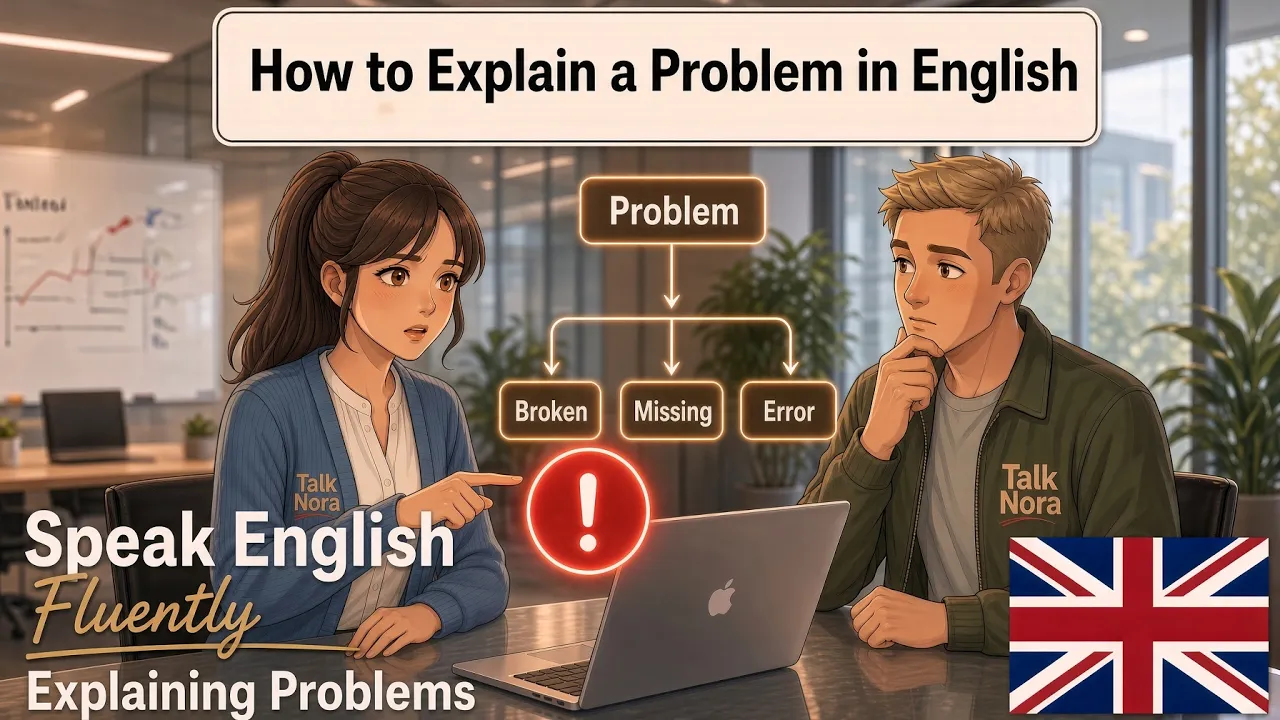
Our topic is how to explain a problem clearly in English.
私たちのトピックは、「英語で問題を明確に説明する方法」です。
Have you ever faced a situation where you wanted to explain a problem?
問題を説明したいのに、どうすればいいか困った経験はありませんか?
But you could not find the right English words.
しかし、適切な英語の言葉が見つからないことがあります。
Have you ever tried to describe something that happened, but the other person could not understand your point?
起きたことを説明しようとしたけれど、相手があなたの意図を理解してくれなかったことはありませんか?
Perhaps you knew exactly what the problem was, but you struggled to explain it in English.
何が問題なのかはよく知っていても、それを英語で説明するのが難しい場合があります。
If you have experienced something like this, today's lesson will be very useful for you.
このような経験をしたことがあるなら、今日のレッスンは非常に役に立つでしょう。
Explaining a problem is an important part of everyday communication.
問題を説明することは、日常のコミュニケーションにおいて重要な部分です。
We need this skill at home, at school, in the workplace, while traveling and even when talking to friends.
このスキルは、家庭内、学校、職場、旅行中、そして友人と話しているときなど、あらゆる場面で必要とされます。
For example, imagine that your mobile phone is not working properly.
例えば、携帯電話が正常に動作していない状況を想像してみてください。
You want to explain the issue to a shopkeeper or a customer service representative.
店主やカスタマーサービス担当者に対して、その問題を説明したいと考えています。
You cannot simply say that something is wrong.
単に「何かおかしい」と言うだけでは不十分です。
You need to explain what happened, when it started and what kind of difficulty you are facing.
何が起こったのか、いつ始まったのか、どのような困難に直面しているのかを説明する必要があります。
that is why learning to explain problems clearly can make your communication more effective so let's understand how we can do this in simple english the first thing you should remember is to start with the main problem do not begin with unnecessary information tell the listener directly what the issue is you can use simple expressions like i have a problem with my internet connection You can also say, there's an issue with my computer.
だからこそ、問題を明確に説明できるようになれば、コミュニケーションがより効果的になります。では、簡単な英語でこれを行う方法を理解しましょう。まず覚えておくべきことは、主要な問題から始めることです。不要な情報で始めず、聴衆に直接何が問題なのかを伝えてください。「インターネット接続に問題があります」といったシンプルな表現を使うことができます。また、「パソコンに不具合があります」とも言えます。
Another useful sentence is, I am facing a problem with my bank account.
別の便利な文は、「銀行口座に問題が発生しています」です。
These sentences are simple, natural and easy to understand.
これらの文はシンプルで自然、そして理解しやすいものです。
When you begin with the main issue, the listener immediately understands what you want to discuss.
主要な問題から話し始めると、聴衆はあなたが何を議論したいのかをすぐに理解します。
Now, let's learn how to describe what happened.
次に、何が起こったかを説明する方法を学びましょう。
After introducing the problem, explain the situation in a little more detail.
問題を導入した後、状況をもう少し詳しく説明してください。
You can use expressions such as, The problem started this morning.
「問題は今朝始まりました」といった表現を使うことができます。
You can say, It happened when I was using my phone.
「スマホを使っているときに発生しました」と言うことができます。
You can also say, I noticed this issue yesterday evening.
また、「昨日の夕方にこの不具合に気づきました」とも言えます。
These expressions help you explain the background of the problem.
これらの表現は、問題の背景を説明するのに役立ちます。
Remember that you do not need complicated English to explain something properly.
何かを適切に説明するために、複雑な英語が必要ではないことを覚えておいてください。
Simple sentences can communicate your message very effectively.
シンプルな文でも、メッセージを非常に効果的に伝えることができます。
The next important step is to explain how the problem affects you.
次の重要なステップは、その問題があなたにどのような影響を与えているかを説明することです。
Sometimes, simply describing the issue is not enough.
場合によっては、単に問題を説明するだけでは不十分なことがあります。
The other person also needs to understand why it is creating difficulty for you.
相手側も、なぜそれがあなたにとって困難を生み出しているのかを理解する必要があります。
For example, you can say, because of this problem, I cannot complete my work.
例えば、「この問題のために、仕事が完了できません」と言うことができます。
You can say, this issue is affecting my daily routine.
「この不具合が私の日常生活に影響を与えています」と言うことができます。
Another useful expression is, I am unable to access my important documents.
別の便利な表現は、「重要なドキュメントにアクセスできません」です。
These sentences explain the effect of the problem.
これらの文は、問題の影響を説明します。
They help the listener understand why you need assistance.
これらは、聴衆がなぜ支援が必要なのかを理解するのに役立ちます。
Now, let's learn some useful English expressions for explaining different problems.
次に、さまざまな問題を説明するための便利な英語表現を学びましょう。
Suppose you are having difficulty understanding something.
例えば、何かを理解することに困難を感じていると仮定します。
You can say, I am having trouble understanding this topic.
「このトピックを理解するのに苦労しています」と言うことができます。
If you cannot complete a task, you can say, I am facing some difficulties completing this work.
タスクを完了できない場合は、「この作業を完了する際にいくつかの困難に直面しています」と言うことができます。
If your plans have changed unexpectedly, you can say, Something unexpected has happened and I need to change my plans.
計画が予期せず変更された場合は、「予期せぬことが起こり、計画を変更する必要があります」と言うことができます。
If you are unable to reach a particular place, you can say, I am having difficulty finding the correct location.
特定の場所に行けない場合は、「正しい場所を見つけるのに困難があります」と言うことができます。
These expressions are useful in different everyday situations.
これらの表現は、異なる日常の状況で有用です。
You can practice them and use them whenever you need them.
練習して、必要 whenever それらを使用することができます。
Now, let's talk about something important.
次に、重要なことについて話しましょう。
When explaining a problem, always try to follow a proper sequence.
問題を説明する際は、常に適切な順序に従おうと心がけましょう。
First, explain what happened.
まず、何があったのかを説明します。
Second, tell the listener when it happened.
次に、それがいつ起きたのかを聞き手に伝えます。
Third, describe the difficulty you are facing.
第三に、あなたが直面している困難を説明します。
Finally, explain what kind of help or solution you need.
最後に、どのような助けや解決策が必要なのかを説明します。
This simple structure makes your explanation organized and understandable.
このシンプルな構造により、あなたの説明は整理され、理解しやすくなります。
For example, imagine that you are unable to attend an important meeting.
例えば、重要な会議に出られない状況を想像してみてください。
You can explain the situation like this.
このような形で状況を説明できます。
I am sorry, but I will not be able to attend today's meeting.
申し訳ありませんが、今日の会議には出席できません。
My bus has been delayed because of heavy traffic.
渋滞のため、バスが遅れています。
As a result, I may reach the office later than expected.
その結果、予想よりも遅れてオフィスに到着する可能性があります。
Could you please share the important points discussed in the meeting?
会議で議論された重要なポイントを共有していただけますか?
Notice how each sentence gives useful information.
各文が有用な情報を提供していることに注目してください。
The listener can understand the situation without asking too many questions.
聞き手は、あまり多くの質問をしなくても状況を理解できます。
This is what clear communication means.
これが明確なコミュニケーションの意味です。
Now, imagine another situation.
では、別の状況を想像してみましょう。
You are working on an important assignment, but your computer suddenly stops working.
重要な課題に取り組んでいますが、パソコンが突然動かなくなりました。
How can you explain this problem to your colleague?
この問題を同僚にどのように説明すればよいでしょうか?
You can say, I am facing a technical problem with my computer.
「パソコンで技術的な問題が発生しています」と言うことができます。
It was working properly a few minutes ago.
数分前までは正常に動作していました。
Suddenly, the screen stopped responding.
突然、画面の反応が止まりました。
I have tried restarting the computer, but the problem is still there.
パソコンを再起動してみましたが、問題は依然として発生しています。
Could you please help me check what is wrong?
何が悪いのかを確認するために手伝っていただけますか?
This is a natural way to explain a technical problem.
これは技術的な問題を説明する自然な方法です。
You do not need advanced vocabulary.
高度な語彙は必要ありません。
You only need the right sentences in the right order.
必要なことは、正しい順序で適切な文を使うことです。
Let's move to another everyday situation.
次に、もう一つの日常の状況に移りましょう。
Imagine that you ordered something online, but you received a different product.
オンラインで何かを購入しましたが、異なる商品が届いたと想像してみてください。
You want to contact customer support.
カスタマーサポートに連絡したい場合です。
You can say, I recently placed an order through your website.
「最近、貴社のウェブサイトを通じて注文を行いました」と言うことができます。
However, I received a different product.
しかし、異なる商品が届きました。
The product I received does not match my original order.
届いた商品は、元の注文と一致しません。
Could you please help me resolve this issue?
この問題を解決するために手伝っていただけますか?
This is a polite and clear way to communicate your problem.
これは問題を伝える丁寧かつ明確な方法です。
Always remember that explaining a problem politely is just as important as explaining it correctly.
問題を丁寧に説明することは、正しく説明することと同じくらい重要であることを常に覚えておきましょう。
Your tone should be calm and respectful.
あなたのトーンは冷静で敬意を持ってください。
Avoid becoming unnecessarily angry while describing a situation.
状況を説明する際に、不必要に怒ったりしないでください。
Speak clearly, give the necessary information and allow the other person to respond.
はっきりと話しかけ、必要な情報を提供し、相手が応答できるようにしましょう。
Now, let's learn how to explain a problem when you do not know its exact cause.
次に、原因が正確にわからない場合に問題を説明する方法を学びましょう。
Sometimes we experience a difficulty but we do not understand why it is happening.
時には困難を経験しますが、なぜそれが起きているのかわからないことがあります。
In such situations, you can use expressions like, I am not sure what caused this problem.
そのような状況では、「この問題の原因が何なのかよくわかりません」といった表現を使うことができます。
You can also say, I do not know why this is happening.
「なぜこれが起きているのかわかりません」と言うこともできます。
Another useful sentence is, everything was working fine earlier but now something seems to be wrong.
別の便利な文として、「以前はすべて正常に動いていたのに、今は何かおかしいようです」というものがあります。
These sentences help you communicate honestly without guessing.
これらの文は、推測せずに誠実にコミュニケーションを取るのを助けてくれます。
You do not need to know every answer before explaining a problem.
問題を説明する前に、すべての答えを知る必要はありません。
You simply need to describe what you have noticed.
単にあなたが気づいたことを説明すればよいのです。
Another useful communication skill is asking for clarification.
もう一つの有用なコミュニケーションスキルは、確認を求めることです。
Sometimes the listener may not understand your explanation completely.
聞き手があなたの説明を完全に理解できない場合もあります。
They may ask you additional questions.
追加の質問をされるかもしれません。
Do not feel nervous in that situation.
その場で緊張する必要はありません。
You can calmly explain the same thing using different words.
異なる言葉を使って、冷静に同じことを説明することができます。
For example, you can say, let me explain it in another way.
例えば、「別の方法で説明させてください」と言うことができます。
You can also say, what I mean is that the problem started after I changed the settings.
また、「私が言いたいのは、設定を変更した後に問題が発生したということです」と言うこともできます。
Another useful expression is, to make it clearer, the main issue is, these expressions help you continue the conversation naturally.
別の便利な表現として、「より明確にするために、主な問題は〜です」があります。これらの表現は、会話を自然に進めるのに役立ちます。
They also show that you are trying to communicate your message properly.
また、あなたがメッセージを適切に伝えようとしていることを示すことにもなります。
Now, let's discuss some common mistakes people make while explaining problems in English.
次に、英語で問題を説明する際に人々が犯しやすい一般的な間違いについて話し合いましょう。
The first mistake is speaking too quickly.
最初の間違いは、話速が速すぎることです。
When we feel nervous, we sometimes speak faster than usual.
私たちは緊張すると、普段よりも速く話してしまうことがあります。
As a result, our words become unclear and the listener may miss important information.
その結果、言葉が不明瞭になり、聞き手が重要な情報を聞き逃す可能性があります。
So, take your time and speak at a comfortable speed.
したがって、焦らず快適なスピードで話し合いましょう。
The second mistake is using too many unnecessary details.
2つ目の間違いは、不必要な詳細を使いすぎることです。
You do not have to explain every small thing that happened.
起きた小さなことすべてを説明する必要はありません。
Focus on the information that is directly related to the problem.
問題に直接関連している情報に焦点を当ててください。
The third mistake is using difficult words when simple words are enough.
3つ目の間違いは、簡単な言葉で十分なのに難しい言葉を使うことです。
Remember, good communication is not about using complicated vocabulary.
覚えておいてください。良いコミュニケーションとは、複雑な語彙を使うことではありません。
It is about making your message easy to understand.
自分のメッセージをわかりやすくすることです。
The fourth mistake is forgetting to explain what you need.
4つ目の間違いは、自分が何を求めているかを説明し忘れることです。
After describing your problem, tell the listener what kind of assistance you are looking for.
問題を説明した後、どのような支援を探しているかを聞き手に伝えてください。
For example, you can ask, could you please guide me?
例えば、「私を導いていただけますか?」と尋ねることができます。
You can say, can you help me find a solution?
「解決策を見つける手助けをしてもらえますか?」と言うことができます。
You can also ask, what should I do next?
また、「次は何をすべきですか?」と尋ねることもできます。
These questions help move the conversation towards a solution.
これらの質問は、会話を解決策へと向けるのに役立ちます。
Now, let's practice a few useful sentences together.
それでは、いくつかの便利な文を一緒に練習しましょう。
Listen carefully and repeat each sentence after me.
注意深く聞いて、私の後で各文を繰り返してください。
I am facing a small problem.
ちょっとした問題に直面しています。
The issue started this morning.
この問題は今朝始まりました。
I am unable to complete this task.
このタスクを完了できません。
Something is not working properly.
何かが正常に動作していません。
I have already tried to fix the problem.
すでに問題を修正しようと試みました。
Unfortunately, the issue is still there.
残念ながら、問題は依然として発生しています。
Could you please help me understand situation?
状況を理解するお手伝いをしていただけませんか?
I would appreciate your assistance.
ご支援をいただければ幸いです。
Let me explain what happened.
何が起きたのか説明させてください。
I hope we can find a solution soon.
早く解決策が見つかることを願っています。
Excellent!
素晴らしい!
Practice these sentences regularly until they become familiar to you.
これらに慣れるまで、定期的に練習してください。
Now, let's learn how to explain a personal problem in a respectful way.
次に、個人的な問題を敬意を持って伝える方法を学びましょう。
Sometimes, we need to explain a situation to a friend, family member or colleague.
時には、友人、家族、または同僚に状況を説明する必要があります。
For example, imagine that you cannot complete a responsibility because you have several other commitments.
例えば、他の用事がいくつかあるために責任を果たせない場合を想像してみてください。
You can say, I wanted to complete this work today but I have some other responsibilities.
「今日はこの仕事を完了したかったのですが、他に責任があります」と言うことができます。
I am finding it difficult to manage everything at the moment.
現在、すべてを管理するのが難しいと感じています。
I may need a little more time to finish this task.
このタスクを終えるのに少し時間がかかるかもしれません。
This is a clear and respectful way to explain your situation.
これはあなたの状況を明確かつ敬意を持って伝える方法です。
You are communicating your difficulty without making unnecessary excuses.
不要な言い訳をせずに、困難を伝えています。
Similarly, if you misunderstand someone's message, you can say, I think there has been a misunderstanding.
同様に、相手のメッセージを誤解した場合、「誤解があるようです」と言うことができます。
Perhaps I did not understand your point correctly.
おそらく、あなたの言っている点を正しく理解できていませんでした。
Could you please explain what you meant?
何を意味したのか説明していただけませんか?
Such expressions help prevent confusion and improve communication.
このような表現は混乱を防ぎ、コミュニケーションを改善するのに役立ちます。
Now, here is another important point.
ここで、もう一つ重要なポイントがあります。
Do not be afraid of making small grammar mistakes while explaining a problem.
問題を説明している間に小さな文法ミスをしても恐れないでください。
Your main goal should be to communicate your message.
主な目標は自分のメッセージを伝えることです。
Of course, learning correct grammar is important.
もちろん、正しい文法を学ぶことは重要です。
However, you should not stop speaking just because you are unsure about one particular sentence.
しかし、特定の文について確信が持てないからといって、話すのをやめてはいけません。
Start with the words you know.
知っている言葉から始めましょう。
Make short sentences.
短い文を作りましょう。
Connect those sentences naturally.
それらの文を自然につなぎましょう。
With regular practice, your ability to explain situations will improve.
定期的な練習により、状況を説明する能力が向上します。
Let me share a simple practice method with you.
簡単な練習方法を共有しましょう。
Every day, choose one ordinary problem or situation and try to explain it in English.
毎日、日常的な問題や状況の一つを選び、英語で説明してみてください。
For example, you can describe why you were late.
例えば、遅刻した理由を説明することができます。
You can explain why your internet connection was not working.
インターネット接続が機能しなかった理由を説明することもできます。
You can talk about a difficulty you experienced while completing your daily work.
日常の作業を完了する際に経験した困難について話すこともできます。
You can even explain a problem related to traveling or shopping.
旅行や買い物に関連する問題についても説明できます。
Try to speak for one or two minutes without stopping.
止まらずに1〜2分間話し続けてみてください。
First, focus on expressing your ideas clearly, gradually.
まず、徐々に自分のアイデアを明確に表現することに集中しましょう。
work on improving your grammar, vocabulary and pronunciation.
文法、語彙、発音を改善するように努めましょう。
You can also record your voice and listen to it later.
自分の声を録音して、後で聞くこともできます。
Notice whether your explanation is easy to understand.
あなたの説明が理解しやすいかどうかを確認しましょう。
Check whether you have included the important details.
重要な詳細を含めているかどうかをチェックしましょう。
This small activity can help you become more comfortable with everyday English communication.
この小さな練習が、日常の英語コミュニケーションに慣れるのに役立ちます。
Always remember that communication is a practical skill.
コミュニケーションは実践的なスキルであることを常に覚えておきましょう。
You cannot improve it only by reading grammar rules.
文法ルールを読むだけでは、それを改善することはできません。
You also need to use English while describing real situations.
実際の状況を説明する際にも、英語を使う必要があります。
The more situations you practice, the more naturally you will be able to express yourself.
あなたが練習する状況が多ければ多いほど、より自然に自分の意見を表現できるようになります。
So, whenever you face a difficulty, think about how you would explain it in English.
したがって、困難に直面したときは、それを英語でどのように説明するかを考えてみましょう。
Try to find simple words, organize your thoughts and speak with confidence.
簡単な言葉を見つけ、考えを整理し、自信を持って話してみてください。
Before we finish today's lesson, let's quickly remember what we have learned.
今日のレッスンを終わる前に、学んだことをさっと振り返りましょう。
We learned how to introduce a problem clearly.
問題を明確に紹介する方法を学びました。
We learned how to describe what happened and when it happened.
何が起きたか、そしていつ起きたかを説明する方法を学びました。
We also learned how to explain the effects of a problem.
また、問題の影響を説明する方法も学びました。
We practiced useful expressions for asking questions and requesting assistance.
質問をしたり支援を求めたりするための便利な表現を練習しました。