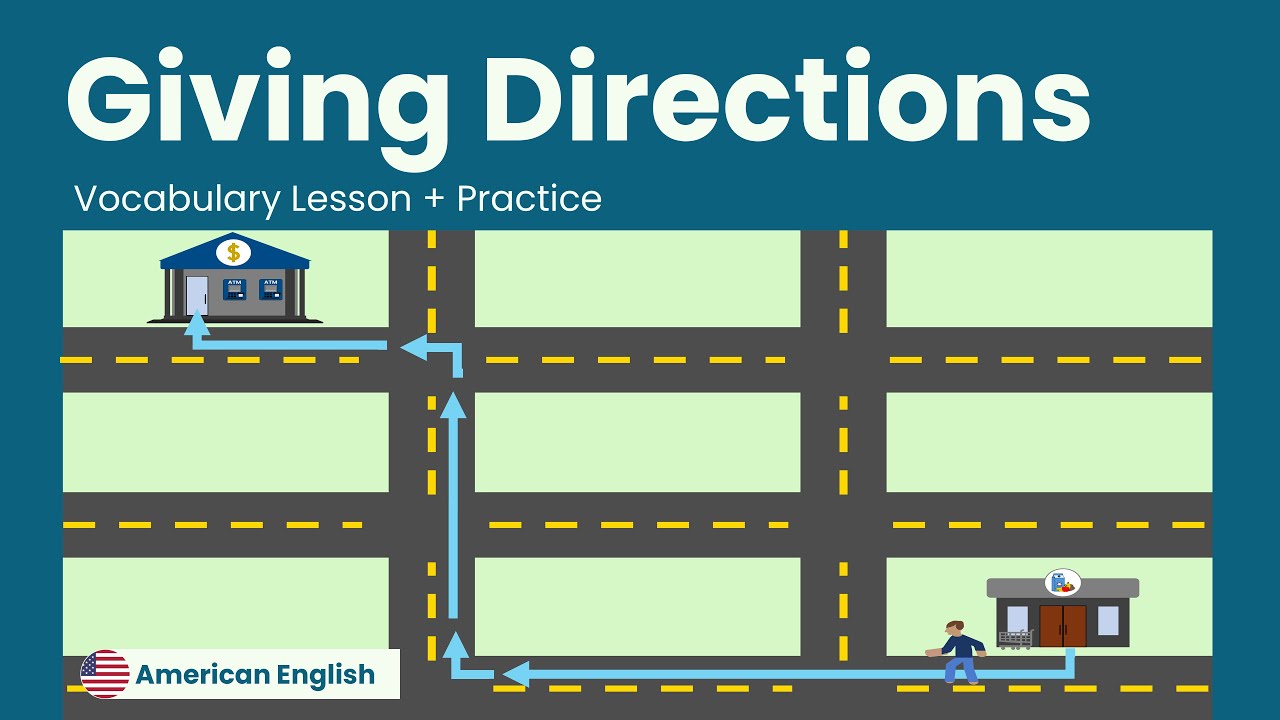
Hi, everybody.
みなさん、こんにちは。
Welcome to www.engvid.com.
www.engvid.comへようこそ。
I'm Adam.
アダムです。
In today's video, I want to show you ways to ask for and give directions.
今日の動画では、道案内の求め方と与え方をいくつかご紹介します。
For example, if you're going to travel to another country; or travelers are in your city, and they need some help — you can help them.
例えば、他の国に旅行に行く場合や、あなたの街にいる旅行者が何か助けを必要としている場合—youは彼らを助けることができます。
It's a little bit of a beginner lesson, so I'll speak a little bit more slowly.
これは少し初心者向けのレッスンですので、少しゆっくり話します。
And I'm going to give you a set of questions, I'm going to give you some vocabulary.
そして、一連の質問と、いくつかの語彙をお伝えします。
And the most important thing you need to understand is the verbs that you're going to have to use in order to help somebody find their way.
あなたが理解する必要がある最も重要なことは、誰かの道順を見つけるのを助けるために使用する動詞です。
And I'll look at those in a moment.
それらはすぐに詳しく見ていきます。
So, we're going to start with the questions.
では、質問から始めましょう。
Now, again, in English — just as in any other language — there are many ways to ask for anything, really.
さて、英語でも他のどの言語でもそうですが、実際には何かを尋ねる方法はたくさんありますよね。
Right?
そうですか?
But these are the main questions that you need to know, in order to get directions and in order to understand someone who needs directions from you.
しかし、これらは道順を得るため、そしてあなたに道順を求める人の言葉を理解するために知っておくべき主な質問です。
So, the more common...
より一般的な…
most common question is: "How can I get to..."
最も一般的な質問は、「…への行き方は?」です。
whatever place it is.
どんな場所であっても。
"How can I get to the train station?", "How can I get to the museum?", "How can I get to" whatever is a tourist attraction in a city; your city, other cities, etcetera.
「駅への行き方は?」「博物館への行き方は?」「都市にある観光名所、あなたの都市、他の都市など、あらゆる場所への行き方は?」など。
Or, more direct: "Where is something?"
あるいは、より直接的に:「…はどこですか?」
Now, a little bit, you have to keep in mind that if you're in certain countries...
さて、少し注意が必要なのは、特定の国にいる場合…
for example, in Canada, you can't really go up to a person and say: "Where is the train station?"
例えば、カナダでは、人に近づいて「駅はどこですか?」と言うのはあまり良くありません。
Canadians are a little bit more polite, I guess you could say; a little bit softer, so it's better to have an indirect question, like this one: "Can you tell me where something is?"
カナダ人は少し丁寧で、柔らかい傾向があるので、間接的な質問、例えば「〜はどこですか教えてもらえますか?」の方が良いでしょう。
Or: "Can you tell me how to get to?"
または:「〜への行き方を知っていますか?」
Now, very important to remember: If you're asking a direct question, like just the question: "Where is the place?"
ここで覚えておくべき非常に重要な点:直接質問、例えば単に「その場所はどこですか?」と聞いている場合…
If you're asking an indirect question, this is actually the question word: "Can" or "Do".
間接質問をしている場合、実際には疑問詞は「Can」または「Do」です。
So, this is now turned into a noun clause.
つまり、これは名詞節に変換されます。
Right?
そうですか?
So, then: "where something is", and the "is" comes after the place you're going to.
したがって、「where something is」となり、「is」は行く先の後に来ます。
The "is" comes before the place you're going to, so make sure you understand the correct structure of the question.
「is」は行く先の前に来るので、質問の正しい構造を理解してください。
And...
そして…
but, ideally, use the indirect question; it's a little bit softer, a little bit more polite.
理想的には、間接質問を使用することをお勧めします。それは少し柔らかく、より丁寧だからです。
So: "Can you tell me how to get to the train station?", "Do you know where the train station is?"
つまり:「駅までどう行けばいいですか?」、「駅はどこですか?」
Or you can use both of these clauses with either question.
または、これらの節をどちらの質問とも組み合わせて使うことができます。
Now, another way to ask is: "What's the fastest way to get to...?"
また別の尋ね方として:「一番早い行き方は何ですか?」があります。
You don't actually even have to use: "to get".
実際には「~へ行く(to get)」を使わなくても構いません。
"What's the fastest way to the train station?"
「駅への一番早い行き方は何ですか?」
is okay.
でも大丈夫です。
But "to get" makes it a little bit more clear.
しかし「~へ行く」を使うと、少し明確になります。
And when you ask someone: "What's the fastest way?"
そして誰かに:「一番早い行き方は?」と尋ねると、
they understand that you want directions, and they will explain to you how to get to the place.
相手はあなたが道順を知りたいことを理解し、その場所への行き方を説明してくれます。
Now, very, very important that you study these words.
さて、これらの単語をよく勉強することが非常に重要です。
Okay?
わかりましたか?
All of these are prepositions of place.
これらはすべて場所を表す前置詞です。
You must understand how they are used and when they are used in order to understand directions.
道順を理解するためには、それらがどのように、いつ使われるかを理解する必要があります。
So, when someone is explaining it to you, they're going to use all of these words; and a few other things that I'll mention in a moment.
誰かがあなたに説明するとき、これらすべての言葉を使い、あとで少し触れる他のいくつかのことを使います。
So, I kind of ran out of room, so I put "past" at the top.
スペースが足りなくなったので、「past(~の向こう側)」を上部に置きました。
But "past": "Go past the first building, and the second building is the one you want."
「past」:「最初の建物の先を進んでください。2番目の建物があなたの目的地です。」
So, "past" means, like, after — that's one.
つまり、「past」は「~の後ろ(after)」という意味です。これが一つ目です。
"At or on the corner of A Street and B Street".
"A通りとB通りの角"。
"At the corner" means general area; "on the corner" means a specific corner.
"角(at the corner)"は一般的なエリアを指し、「角(on the corner)」は特定の角を指します。
But, again, that's a different lesson altogether.
しかし、これもまた全く別のレッスンです。
Both of these will work just fine.
この二つはどちらも問題なく機能します。
"Kitty corner".
"kitty corner(斜め向かい)"。
So, "kitty corner" is basically when you have a situation.
つまり、「kitty corner」というのは、基本的にある状況での話です。
So, you...
つまり、あなたは…
you have an intersection.
交差点を持っています。
Okay?
わかりましたか?
If something is here, this is "kitty corner" — the opposite corner.
もし何か物がここにあるなら、これは「kitty corner(斜め向かい)」— 対角線の向こう側の角です。
This is simply across the street.
これは単に道路の向こう側です。
This is "kitty corner", when you're going in a diagonal.
これは「kitty corner(斜め向かい)」で、斜めに移動する場合です。
Okay?
わかりましたか?
So, that's important to remember.
なので、それを覚えておくことが重要です。
Not everybody uses this particular expression, but some people might use it; it's good to understand it.
全員がこの特定の表現を使うわけではありませんが、一部の人々は使うかもしれません;理解しておくと良いでしょう。
"Next to", so "next to"; "beside" — same idea.
"next to(隣り)"、つまり「next to」;「beside(そばに)」— 同じ考えです。
"Near".
"Near(近く)"。
"Near" is a little bit vague, so try not to use: "near" or "close to", but sometimes it's good enough, and you'll understand why in a moment.
"Near"は少し曖昧なので、「near」や「close to(近くに)」を使わないように心がけてください。ただし、時にはそれで十分であり、理由については後ほどご理解いただけます。
"Not far from" — same.
"Not far from(遠くない)"— 同じです。
"In front of", "in front of", "behind", obviously.
"In front of(前に)"、"In front of(前に)"、"Behind(後ろに)"、もちろん。
"Across the street from".
"Across the street from(道路の向こう側に)"。
So, "across the street from" something.
つまり、何か物の「Across the street from(道路の向こう側に)」。
"Between the bank and the library is the building you're looking for."
"銀行と図書館の間にあるのが、あなたが探している建物です。"
So, "between" two things.
つまり、2つのものの「間」です。
Make sure you always remember: "Between", "and" go together, when you're talking about relationship of place.
常に覚えておいてください:場所の関係について話すとき、「Between(~の間)」と「and(と)」はセットで使います。
"On the left" or "on the right".
「左側」または「右側」。
So: "If you're walking down the street, you will see that store on your right; you will see that store on your left", depending where it is.
例えば、「通りを歩いていると、その店はあなたの右側にあります;あるいは左側にあります」というように、場所によって変わります。
Where are we?
さて、ここはどこでしたっけ?
So, now, if you come to North America, for example — Canada, the US — most of the cities here are based on a grid.
では、例えば北米(カナダや米国)に行くと、多くの都市がグリッド状の街区配置に基づいています。
A "grid" means that streets go one, two, three, four; one, two, three, four.
「グリッド」とは、道路が1、2、3、4…と一直線に伸びていることを意味します。
It's very much like a Tic-Tac-Toe map; looks like.
まるで『三目並べ』のマップのようになっています。
In Europe, streets go, like, bendy and winding, and all over the place.
ヨーロッパでは、道路が曲がりくねったり、あちこちに広がっていたりします。
So, in Europe, they don't really use: "to the north", "to the east", "west", etcetera.
そのため、ヨーロッパでは「北へ」「東へ」「西へ」などの方向指示をあまり使いません。
In North America, they use this a lot because it's much easier to explain: "Go north on Fifth Avenue, head east on Eighth Street, and you'll get to where you're going."
北米ではこれをよく使います。説明がずっと簡単だからです。「第五番街を北へ進み、第八番街を東へ進むと、目的地に着きます。」といった具合です。
So, we use: "north", "east", "south", and "west" a lot, so make sure you understand how these directions work.
私たちは「北」「東」「南」「西」をよく使うので、これらの方向がどのように機能するかを理解してください。
Mainly, what you need to understand is: Where is north?
主に理解すべきことは、「北がどこか」です。
So, when you're standing on a street, always try to get an idea of: "Where is north?"
ですから、通りに立ったら、常に「北がどちらか」を把握しようとする癖をつけてください。
and then you know all the other ones.
そうすれば、他の方向もすべてわかります。
It's...
これは…
this is called: "orientation".
これを「オリエンテーション(方位認識)」と呼びます。
So, when you go to a new city, become oriented with the layout of the...
新しい都市に行ったときは、地図やグリッド状の配置に慣れてください。
of the map; of the grid.
地図やグリッドのレイアウトに慣れることです。
Always get a map, figure out: "Which way is north?"
必ず地図を手に入れ、「北がどちらか」を確認してください。
and then you'll start to understand.
そうすると、理解し始めます。
So, "to the north" means in the direction of north, "on the west side".
つまり、「北へ」は北の方向へ、「西側」は西のサイドという意味です。
So, sometimes somebody will say something is "at the intersection", but you want to be more specific, so they'll...
時々、誰かが「交差点にあります」と言うことがありますが、より具体的に言いたい場合、彼らは…
they will tell you: "It's on the northwest side of the intersection", because there are four.
「交差点の西北側にあります」と教えてくれます。なぜなら、交差点には4つの側面があるからです。
So, if they want to specify...
もし彼らが指定したい場合…
For example, if you're looking for a store, but the store doesn't have a sign on the street — it's inside a building, for example — so you'll say: "The store is on the buil-...
例えば、お店を探しているのですが、通りの看板がない場合(ビルの中にあるなど)、あなたはこう言います:「その店はビルの…
is inside the building on the northwest corner, in the basement.
地下階にある、西北角のビルの中にあります。
Go there, and you'll find it no problem."
そこへ行けば、問題なく見つかりますよ。」
Okay?
わかりましたか?
So, you must understand all of these words in order to give and receive instructions and directions.
指示や道順を受け渡しするには、これらの言葉をすべて理解する必要があります。
Now, most importantly, you have to get comfortable with the verbs.
最も重要なのは、動詞に慣れておくことです。
So, let's look at those next.
では、次にそれらを見ていきましょう。
Okay.
はい。
So, now, we actually get to the hard part; this is where people sometimes get lost.
さて、ここからが難しい部分です。ここで人々が混乱することがあります。
Because, remember: If you are giving instructions, you can stick to one or two verbs, and just use it over and over again, and people will understand.
Remember: 指示を出す場合は、動詞を一つか二つに絞って繰り返し使えば、相手は理解してくれます。
But when you are the one asking for instructions, and you're asking a native-English speaker, there's many ways to describe or to give directions to describe how to get somewhere.
しかし、あなたが指示を求める側で、ネイティブスピーカーに尋ねる場合、どこへ行くかを説明する方法はたくさんあります。
So, be a little bit more aware of all the different ways we can actually give you directions.
したがって、私たちが実際に道順を教えてくれる様々な表現に少し注意を向けてください。
So, we're going to look at verbs.
では、動詞を見ていきましょう。
Now, mostly, we're going to start with anything that is "walkable".
まず、主に「歩いて行ける」場所から始めます。
What this means is you can actually walk to the place; it's not very far.
これは、実際にその場所まで歩けるという意味で、それほど遠くありません。
Some places are too far; you may need to take a bus, or a subway, or a taxi, etcetera.
一部の場所は遠すぎるため、バスや地下鉄、タクシーなどを利用する必要があるかもしれません。
So, if it's walkable, just give them very simple directions.
したがって、もし歩いて行ける距離なら、非常にシンプルな道順を教えてあげてください。
"Head" or "go".
「Head(進行方向へ進む)」または「go(行く)」。
"Head" and "go" are both verbs, and they essentially mean the same thing.
「Head」と「go」はどちらも動詞であり、本質的に同じ意味を持ちます。
"Head straight" — just basically go straight; means the same idea.
「Head straight(一直線に進む)」— 基本的にはただ真っ直ぐ進むことで、同じ考えを表します。
"Head up" or "down", and the name of the street, if you know the name.
「Head up」または「down」、そして通り名(名前がわかる場合)。
Now, generally speaking — and again, in North America, where we have the grids — everything is in a line.
一般的に言及すると— そして再び北米のグリッド状の街並みにおいて— すべてが一直線上にあります。
"Up" means "north", "down" means "south".
「Up」は「北」を意味し、「down」は「南」を意味します。
We don't really have "east" or "west".
私たちは実際には「東」や「西」をよく使いません。
"East" or "west" — say: "east" or "west".
「East」または「west」— 「east」または「west」と言ってください。
So: "Head up Fifth Avenue", "Head down Fifth Avenue", depending on the direction you're going.
つまり:「Head up Fifth Avenue(ファifth・アベニューを北へ進む)」、「Head down Fifth Avenue(ファifth・アベニューを南へ進む)」など、進んでいる方向によります。
Or: "Go down", "go up", "Head north on Fifth Street" or "Main Street".
または:「Go down」、「go up」、「Head north on Fifth Street(ファifth・ストリートで北へ進む)」または「Main Street(メイン・ストリート)」。
Again, "north", "south", "east", "west".
再び、「north(北)」、「south(南)」、「east(東)」、「west(西)」。
"Go past".
「Go past(〜を通り過ぎる)」。
"Go past the National Bank building", which you'll...
「Go past the National Bank building(国立銀行ビルを通り過ぎる)」、そこは…
you'll see easily because it's a landmark, but I'll talk about that in a second.
ランドマークなので簡単に目に見えるでしょうが、それについては後で話します。
So, "head" or "go" — very commonly used.
つまり、「head」または「go」— とてもよく使われます。
Some people also use the verb: "follow".
また、「follow(〜に従う)」という動詞を使う人もいます。
So: "Follow this street until you get to", but, again, that's a little bit more tricky because...
つまり:「Follow this street until you get to(この通りに沿って〜に着くまで)」ですが、これも少し複雑です。なぜなら…
especially if...
特にもし…
if streets are straight and all that, that's fine.
通りが真っ直ぐであれば問題ありません。
This is a little bit more common in non-grid cities.
これはグリッド状でない都市の方が少し一般的です。
So: "Follow this street" because this street bends, so just stay on the street and follow the bends until you get to somewhere.
つまり:「Follow this street(この通りに沿ってください)」、なぜならこの通りは曲がるので、通りに沿って曲がり角をたどってどこかに着くまで進んでください。
"Follow until", and then whatever is going to come up.
「Follow until(〜に沿って進んで)」、そして次に現れるものへ。
Then there's: "turn".
次に「turn(曲がる)」があります。
You can: "turn left", "turn right", "turn eastward" — means in the direction of east — "turn south".
あなたは:「turn left(左折)」、「turn right(右折)」、「turn eastward(東へ曲がる)」— 東の方向へ — 「turn south(南へ曲がる)」ができます。
You can say: "south" or "southward"; "east" or "eastward".
あなたは:「south」または「southward」;「east」または「eastward」と言うことができます。
Both okay.
どちらも問題ありません。
Now, you could also say: "Take a right", "make a left".
また、次のようにも言えます:「Take a right(右折)」、「make a left(左折)」。
These are only for left and right, that's why I put them in brackets.
これらは左と右のみのものであり、そのため括弧に入れました。
You can't say: "take south", "take eastward" — that doesn't work.
「take south」、「take eastward」とは言えません— それは機能しません。
"Take a right" basically means turn right.
"右折する"とは、基本的に右に曲がるという意味です。
"Make a left" basically means turn left.
"左折する"とは、基本的に左に曲がるという意味です。
This is especially for driving.
これは特に運転の際に使用されます。
So, if you're driving and somebody is sitting next to you and giving you instructions, they'll say: "Okay.
例えば、あなたが運転していて、隣に座っている人が指示を出している場合、その人は次のように言うでしょう。「はい。」
Take a left over there.
そこで左折してください。」
Make a right at the next street" or "turn" — also okay.
次の交差点で右折するか、または「曲がる」と言っても問題ありません。」
Now, if the place you're going to is not walkable; is not within walking distance, then you have to give some more instructions.
さて、目的地が徒歩圏内にない場合、つまり歩ける距離ではない場合は、さらに詳細な指示を出す必要があります。
So, "Take the number one line" or "number ten line", or whatever the...
例えば、「1番線の電車に乗る」や「10番線の電車に乗る」、あるいは地下鉄の路線名がある場合はそれを使います。
if there's a name for the subway line.
地下鉄の路線名がある場合など。
Generally speaking, when we talk about "line", we talk about...
一般的に、「路線(ライン)」という言葉を使う場合、それは…
we're talking about subway or train, if it's above ground.
地下鉄や地上を走る電車を指しています。
"Take the number three bus".
"3番バスの乗車"。
I should put a "the" here.
ここでは冠詞の "the" を付けるべきです。
"Take the number three bus".
"3番バスの乗車"。
Buses have numbers, so we don't really use lines; we just say the number of the bus.
バスには番号があるので、通常は「路線」という言葉を使わず、単にバスの番号だけを言います。
Now, you have to be very careful about giving directions with bus or subway because in some countries, you might not be able to read the signs.
さて、バスや地下鉄の案内をする際は注意が必要です。なぜなら、国によっては標識を読めない可能性があるからです。
If you're coming to an English-speaking country — no problem; if you're going to other places, but are still using English to get around, you might not know the names.
英語圏の国に来る場合は問題ありませんが、他の場所へ行き、移動のためにまだ英語を使っている場合、名前がわからないことがあります。
So, it's helpful if somebody tells you how many stops to go, more or less.
そのため、大体何駅行くかを教えてもらうと便利です。
So: "Go five stops.
例えば、「5駅進んでください」。
Get off at the name of the station", if you know it.
もし駅の名前がわかるなら、その駅で降りてください。」
Okay?
わかりましたか?
Notice we use: "go" a lot.
ここで「go(進む/行く)」という動詞をよく使っていることに注目してください。
Now, sometimes you'll come to an intersection or you'll come to a particular place where you're on the wrong side — just "cross the street" or "go across the street", "go across the intersection", "go across the park", whatever the case may be.
さて、時には交差点や、間違った側に来てしまった特定の場所に到達することがあります。そんなときは、単に「道を渡る」か、「通りを横断する」、「交差点を渡って進む」、「公園を横断して進む」などと言えばよいです。
Now, it's also very important that you understand the differences between street names.
また、道路名の違いを理解することも非常に重要です。
We can say: "Avenue", "Road", "Street", "Boulevard".
私たちは「Avenue(大通り)」「Road(道)」「Street(通り)」「Boulevard(広幅員道路)」といった言葉を使うことができます。
These are the main names of streets.
これらは主な道路名の種類です。
There are smaller streets that you don't really need to worry about at the moment; these are the main ones you're going to come across.
現在気にする必要はないような小さな通りもありますが、主に遭遇するのはこれらの主要な通りです。
So: "Turn...
例えば、「〜で右折…」
turn south at Fifth Avenue", "turn left on Main Street".
フィフス・アベニューで南に曲がる」、「メイン・ストリートで左折する」などと言います。
You can also say: "onto".
また、「onto(〜の上に)」という言葉も使うことができます。
So, this is, again, more for driving: "Turn onto Main Street and go straight" or "go east", whatever the case may be.
これも again、主に運転の場合に使われます。「メイン・ストリートに入り、一直線に進む」や、「東に進む」などと言います。
Now, sometimes they're going to give you relative directions.
さて、時には相対的な方向を示すことがあります。
They're going to tell you how to get to one place; and then from this place, they're going to give you further directions.
まずある場所への行き方を教えてもらい、その後、その場所からさらに先の指示が出されます。
So: "When you get to the intersection", "when you get to the mall", "when you get to the park, turn left", "go straight", "head down", "look for".
例えば、「交差点に着いたら」、「モールに着いたら」、「公園に着いたら左折」、「一直線に進む」、「下っていく」、「目印を探す」などと言います。
"Look for" is very, very useful because now we're introducing "landmarks".
"Look for"は非常に有用です。ここでは「ランドマーク」を紹介しています。
"Landmarks" are things, or objects, or situations that are very easy to see; very recognizable.
「ランドマーク」とは、視認性が高く、非常に認識しやすいもの、物体、または状況を指します。
The people who live in a place — everybody knows what this place is, so it's easy to point out.
その地域に住んでいる人々は皆、その場所がどこにあるかを知っているため、指し示すのが簡単です。
Now, "landmarks" can be "buildings"; and they're big, so they're easy to see.
「ランドマーク」には「建物」が含まれます。建物は大きいため、遠くからでも見えやすいのです。
You can see them from a distance.
それらは遠くからでも見ることができます。
They can be "bridges" in some places, like in San Francisco: "The Golden Gate Bridge" is a landmark.
場所によっては「橋」もランドマークになります。例えばサンフランシスコでは、「ゴールデンゲートブリッジ」がランドマークです。
They can be "monuments" — these are special constructions, like, to remember...
「記念碑」になることもあります。これらは特別な建造物で、例えば…
to remember a war, or fallen soldiers; or just a special person from history, like a president or a local hero, etcetera.
戦争や戦没者、あるいは大統領や地元の英雄といった歴史上の特別な人物を記憶するために建てられたものです。
It could be "statues", it could be "plaques", it could be all kinds of things.
「像」であったり、「銘板」であったり、あらゆる種類のものが考えられます。
Some "parks" are "landmarks".
一部の「公園」も「ランドマーク」です。
If they're in the middle of a city — there's only one big park — that's the one people will relate their directions to, or any other landmark.
もしそれが市の中心部にあり、大きな公園が一つしかない場合、人々は道順の説明をする際に、その公園や他のランドマークを基準にします。
So: "When you get to the park, cross the park and on the other side you will see", and then...
つまり、「公園に着いたら、公園を渡って向こう側に行くと…」と続き、そして…
"So, if you're looking for, then you will see this", or "look for the tall, brown building; and next to that is the place you're looking for", for example.
「探しているものが見えるはずです」や、「背の高い茶色の建物を探してください。その隣が目当ての場所です」などと言います。
Or if you know that a place is a little bit difficult to get to, what you want to do is get the person moving in the general direction on the way to the place, and then say: "Once you get to the park, ask...
あるいは、目的地まで少し分かりにくい場合、まずその方向へ進んでもらってから、「公園に着いたら、もう一度…
ask again.
聞き直してください」と言います。
Ask somebody else for directions."
誰かにまた道順を聞いてください」。
Because if I try to explain to you from here what to do after you get to the park, you will be very confused.
なぜなら、ここで説明しても、公園に着いてからの行動を説明しようとしても、あなたは非常に混乱してしまうからです。
I'll just tell you: "Get to the park", then somebody else will tell you what to do next.
私はただ、「公園まで行ってください」と伝え、その後、誰かが次の行動を教えてくれます。
That's the easiest way to do it.
それが一番簡単なやり方です。
And when we...
そして、私たちが…
some people say: "You can't miss it."
「見落とすことはあり得ません」と言う人がいます。
Now, people have a lot of problem with this word.
さて、この言葉について混乱する人が多いのです。
"Miss" doesn't mean, like, something like: "Oh, you're longing for.
「miss」は、例えば「ああ、恋しい」といった意味ではありません。
It's gone from you; you...
あなたから離れてしまったこと;あなたが…
you miss it".
その人を恋しく思う」ということです。
If your friend goes away for...
もしあなたの友人が…
from your city and you "miss" your friend — that's one thing.
あなたの街を離れて、あなたがその友人を「恋しく思う」場合—それは別の話です。
Here, "miss" means not notice.
ここでは、「miss」は「気づかない」という意味です。
So: "You can't miss it" means it's impossible not to see it.
つまり、「見落とすことはあり得ません」とは、それを見ないでいることが不可能だということです。
And, again, we're talking about "landmarks".
そして、またしても私たちは「ランドマーク」について話しています。
So: "If you go to the park, go across the park; and you'll see a big, brown building.
つまり、「公園に行き、公園を渡ると、大きな茶色い建物が見えるでしょう。
You can't miss it.
そこは見落としようがありません。
Once you see that big, brown building — go to the left of it", "go to the right of it", "go behind" wherever the situation may be.
その大きな茶色い建物が見えたら—状況に応じて、その左側へ進んだり、右側へ進んだり、背後へ回ったりしてください。
Okay?
わかりましたか?
So, there.
では、ここです。
There you go.
行ってみましょう。
Those are some key vocabulary and key expressions that you need in order to give and understand directions.
これらは、道順を伝えたり理解したりするために必要な重要な語彙と表現です。
Okay?
わかりましたか?
Very important if you want to go traveling.
旅行に行く予定がある方には非常に重要です。
And keep in mind: If you're going to tourist areas anywhere in the world, people there speak English, so they will be giving you these kinds of instructions.
覚えておいてください:世界中の観光地に行くと、そこで英語を話す人々がいます。彼らはこのような指示を出してくれます。
They've practiced doing this for the tourists.
彼らは観光客向けにこれを練習しています。
Okay?
わかりましたか?
And so that's it for today; just to get you started on directions.
今日はこれで終わりです。道順について学び始めるための導入でした。
If you have any questions about any of this, please go to www.engvid.com, and there's a comment section you can ask me questions.
これらについて質問がある場合は、www.engvid.com にアクセスして、コメント欄で私に質問してください。
I'll be happy to give you whatever answers I can.
できる限りお答えします。
There's also a quiz that you can try to understand what we learned here today.
また、今日学んだ内容を理解するためのクイズもあります。ぜひ挑戦してみてください。
And that's it.
以上です。
I hope you like this video.
このビデオをお気に入りにしていただけると嬉しいです。
If you did, please give me a like.
気に入っていただけたら、いいね(高評価)をお願いします。
Don't forget to subscribe to my channel, and ring the bell for notifications of future videos.
チャンネル登録を忘れずに、今後の動画の通知を受け取るためにベルアイコンも押してください。
And come back next time; I'll give you more useful tips to improve your English journey.
次回もお越しください。英語学習をさらに上達させるための有用なヒントをお伝えします。
I'll see you again soon.
またすぐにお会いしましょう。
Bye.
さようなら。