Hi, everybody.
안녕하세요, 여러분.
Welcome to www.engvid.com.
www.engvid.com에 오신 것을 환영합니다.
I'm Adam.
아담이라고 합니다.
In today's video, I want to show you ways to ask for and give directions.
오늘 영상에서는 길 묻고 길 알려주는 방법을 보여드리려고 합니다.
For example, if you're going to travel to another country; or travelers are in your city, and they need some help — you can help them.
예를 들어 다른 나라로 여행을 가거나, 당신의 도시에 여행객들이 와서 도움이 필요할 때—you가 그들을 도와줄 수 있습니다.
It's a little bit of a beginner lesson, so I'll speak a little bit more slowly.
초급자 수준의 수업이라서 조금 더 천천히 말하겠습니다.
And I'm going to give you a set of questions, I'm going to give you some vocabulary.
질문 세트와 몇 가지 어휘를 드리겠습니다.
And the most important thing you need to understand is the verbs that you're going to have to use in order to help somebody find their way.
여러분이 이해해야 할 가장 중요한 것은 누군가의 길을 찾아주는 데 사용해야 하는 동사들입니다.
And I'll look at those in a moment.
잠시 후에 그것들을 살펴보겠습니다.
So, we're going to start with the questions.
그러니 질문부터 시작하겠습니다.
Now, again, in English — just as in any other language — there are many ways to ask for anything, really.
다시 말하지만, 영어뿐 아니라 다른 어떤 언어에서도 정말 무언가를 묻는 방법은 많습니다.
Right?
맞죠?
But these are the main questions that you need to know, in order to get directions and in order to understand someone who needs directions from you.
하지만 길 안내를 받고 당신에게 길 안내를 요청하는 사람을 이해하려면 이 주요 질문들을 알아야 합니다.
So, the more common...
더 흔한...
most common question is: "How can I get to..."
가장 흔한 질문은 "How can I get to..."(~에 가는 법이 어떻게 되나요?)입니다.
whatever place it is.
어떤 장소든 상관없이요.
"How can I get to the train station?", "How can I get to the museum?", "How can I get to" whatever is a tourist attraction in a city; your city, other cities, etcetera.
"How can I get to the train station?"(기차역에 가는 법이 어떻게 되나요?), "How can I get to the museum?"(박물관에 가는 법이 어떻게 되나요?), 도시의 관광지나 당신의 도시, 다른 도시 등 무엇이든 "How can I get to"(~에 가는 법이 어떻게 되나요?)라고 할 수 있습니다.
Or, more direct: "Where is something?"
또는 더 직접적으로: "Where is something?"(~은 어디에 있나요?)
Now, a little bit, you have to keep in mind that if you're in certain countries...
약간 주의해야 할 점은 특정 국가에 있을 경우...
for example, in Canada, you can't really go up to a person and say: "Where is the train station?"
예를 들어 캐나다에서는 사람에게 다가가서 "Where is the train station?"(기차역이 어디예요?)라고 말하는 것은 실제로 잘 통하지 않습니다.
Canadians are a little bit more polite, I guess you could say; a little bit softer, so it's better to have an indirect question, like this one: "Can you tell me where something is?"
캐나다 사람들은 조금 더 예의 바르고, 부드럽다고 할 수 있겠죠. 그래서 다음과 같은 간접 질문을 하는 것이 좋습니다: "Can you tell me where something is?"(~이 어디인지 알려주실 수 있나요?)
Or: "Can you tell me how to get to?"
또는: "Can you tell me how to get to?"(~에 가는 법을 알려주실 수 있나요?)
Now, very important to remember: If you're asking a direct question, like just the question: "Where is the place?"
중요하게 기억해야 할 점: 직접 질문을 하고 있다면, 단순히 "Where is the place?"(그 곳은 어디예요?)라는 질문만 하는 것입니다.
If you're asking an indirect question, this is actually the question word: "Can" or "Do".
간접 질문을 하고 있다면, 이는 실제로 질문 단어인 "Can" 또는 "Do"입니다.
So, this is now turned into a noun clause.
이제 이것이 명사절로 바뀌었습니다.
Right?
맞죠?
So, then: "where something is", and the "is" comes after the place you're going to.
그러면: "where something is"이고, "is"는 당신이 갈 장소 뒤에 옵니다.
The "is" comes before the place you're going to, so make sure you understand the correct structure of the question.
"is"는 당신이 갈 장소 앞에 옵니다. 그러니 질문의 올바른 구조를 이해했는지 확인하십시오.
And...
그리고...
but, ideally, use the indirect question; it's a little bit softer, a little bit more polite.
이상적으로는 간접 질문을 사용하십시오; 조금 더 부드럽고 예의 바릅니다.
So: "Can you tell me how to get to the train station?", "Do you know where the train station is?"
"기차역 가는 법을 알려주실 수 있나요?", "기차역이 어디에 있는지 아시나요?"
Or you can use both of these clauses with either question.
또는 두 가지 절을 어떤 질문과도 함께 사용할 수 있습니다.
Now, another way to ask is: "What's the fastest way to get to...?"
다른 질문 방법은 다음과 같습니다: "가장 빠른 길은 무엇인가요?"
You don't actually even have to use: "to get".
사실 '가는'이라는 표현을 사용하지 않아도 됩니다.
"What's the fastest way to the train station?"
"기차역까지 가장 빠른 길이 뭐예요?"
is okay.
이렇게 말해도 괜찮습니다.
But "to get" makes it a little bit more clear.
하지만 '가는'을 추가하면 조금 더 명확해집니다.
And when you ask someone: "What's the fastest way?"
누군가에게 "가장 빠른 길이 뭐예요?"라고 물을 때,
they understand that you want directions, and they will explain to you how to get to the place.
상대방은 당신이 길을 원한다는 것을 이해하며, 그 장소로 어떻게 가야 하는지 설명해 줄 것입니다.
Now, very, very important that you study these words.
이 단어들을 꼭 공부하는 것이 매우 중요합니다.
Okay?
알겠습니까?
All of these are prepositions of place.
이 모든 것들은 위치를 나타내는 전치사입니다.
You must understand how they are used and when they are used in order to understand directions.
길을 이해하려면 이 단어들이 어떻게 그리고 언제 사용되는지 반드시 이해해야 합니다.
So, when someone is explaining it to you, they're going to use all of these words; and a few other things that I'll mention in a moment.
누군가가 당신에게 설명할 때, 이 모든 단어들과 잠시 후 언급할 몇 가지 다른 것들을 사용할 것입니다.
So, I kind of ran out of room, so I put "past" at the top.
공간이 부족해서 'past(지나)'를 맨 위에 배치했습니다.
But "past": "Go past the first building, and the second building is the one you want."
'past'의 예: "첫 번째 건물을 지나면, 두 번째 건물이 찾는 곳입니다."
So, "past" means, like, after — that's one.
즉, 'past'는 'after(뒤에)'와 같은 의미입니다.
"At or on the corner of A Street and B Street".
"A번 거리와 B번 거리의 모퉁이에"
"At the corner" means general area; "on the corner" means a specific corner.
"모퉁이에(at the corner)"는 일반적인 지역을 의미하고, "모퉁이에(on the corner)"는 특정 모퉁이를 의미합니다.
But, again, that's a different lesson altogether.
하지만 다시 말하지만, 이는 완전히 다른 수업 주제입니다.
Both of these will work just fine.
두 표현 모두 잘 통용됩니다.
"Kitty corner".
"kitty corner(대각선 맞은편 모퉁이)"
So, "kitty corner" is basically when you have a situation.
즉, 'kitty corner'는 기본적으로 교차로 상황을 말할 때 사용합니다.
So, you...
그런데, 당신은...
you have an intersection.
교차로가 있다고 가정해 봅시다.
Okay?
알겠습니까?
If something is here, this is "kitty corner" — the opposite corner.
만약 무언가가 여기에 있다면, 이것이 바로 'kitty corner' — 반대쪽 모퉁이입니다.
This is simply across the street.
이는 단순히 도로 건너편입니다.
This is "kitty corner", when you're going in a diagonal.
대각선으로 이동할 때 이를 'kitty corner'라고 합니다.
Okay?
알겠습니까?
So, that's important to remember.
그러니 이것을 기억하는 것이 중요합니다.
Not everybody uses this particular expression, but some people might use it; it's good to understand it.
모든 사람이 이 특정 표현을 사용하는 것은 아니지만, 일부 사람들은 사용할 수 있으므로 이해해 두는 것이 좋습니다.
"Next to", so "next to"; "beside" — same idea.
"옆에(next to)", 즉 'next to'; 'beside(곁에)' — 같은 개념입니다.
"Near".
"가까이(near)"
"Near" is a little bit vague, so try not to use: "near" or "close to", but sometimes it's good enough, and you'll understand why in a moment.
'near'는 다소 모호하므로, 'near'나 'close to(근처에)' 사용을 피하려고 노력하세요. 하지만 때로는 충분할 수 있으며, 잠시 후 그 이유를 이해하게 될 것입니다.
"Not far from" — same.
"멀지 않은(not far from)" — 동일합니다.
"In front of", "in front of", "behind", obviously.
"앞에(in front of)", 'in front of', '뒤에(behind)', 물론입니다.
"Across the street from".
"도로 건너편(across the street from)"
So, "across the street from" something.
즉, 어떤 것의 "도로 건너편"입니다.
"Between the bank and the library is the building you're looking for."
"은행과 도서관 사이에 있는 건물이 찾는 곳입니다."
So, "between" two things.
"두 사물 사이의"라는 뜻입니다.
Make sure you always remember: "Between", "and" go together, when you're talking about relationship of place.
장소 간의 관계를 설명할 때는 항상 "Between(사이에)"와 "and(와/과)"가 함께 사용된다는 점을 기억하세요.
"On the left" or "on the right".
"왼쪽에" 또는 "오른쪽에"입니다.
So: "If you're walking down the street, you will see that store on your right; you will see that store on your left", depending where it is.
예를 들어, "거리로 걸어가면 그 가게가 오른쪽에 보일 것입니다. 어디에 있느냐에 따라 왼쪽에도 보일 것입니다."라고 말합니다.
Where are we?
우리가 어디에 있는지요?
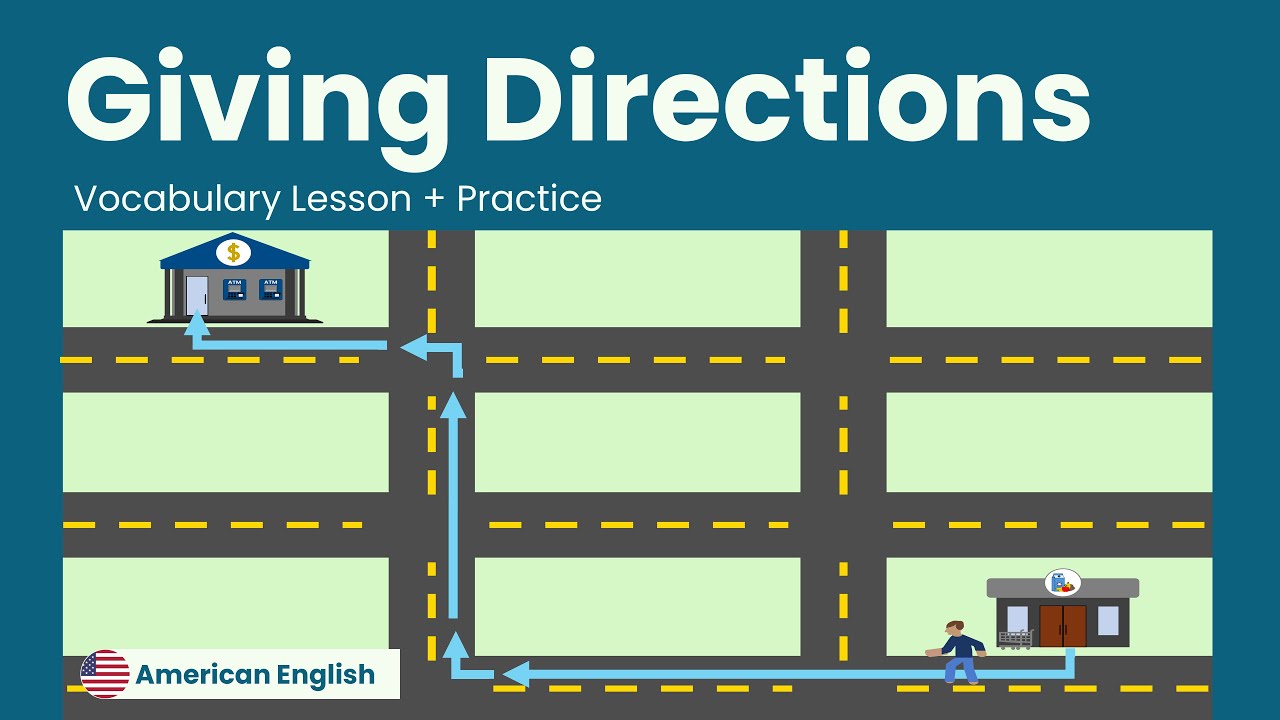
So, now, if you come to North America, for example — Canada, the US — most of the cities here are based on a grid.
북미(캐나다나 미국 등)에 가보면 대부분의 도시들이 격자 형태를 기반으로 한다는 것을 알 수 있습니다.
A "grid" means that streets go one, two, three, four; one, two, three, four.
"격자(grid)"란 거리가 일, 이, 삼, 사; 일, 이, 삼, 사처럼 직선으로 뻗어 있다는 의미입니다.
It's very much like a Tic-Tac-Toe map; looks like.
틱택토(Tic-Tac-Toe) 지도와 매우 비슷해 보입니다.
In Europe, streets go, like, bendy and winding, and all over the place.
유럽에서는 길들이 구불구불하게 휘어져 있고 여기저기 어지럽게 나 있는 경우가 많습니다.
So, in Europe, they don't really use: "to the north", "to the east", "west", etcetera.
따라서 유럽에서는 북쪽, 동쪽, 서쪽 등의 방향을 거의 사용하지 않습니다.
In North America, they use this a lot because it's much easier to explain: "Go north on Fifth Avenue, head east on Eighth Street, and you'll get to where you're going."
북미에서는 이를 많이 사용합니다. 설명하기 훨씬 쉽기 때문입니다. "5번 가로를 북쪽으로 가고, 8번 가로를 동쪽으로 가면 목적지에 도착합니다."라고 말하죠.
So, we use: "north", "east", "south", and "west" a lot, so make sure you understand how these directions work.
우리는 북, 동, 남, 서를 많이 사용하므로 이러한 방위 개념이 어떻게 작동하는지 이해해야 합니다.
Mainly, what you need to understand is: Where is north?
주로 이해해야 할 것은 '북쪽이 어디인가'입니다.
So, when you're standing on a street, always try to get an idea of: "Where is north?"
길에 서 있을 때는 항상 '북쪽이 어디인지' 파악하려고 노력해야 합니다.
and then you know all the other ones.
그럼 나머지 방향들도 모두 알게 됩니다.
It's...
이것은...
this is called: "orientation".
이를 "방위(Orientation)"라고 부릅니다.
So, when you go to a new city, become oriented with the layout of the...
새로운 도시로 이동할 때는 지도나 격자 구조의 배치를 파악하여 방향 감각을 익혀야 합니다.
of the map; of the grid.
지도나 격자 구조를 말입니다.
Always get a map, figure out: "Which way is north?"
항상 지도를 들고 '북쪽이 어느 쪽인지' 확인하세요.
and then you'll start to understand.
그럼 이해하기 시작할 것입니다.
So, "to the north" means in the direction of north, "on the west side".
즉, '북쪽으로'는 북쪽 방향을 의미하고, '서쪽 면에'라는 뜻입니다.
So, sometimes somebody will say something is "at the intersection", but you want to be more specific, so they'll...
때로는 누군가가 어떤 곳이 '교차로에 있다'고 말할 수 있지만, 더 구체적으로 알고 싶다면 그들은...
they will tell you: "It's on the northwest side of the intersection", because there are four.
네 군데가 있으므로 교차로의 '북서쪽 모퉁이에 있다'고 알려줄 것입니다.
So, if they want to specify...
그래서 만약 그들이 특정 위치를 명시하려 한다면...
For example, if you're looking for a store, but the store doesn't have a sign on the street — it's inside a building, for example — so you'll say: "The store is on the buil-...
예를 들어, 상점을 찾고 있는데 거리 표지판이 없고 건물 안에 있는 경우라면 이렇게 말할 것입니다: '상점은 건물의...
is inside the building on the northwest corner, in the basement.
건물 북서쪽 모퉁이 지하에 있습니다.
Go there, and you'll find it no problem."
거기로 가시면 쉽게 찾으실 수 있습니다."
Okay?
알겠습니다?
So, you must understand all of these words in order to give and receive instructions and directions.
길 안내를 주고 받을 때 이 모든 단어들을 이해해야 합니다.
Now, most importantly, you have to get comfortable with the verbs.
가장 중요한 것은 동사에 익숙해지는 것입니다.
So, let's look at those next.
다음으로 그 동사들을 살펴보겠습니다.
Okay.
좋습니다.
So, now, we actually get to the hard part; this is where people sometimes get lost.
이제 본격적인 어려운 부분으로 넘어갑니다. 사람들이 종종 헷갈리는 대목입니다.
Because, remember: If you are giving instructions, you can stick to one or two verbs, and just use it over and over again, and people will understand.
기억하세요: 지시를 줄 때는 동사 하나나 두 개만 고집하면 되며, 반복해서 사용하면 상대방이 이해합니다.
But when you are the one asking for instructions, and you're asking a native-English speaker, there's many ways to describe or to give directions to describe how to get somewhere.
하지만 당신이 지시를 요청하는 당사자이고 원어민에게 묻는다면, 어딘가에 가는 방법을 설명하거나 지시를 주는 데에는 많은 표현 방법이 있습니다.
So, be a little bit more aware of all the different ways we can actually give you directions.
우리가 실제로 당신에게 방향을 알려주는 다양한 방식에 대해 조금 더 주의 깊게 알아두세요.
So, we're going to look at verbs.
이제 동사들을 살펴보겠습니다.
Now, mostly, we're going to start with anything that is "walkable".
대부분 '걷기 가능한' 곳부터 시작하겠습니다.
What this means is you can actually walk to the place; it's not very far.
이는 실제로 그 장소까지 걸어서 갈 수 있다는 뜻이며, 거리가 그리 멀지 않다는 의미입니다.
Some places are too far; you may need to take a bus, or a subway, or a taxi, etcetera.
어떤 곳은 너무 멀리 있어서 버스나 지하철, 택시 등을 이용해야 할 수도 있습니다.
So, if it's walkable, just give them very simple directions.
따라서 걷기로 갈 수 있다면 매우 간단한 지시를 주면 됩니다.
"Head" or "go".
'Head(진행하다)' 또는 'go(가다)'.
"Head" and "go" are both verbs, and they essentially mean the same thing.
'Head'와 'go'는 둘 다 동사이며, 본질적으로 같은 의미를 가집니다.
"Head straight" — just basically go straight; means the same idea.
'Head straight(일직선으로 진행하다)'는 기본적으로 'go straight(직진하다)'와 같은 아이디어를 의미합니다.
"Head up" or "down", and the name of the street, if you know the name.
거리 이름을 안다면 'Head up/down(위/아래로 진행하다)' + 거리 이름을 사용합니다.
Now, generally speaking — and again, in North America, where we have the grids — everything is in a line.
일반적으로 말하자면 — 그리고 다시 말하지만 북미에서는 격자무늬 도로 체계가 있기 때문에 — 모든 것이 일렬로 되어 있습니다.
"Up" means "north", "down" means "south".
'Up(위)'은 'north(북쪽)'을 의미하고, 'down(아래)'은 'south(남쪽)'을 의미합니다.
We don't really have "east" or "west".
우리는 'east(동쪽)'나 'west(서쪽)'를 그렇게 많이 사용하지 않습니다.
"East" or "west" — say: "east" or "west".
'East'나 'west'라고 말할 때는 그냥 'east'나 'west'라고 말합니다.
So: "Head up Fifth Avenue", "Head down Fifth Avenue", depending on the direction you're going.
예를 들어: 'Head up Fifth Avenue(퍼스트 애비뉴 위쪽으로 진행하다)', 'Head down Fifth Avenue(퍼스트 애비뉴 아래쪽으로 진행하다)'는 가는 방향에 따라 다릅니다.
Or: "Go down", "go up", "Head north on Fifth Street" or "Main Street".
또는: 'Go down', 'go up', 'Head north on Fifth Street(퍼스트 스트리트 북쪽으로 진행하다)' 또는 'Main Street(메인 스트리트)'.
Again, "north", "south", "east", "west".
다시 말하지만 'north', 'south', 'east', 'west'입니다.
"Go past".
'Go past(지나가다)'.
"Go past the National Bank building", which you'll...
'National Bank building(국립은행 건물)을 지나가세요', 이 건물은...
you'll see easily because it's a landmark, but I'll talk about that in a second.
랜드마크이기 때문에 쉽게 볼 수 있지만, 잠시 후에 이에 대해 이야기하겠습니다.
So, "head" or "go" — very commonly used.
따라서 'head' 또는 'go'는 매우 흔히 사용됩니다.
Some people also use the verb: "follow".
일부 사람들은 'follow(따르다)'라는 동사도 사용합니다.
So: "Follow this street until you get to", but, again, that's a little bit more tricky because...
예: 'Follow this street until you get to(이 길을 따라 ~에 도착할 때까지)', 하지만 다시 말하지만 이는 조금 더 까다로운데 왜냐하면...
especially if...
특히 만약...
if streets are straight and all that, that's fine.
거리가 직선이라면 괜찮습니다.
This is a little bit more common in non-grid cities.
이 표현은 비격자형 도시에서 조금 더 흔합니다.
So: "Follow this street" because this street bends, so just stay on the street and follow the bends until you get to somewhere.
예: 'Follow this street(이 길을 따라가세요)' — 이 길은 굽이치므로, 길에 그대로 머무르며 굽이치는 대로 따라가다가 어디론가 도착하면 됩니다.
"Follow until", and then whatever is going to come up.
'Follow until(~까지 따라가다)', 그리고 그 뒤에 올 만한 것들.
Then there's: "turn".
그 다음에는 'turn(돌다)'이 있습니다.
You can: "turn left", "turn right", "turn eastward" — means in the direction of east — "turn south".
'turn left(좌회전)', 'turn right(우회전)', 'turn eastward(동쪽으로 돌다)' — 동쪽 방향으로 돌다 — 'turn south(남쪽으로 돌다)'라고 할 수 있습니다.
You can say: "south" or "southward"; "east" or "eastward".
'south' 또는 'southward'; 'east' 또는 'eastward'라고 말할 수 있습니다.
Both okay.
둘 다 괜찮습니다.
Now, you could also say: "Take a right", "make a left".
이제 다음과 같이 말할 수도 있습니다: 'Take a right(우회전하다)', 'make a left(좌회전하다)'.
These are only for left and right, that's why I put them in brackets.
이것들은 좌회전과 우회전에만 해당되므로 괄호 안에 넣었습니다.
You can't say: "take south", "take eastward" — that doesn't work.
'take south', 'take eastward'라고 말할 수는 없습니다 — 그런 표현은 통하지 않습니다.
"Take a right" basically means turn right.
"Take a right"는 기본적으로 오른쪽으로 돌라는 뜻입니다.
"Make a left" basically means turn left.
"Make a left"는 기본적으로 왼쪽으로 돌라는 뜻입니다.
This is especially for driving.
이 표현은 특히 운전할 때 자주 쓰입니다.
So, if you're driving and somebody is sitting next to you and giving you instructions, they'll say: "Okay.
운전을 하고 있고 옆에 앉은 사람이 길 안내를 해줄 경우, 다음과 같이 말할 것입니다. "좋아요."
Take a left over there.
저기서 왼쪽으로 돌아가세요."
Make a right at the next street" or "turn" — also okay.
다음 거리에서 오른쪽으로 돌아가세요" 또는 "돌아가세요" — 이 역시 괜찮습니다.
Now, if the place you're going to is not walkable; is not within walking distance, then you have to give some more instructions.
이제 목적지가 도보로 갈 수 있는 거리가 아니라면, 즉 걸어서 도달할 수 없는 곳이라면 더 많은 안내가 필요합니다.
So, "Take the number one line" or "number ten line", or whatever the...
예를 들어 "1호선을 타세요" 또는 "10호선을 타세요", 또는 지하철 노선의 이름이 있다면 그 이름을 사용하세요...
if there's a name for the subway line.
지하철 노선에 이름이 붙어 있는 경우입니다.
Generally speaking, when we talk about "line", we talk about...
일반적으로 "라인(line)"에 대해 이야기할 때는 ...
we're talking about subway or train, if it's above ground.
지하철이나 지상 열차를 의미합니다.
"Take the number three bus".
"3번 버스를 타세요."
I should put a "the" here.
여기에 관사 "the"를 넣어야 합니다.
"Take the number three bus".
"3번 버스를 타세요."
Buses have numbers, so we don't really use lines; we just say the number of the bus.
버스는 번호가 매겨져 있으므로 우리는 보통 '라인'이라는 단어를 사용하지 않고 버스 번호만 말합니다.
Now, you have to be very careful about giving directions with bus or subway because in some countries, you might not be able to read the signs.
지금부터 버스나 지하철을 이용한 길 안내를 할 때는 매우 주의해야 합니다. 왜냐하면 일부 국가에서는 표지판을 읽을 수 없을 수도 있기 때문입니다.
If you're coming to an English-speaking country — no problem; if you're going to other places, but are still using English to get around, you might not know the names.
영어권 국가로 여행하는 것이라면 문제가 없지만, 다른 곳으로 가면서도 영어로 소통하며 이동한다면 역명 등을 모를 수 있습니다.
So, it's helpful if somebody tells you how many stops to go, more or less.
그렇다면 어느 정도 정류장을 가야 하는지 알려주는 것이 도움이 됩니다.
So: "Go five stops.
예를 들어 "5정거장 가세요."
Get off at the name of the station", if you know it.
역 이름을 알고 있다면 그곳에서 내리세요."
Okay?
알겠습니다?
Notice we use: "go" a lot.
우리가 "go(가다)"라는 동사를 많이 사용하는 것을 주목하세요.
Now, sometimes you'll come to an intersection or you'll come to a particular place where you're on the wrong side — just "cross the street" or "go across the street", "go across the intersection", "go across the park", whatever the case may be.
때로는 교차점에 이르거나 잘못된 쪽에 있을 수 있는데, 이때는 그냥 "길을 건너세요" 또는 "도로를 가로질러 가세요", "교차로를 건너세요", "공원을 건너세요" 등 상황에 따라 말하면 됩니다.
Now, it's also very important that you understand the differences between street names.
또한 도로 이름의 차이점을 이해하는 것도 매우 중요합니다.
We can say: "Avenue", "Road", "Street", "Boulevard".
우리는 "Avenue(대로)", "Road(길)", "Street(거리)", "Boulevard(광장길)"라고 말할 수 있습니다.
These are the main names of streets.
이들이 주요 도로 명칭들입니다.
There are smaller streets that you don't really need to worry about at the moment; these are the main ones you're going to come across.
현재로서는 크게 걱정하지 않아도 되는 작은 길들도 있지만, 주로 마주치게 되는 것은 이러한 주요 길들입니다.
So: "Turn...
예를 들어 "회전..."
turn south at Fifth Avenue", "turn left on Main Street".
5번 대로에서 남쪽으로 회전하세요", "메인 스트리트에서 왼쪽으로 회전하세요."
You can also say: "onto".
"onto(위로 올라타/안으로 들어가)"라고도 말할 수 있습니다.
So, this is, again, more for driving: "Turn onto Main Street and go straight" or "go east", whatever the case may be.
이 역시 주로 운전 시 사용됩니다: "메인 스트리트에 진입하여 직진하세요" 또는 "동쪽으로 가세요" 등 상황에 따라 다릅니다.
Now, sometimes they're going to give you relative directions.
때로는 상대적인 방향을 알려주기도 합니다.
They're going to tell you how to get to one place; and then from this place, they're going to give you further directions.
먼저 한 곳까지 가는 방법을 알려준 후, 그곳에서부터 추가적인 길 안내를 하게 됩니다.
So: "When you get to the intersection", "when you get to the mall", "when you get to the park, turn left", "go straight", "head down", "look for".
예컨대 "교차점에 도착했을 때", "쇼핑몰에 도착했을 때", "공원에 도착하면 왼쪽으로 회전하세요", "직진하세요", "남쪽으로 가세요", "찾아보세요"와 같은 표현을 사용합니다.
"Look for" is very, very useful because now we're introducing "landmarks".
"Look for"는 매우, 매우 유용합니다. 이제 "랜드마크"를 소개하기 때문입니다.
"Landmarks" are things, or objects, or situations that are very easy to see; very recognizable.
"랜드마크"란 매우 쉽게 볼 수 있는 사물, 객체 또는 상황을 의미합니다. 매우 식별 가능합니다.
The people who live in a place — everybody knows what this place is, so it's easy to point out.
그곳에 사는 사람들은 누구나 그 장소가 어디인지 알고 있으므로, 가리켜 설명하기가 쉽습니다.
Now, "landmarks" can be "buildings"; and they're big, so they're easy to see.
이제 "랜드마크"는 "건물"일 수 있습니다. 그리고 건물이 크므로 보기 쉽습니다.
You can see them from a distance.
멀리서도 볼 수 있습니다.
They can be "bridges" in some places, like in San Francisco: "The Golden Gate Bridge" is a landmark.
어떤 곳에서는 "다리"일 수도 있습니다. 예를 들어 샌프란시스코의 "골든 게이트 브리지"는 랜드마크입니다.
They can be "monuments" — these are special constructions, like, to remember...
"기념비"일 수도 있습니다. 이는 특별한 건축물로, 보통...
to remember a war, or fallen soldiers; or just a special person from history, like a president or a local hero, etcetera.
전쟁이나 전사한 병사들을 기억하기 위해, 혹은 대통령이나 지역 영웅 같은 역사적 인물을 기억하기 위해 세워집니다 등등.
It could be "statues", it could be "plaques", it could be all kinds of things.
"동상"일 수도 있고, "명패"일 수도 있으며, 다양한 종류의 것들이 있을 수 있습니다.
Some "parks" are "landmarks".
일부 "공원"들도 "랜드마크"입니다.
If they're in the middle of a city — there's only one big park — that's the one people will relate their directions to, or any other landmark.
도시 한가운데에 있다면 — 큰 공원이 하나뿐이라면 — 사람들이 길 안내할 때 기준점으로 삼는 곳이 바로 그곳이거나 다른 랜드마크입니다.
So: "When you get to the park, cross the park and on the other side you will see", and then...
즉, "공원에 도착하면 공원을 건너 반대편에서 보게 될 것입니다", 그리고...
"So, if you're looking for, then you will see this", or "look for the tall, brown building; and next to that is the place you're looking for", for example.
"그래서 찾고 계신다면 이렇게 보실 겁니다"라거나, "키가 큰 갈색 건물을 찾아보세요; 거기에 옆에 찾으시는 곳이 있습니다"와 같이 말합니다.
Or if you know that a place is a little bit difficult to get to, what you want to do is get the person moving in the general direction on the way to the place, and then say: "Once you get to the park, ask...
또는 어떤 장소가 조금 가기 어렵다는 것을 알면, 해당 방향으로 이동하게 만든 후 다음과 같이 말할 수 있습니다: "공원에 도달하면 다시 물어보십시오..."
ask again.
다시 물어보십시오.
Ask somebody else for directions."
다른 사람에게 길을 물어보십시오."
Because if I try to explain to you from here what to do after you get to the park, you will be very confused.
왜냐하면 제가 여기서부터 공원에 도착한 후에 무엇을 해야 하는지 설명하려고 하면, 당신은 매우 혼란스러워질 것이기 때문입니다.
I'll just tell you: "Get to the park", then somebody else will tell you what to do next.
저는 그냥 "공원에 가세요"라고만 말하고, 그러면 다른 사람이 다음에 무엇을 해야 하는지 알려줄 것입니다.
That's the easiest way to do it.
그게 가장 쉬운 방법입니다.
And when we...
그리고 우리가...
some people say: "You can't miss it."
어떤 사람들은 "놓치지 않을 거예요"라고 말합니다.
Now, people have a lot of problem with this word.
이 단어 때문에 많은 사람들이 어려움을 겪습니다.
"Miss" doesn't mean, like, something like: "Oh, you're longing for.
"Miss"는 '오, 그리워하다' 같은 뜻이 아닙니다.
It's gone from you; you...
당신에게서 사라진 것; 당신이...
you miss it".
놓친 것"입니다.
If your friend goes away for...
친구가 ...
from your city and you "miss" your friend — that's one thing.
당신의 도시를 떠나서 당신이 친구를 "그리워하는" 경우 - 그것은 별개의 일입니다.
Here, "miss" means not notice.
여기서 "miss"는 눈치채지 못한다는 뜻입니다.
So: "You can't miss it" means it's impossible not to see it.
즉, "You can't miss it"는 그것을 보지 않고 지나갈 수 없다는 뜻입니다.
And, again, we're talking about "landmarks".
그리고 다시 말하지만, 우리는 "랜드마크"에 대해 이야기하고 있습니다.
So: "If you go to the park, go across the park; and you'll see a big, brown building.
즉, "공원에 가서 공원을 건너면 큰 갈색 건물이 보일 것입니다.
You can't miss it.
놓치지 않을 거예요.
Once you see that big, brown building — go to the left of it", "go to the right of it", "go behind" wherever the situation may be.
그 큰 갈색 건물을 본 후에는 상황에 따라 "왼쪽으로 가십시오", "오른쪽으로 가십시오", "뒤로 가십시오"라고 합니다.
Okay?
알겠습니까?
So, there.
자, 여기까지입니다.
There you go.
잘 이해하셨기를 바랍니다.
Those are some key vocabulary and key expressions that you need in order to give and understand directions.
길 찾는 법과 길 안내를 이해하는 데 필요한 핵심 어휘와 표현들입니다.
Okay?
알겠습니다?
Very important if you want to go traveling.
여행을 계획 중이시라면 매우 중요합니다.
And keep in mind: If you're going to tourist areas anywhere in the world, people there speak English, so they will be giving you these kinds of instructions.
참고로: 전 세계 어디든 관광지에서는 사람들이 영어를 사용하므로, 이런 식의 안내를 받게 될 것입니다.
They've practiced doing this for the tourists.
그들은 관광객들을 위해 이 방법을 연습해 왔습니다.
Okay?
네?
And so that's it for today; just to get you started on directions.
오늘은 여기까지입니다. 길 찾기를 시작하는 데 도움이 되었기를 바랍니다.
If you have any questions about any of this, please go to www.engvid.com, and there's a comment section you can ask me questions.
이 내용과 관련해 궁금한 점이 있으시면 www.engvid.com으로 가셔서 댓글란에 질문해 주세요.
I'll be happy to give you whatever answers I can.
가능한 한 최선을 다해 답변해 드리겠습니다.
There's also a quiz that you can try to understand what we learned here today.
오늘 배운 내용을 이해하기 위해 퀴즈도 풀어보실 수 있습니다.
And that's it.
그럼 여기까지입니다.
I hope you like this video.
이 영상이 마음에 드셨으면 좋겠습니다.
If you did, please give me a like.
좋아하셨다면 좋아요를 눌러주세요.
Don't forget to subscribe to my channel, and ring the bell for notifications of future videos.
제 채널 구독을 잊지 마시고, 향후 영상 알림을 위해 종소리 버튼을 눌러주세요.
And come back next time; I'll give you more useful tips to improve your English journey.
다음에 다시 오세요. 영어 실력을 향상시키는 더 유용한 팁을 드리겠습니다.
I'll see you again soon.
곧 다시 만나요.
Bye.
안녕히 계세요.