Hey there it's Hadar, and this is the Accent's Way.
Olá, aqui é a Hadar, e este é o Accent's Way.
And today we're going to talk about how to pronounce the th sound.
E hoje vamos falar sobre como pronunciar o som th.
Okay.
Ok.
So the th sound is a sneaky sound.
Então, o som th é um som traiçoeiro.
First of all, it's an uncomfortable sound for most non-native speakers.
Primeiro de tudo, é um som desconfortável para a maioria dos falantes não nativos.
Because you have to stick the tongue to make the th, which is indeed uncomfortable.
Porque você tem que colocar a língua para fora para fazer o th, o que é realmente desconfortável.
We'll first talk about how to pronounce it, and then we'll talk about all the exceptions, and how much work you really need to put into this.
Primeiro vamos falar sobre como pronunciá-lo, e depois vamos falar sobre todas as exceções e quanto trabalho você realmente precisa dedicar a isso.
Okay?
Ok?
So first of all, to make the th sound you want to stick the tongue out but just a bit like this, okay?
Então, primeiro de tudo, para fazer o som th, você quer colocar a língua para fora, mas apenas um pouco assim, ok?
Not too much, okay?
Não demais, ok?
Not too little.
Não de menos.
Because that may sound like a different sound, like a T, for example.
Porque isso pode soar como um som diferente, como um T, por exemplo.
"tanks" So to make the th sound the tongue needs to be out and allow the air to pass between the tongue and teeth creating this friction sound.
"tanks" Então, para fazer o som th, a língua precisa estar para fora e permitir que o ar passe entre a língua e os dentes, criando esse som de fricção.
Listen: th Do it with me!
Ouça: th Faça comigo!
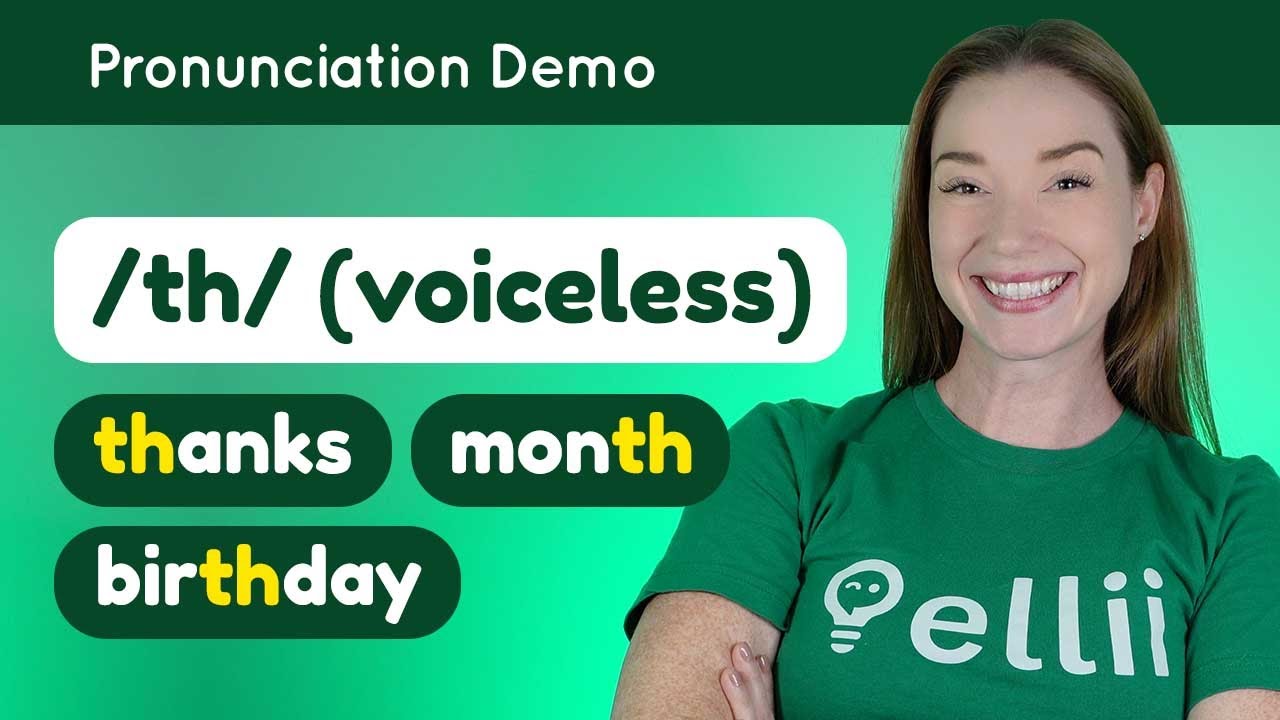
th Now we have two different th's.
th Agora temos dois ths diferentes.
One, the voiceless th, and if you put your hands here and release air Right?
Um, o th surdo, e se você colocar as mãos aqui e soltar o ar. Certo?
You don't feel anything here.
Você não sente nada aqui.
You feel the air coming out and now try this with me: th Did you feel vibrations?
Você sente o ar saindo e agora tente isso comigo: th Você sentiu vibrações?
Good.
Bom.
Because that's the voiced th.
Porque esse é o th sonoro.
Here it was air with the vocal cords vibrating.
Aqui foi ar com as cordas vocais vibrando.
Now we haven't changed anything here.
Agora não mudamos nada aqui.
For both the tongue was out in the air was passing between the tongue and teeth.
Para ambos, a língua estava para fora e o ar passava entre a língua e os dentes.
Now two things you want to pay attention to.
Agora, duas coisas às quais você deve prestar atenção.
1.
1.
You want to make sure that the tongue is out.
Você quer garantir que a língua esteja para fora.
Because otherwise it's gonna sound like a different sound.
Porque caso contrário, vai soar como um som diferente.
Like a T 'tink', like a T or maybe 's-sink' like an S if the tongue is too far back.
Como um T 'tink', como um T ou talvez 's-sink' como um S se a língua estiver muito para trás.
So you want to make sure it's out.
Então você quer garantir que ela esteja para fora.
Not too far out, right.
Não muito para fora, certo.
Also you want to make sure that the tongue is relaxed: th If it's too tight of if the body of the tongue is going to block the air inside the mouth it's still gonna sound like a T, 'tink'.
Além disso, você quer garantir que a língua esteja relaxada: th Se estiver muito tensa ou se o corpo da língua for bloquear o ar dentro da boca, ainda vai soar como um T, 'tink'.
Even though my tongue is out.
Mesmo que minha língua esteja para fora.
That doesn't serve me, right.
Isso não me serve, certo.
So you want to relax your tongue th and feel the air passing: th It should feel like an F sound but make sure that if you tend to substitute the th with an F sound, make sure that it's not the bottom lip that touches the the teeth but your tongue.
Então você quer relaxar sua língua th e sentir o ar passando: th Deve parecer um som F, mas certifique-se de que, se você tende a substituir o th por um som F, não seja o lábio inferior que toca os dentes, mas sim sua língua.
And by the way how do you know that your tongue is not too far out.
E, a propósito, como você sabe que sua língua não está muito para fora?
You can put your finger here on your teeth: think thought and say a few words with a th.
Você pode colocar seu dedo aqui nos seus dentes: think thought e dizer algumas palavras com th.
And you want to feel the tongue just slightly touching your finger not pushing against it because if you feel your tongue pushing against your finger then your tongue is too far out, okay?
E você quer sentir a língua apenas tocando levemente seu dedo, sem empurrá-lo, porque se você sentir sua língua empurrando seu dedo, então sua língua está muito para fora, ok?
Good.
Bom.
So let's practice a few words: theory authentic
Então vamos praticar algumas palavras: theory authentic
path Voiced th: they Make sure it doesn't sound like 'day', alright.
path Th sonoro: they Certifique-se de que não soe como 'day', tudo bem.
Or is a 'zay' they another my brother and mother my brother and mother each other Okay, good.
Ou é um 'zay' they another my brother and mother my brother and mother each other Ok, bom.
Now when it comes to functional words with th like the, this, that, those.
Agora, quando se trata de palavras funcionais com th, como the, this, that, those.
First of all, these are sneaky words because you don't think about them and then automatically your mouth would want to say something like "the", this", "that", "those".
Primeiro de tudo, essas são palavras traiçoeiras porque você não pensa nelas e então automaticamente sua boca vai querer dizer algo como "the", "this", "that", "those".
Now here it's okay to cheat.
Agora, aqui é permitido trapacear.
Generally, we are in favor of cheating, okay.
Geralmente, somos a favor de trapacear, ok.
So whenever you don't have to pronounce the full sound, don't.
Então, sempre que você não tiver que pronunciar o som completo, não faça.
Okay?
Ok?
I'm telling you it's okay.
Estou dizendo a você que é permitido.
So, for example, for words like "the," "this," "that," "those" you can stick, like you don't have to stick the tongue out.
Então, por exemplo, para palavras como "the", "this", "that", "those" você pode colocar a língua atrás dos dentes, não precisa esticá-la para fora.
You can place it on the back of your teeth, the top teeth.
Você pode colocá-la na parte de trás dos seus dentes, os dentes superiores.
the the the this this So it sounds like a D, but it's not "dis," "de" but this this this So you can't see my tongue coming out, but again it's not a D sound.
the the the this this So so so so So so so So So so so So you can't see my tongue coming out, but again it's not a D sound. Parece um som de D, mas não é "dis", "de" mas this this this Então você não consegue ver minha língua saindo, mas novamente não é um som de D.
It's "a D on the teeth."
É um "D nos dentes".
And then it's totally fine.
E aí está tudo bem.
So it's a lot easier to pronounce, especially when you need to transition between sounds like the-car, the-sun, right.
Então fica muito mais fácil de pronunciar, especialmente quando você precisa fazer a transição entre sons como the-car, the-sun, certo.
It's harder to do the-sun.
É mais difícil fazer o the-sun.
So if you put it behind the teeth: the-sun.
Então se você colocar a língua atrás dos dentes: the-sun.
It's easier.
Fica mais fácil.
And still it doesn't have that strong sound of D that some speakers have.
E ainda assim não tem aquele som forte de D que alguns falantes têm.
Not that it's a big deal cuz you're still gonna be clear, okay.
Não que seja um grande problema porque você ainda vai ser compreendido, ok.
Also, you need to remember that when you practice sounds, you need to focus on your highest priorities.
Além disso, você precisa lembrar que ao praticar sons, você precisa focar nas suas maiores prioridades.
So if your th sounds like a T or D everyone will probably understand you.
Então se o seu th soar como um T ou D, todos provavelmente vão entender você.
if you want to improve and if you want it to be a non-issue then definitely work on improving that, okay?
Se você quer melhorar e quer que isso deixe de ser um problema, então definitivamente trabalhe em melhorar isso, ok?
Let's my few more words: authentic them tell them is that Now I want you to remember that when it comes to the th it might be easier in words but then in sentences or phrases it gets a little more challenging because you need to work quickly between the two sounds.
Vamos a mais algumas palavras: authentic them tell them is that Agora eu quero que você lembre que quando se trata do th, pode ser mais fácil em palavras, mas depois em frases ou expressões fica um pouco mais desafiador porque você precisa trabalhar rapidamente entre os dois sons.
So, for example, to say something like "the" may be easy but then to say "the-sun" might be more challenging.
Então, por exemplo, dizer algo como "the" pode ser fácil, mas depois dizer "the-sun" pode ser mais desafiador.
Or "the theater": two th's together!
Ou "the theater": dois ths juntos!
So you always want to anticipate the following sound.
Então você sempre deve antecipar o som seguinte.
So let's say you have a sound like an L that has a th right after, like "will they."
Então digamos que você tenha um som como um L que tem um th logo depois, como "will they."
So what you want to do is to anticipate the sound and stick the tongue out before the th.
Então o que você quer fazer é antecipar o som e esticar a língua para fora antes do th.
will they Same thing with N before th on-the Right, so you bring the tongue out for the N and then you're relaxing it into the TH so you don't have to push the tongue out.
will they A mesma coisa com N antes de th on-the Certo, então você traz a língua para fora para o N e depois relaxa ela no TH então você não precisa empurrar a língua para fora.
Anticipating the th that will help you with the transition: on-the in-the will-they all-that at-the: t-th So here I brought the tongue up for the T instead of keeping it behind the teeth: at, at Doesn't change the sound.
Antecipar o th vai te ajudar na transição: on-the in-the will-they all-that at-the: t-th Então aqui eu levantei a língua para o T em vez de mantê-la atrás dos dentes: at, at Não muda o som.
Anyway it's a held T: at at-relaxing it to a th-the at-the get them and backwards as well: bath-time So, I want to think about this transition and if it's difficult, then I want to work on this transition over and over again, okay.
De qualquer forma é um T segurado: at at-relaxing it to a th-the at-the get them and backwards as well: bath-time Então, eu quero pensar sobre essa transição e se for difícil, então eu quero trabalhar nessa transição repetidamente, ok.
Let's try another one: is-that: z-th Raise your hand if you want to turn off this video right now!
Vamos tentar outro: is-that: z-th Levante a mão se você quiser desligar este vídeo agora mesmo!
is that Right.
is that Certo.
So here there's no cheating.
Aqui não vale a pena fazer trapaça.
You just have to work quickly.
Você só precisa agir rapidamente.
Now you might be doing something like "iz-at" or "ivat".
Agora, você pode estar dizendo algo como "iz-at" ou "ivat".
That's totally fine.
Isso está totalmente ok.
Just make sure that you're not merging the two sounds.
Apenas certifique-se de não estar fundindo os dois sons.
Two different sounds, focus on them: is - the Z is inside - that, th out.
Dois sons diferentes, preste atenção neles: is - o Z fica por dentro - that, th para fora.
So you want to transition and really visualize your tongue going from the inside to the outside.
Então, você quer fazer a transição e realmente visualizar sua língua indo de dentro para fora.
is that After all your tongue is a muscle, you control it, right.
is that Afinal, sua língua é um músculo, você a controla, certo.
It's not like this...
Não é assim...
I always compare it to a sneaky little brat that is just like running around and you're like: "Wait just a minute, wait, look, come here come here".
Eu sempre comparo isso a um garoto travesso e astuto que corre por aí e você pensa: 'Espere só um minuto, espere, olhe, venha aqui, venha aqui'.
So that's your tongue and you need to teach it to listen to you, especially when it comes to the TH transitions.
Então, essa é a sua língua e você precisa ensiná-la a obedecer, especialmente quando se trata das transições com TH.
So what you can do is create those lists of transitions, right.
Então, o que você pode fazer é criar essas listas de transições, certo.
Every time you come across a tricky transition or just a lot of words with TH's and repeat them over and over again.
Toda vez que você encontrar uma transição difícil ou apenas muitas palavras com TH, repita-as repetidamente.
Repetition is the only thing that will help you make it your own and make it spontaneous, okay.
A repetição é a única coisa que vai ajudar você a internalizar isso e torná-lo espontâneo, ok.
So it's not enough to listen to this video and to just like try it out a few times.
Então, não basta assistir a este vídeo e tentar algumas vezes.
You've got to do it on a daily basis even if it's just five minutes a day and then it will become a part of you, and then you'll develop the muscle memory.
Você precisa fazer isso diariamente, mesmo que sejam apenas cinco minutos por dia, e então isso fará parte de você, desenvolvendo a memória muscular.
You'll rewire all the connections in your brain, and you won't go back to the 'comfortable place' which is all the other sounds, okay.
Você reconfigurará todas as conexões do seu cérebro e não voltará ao 'lugar confortável', que são todos os outros sons, ok.
So let's start a list in the comments below put all the possible transitions or tricky transitions of th and other sounds and we'll practice together.
Então, vamos começar uma lista nos comentários abaixo; coloque todas as possíveis transições ou transições difíceis de th e outros sons e praticaremos juntos.
I hope this was helpful, THIS was helpful.
Espero que isto tenha sido útil, ISTO foi útil.
Have a beautiful week!
Tenha uma semana maravilhosa!
Don't forget to subscribe to my YouTube channel and comment over to my website Because I have a lot of great stuff for you over there and free stuff.
Não esqueça de se inscrever no meu canal do YouTube e visitar meu site. Porque tenho muitas coisas ótimas para você lá, inclusive material gratuito.
So why not?
Então, por que não?
Come check it out theaccentsway.com Have a beautiful day, and I'll see you next week in the next video.
Venha conferir theaccentsway.com. Tenha um ótimo dia e vejo você na próxima semana no próximo vídeo.
Bye!
Tchau!