Browse and practise high-value quotes from this video
“First, we can say, I completely agree.”
First, we can say, I completely agree.
Why it is worth remembering
Teaches a standard, clear pattern for stating complete agreement, replacing simple 'I agree' with a more emphatic structure.
Reusable video chunk
I completely agree.
Handpicked content based on the current video topic and level
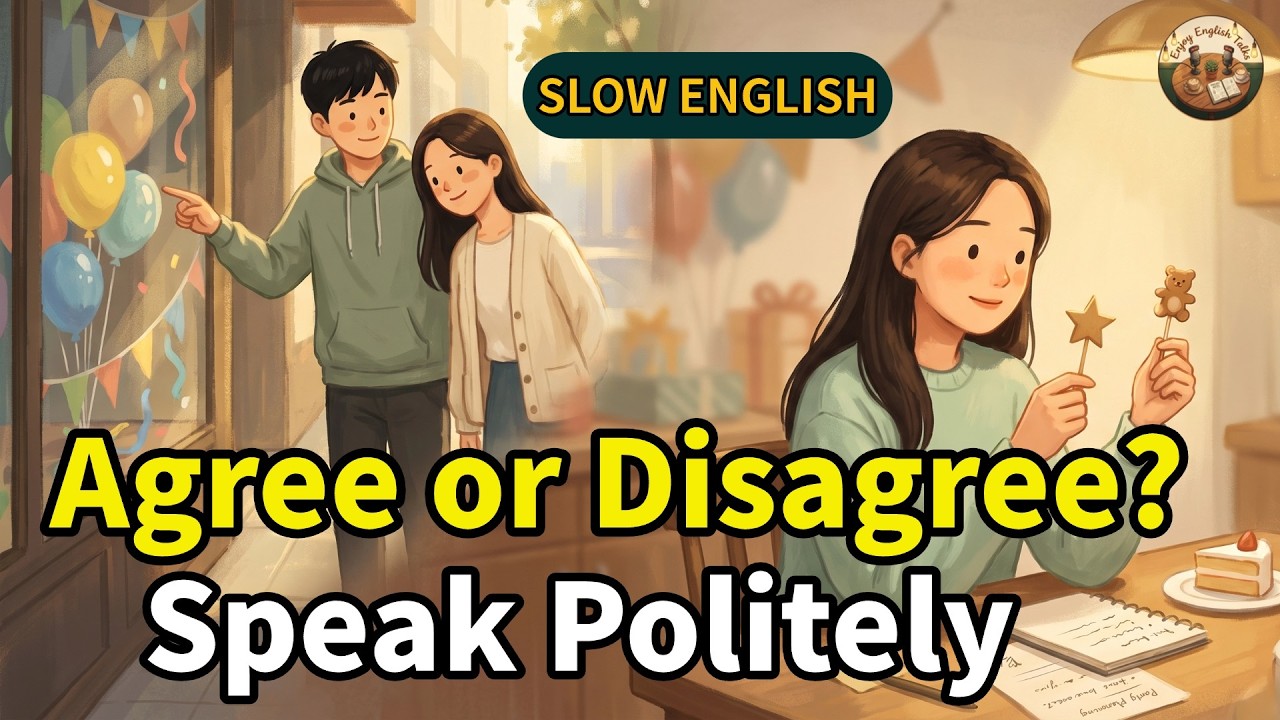
Judy and Jake teach English learners how to agree and disagree politely in a party-planning conversation. They introduce five ways to agree (I agree, I think so too, me too, that's true, you're right) and four soft ways to disagree (I'm not sure, I don't think so, actually I think..., maybe but...). The lesson includes stronger expressions like 'absolutely' and 'I really don't think so', plus tips on using body language and giving reasons to maintain kindness during disagreements.
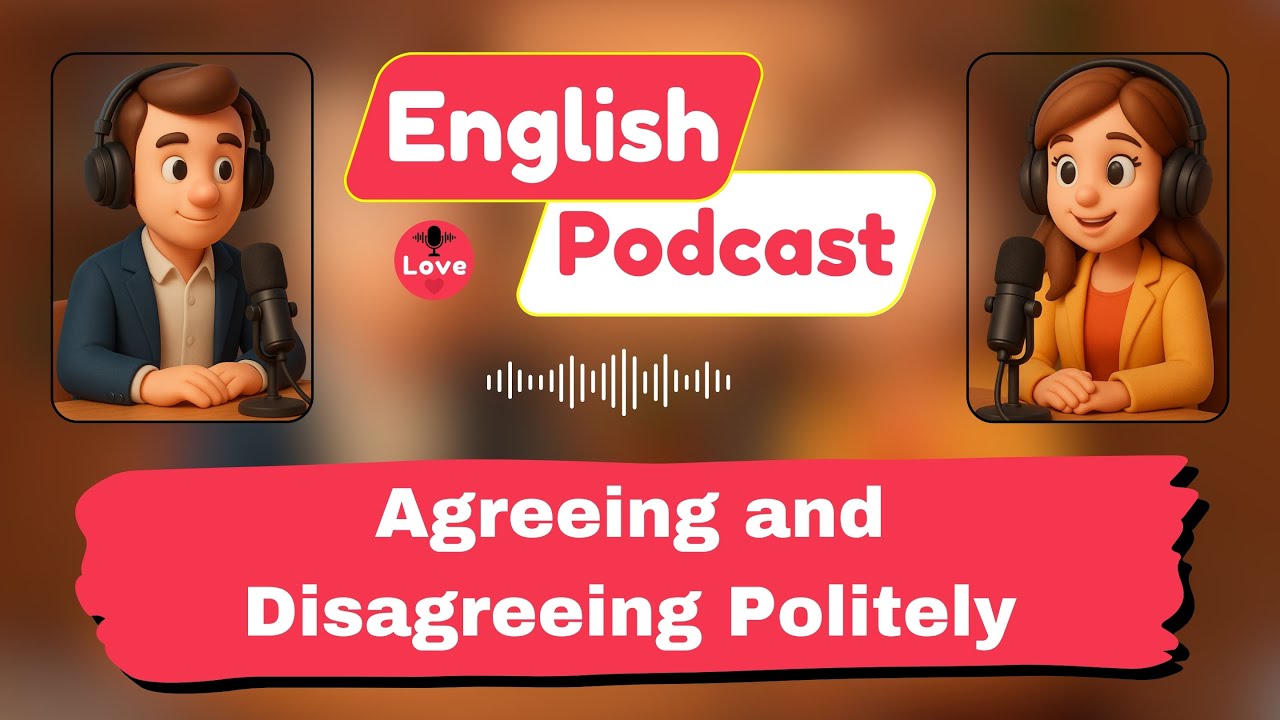
This English podcast lesson teaches beginners how to agree and disagree politely in conversation. Hosts Leo and Emma introduce the 'Politeness Sandwich' technique, which involves using buffer phrases like 'I see your point' before stating a differing opinion with 'I statements' such as 'I think' or 'I feel'. The episode covers various levels of agreement, from simple 'I agree' to strong expressions like 'Absolutely!' and 'I couldn't agree more'. It also addresses partial agreement and provides role-play scenarios to practice respectful dialogue without causing conflict.
This Business English lesson teaches learners how to agree with ideas in professional settings. The instructor categorizes responses into three levels: basic agreement (e.g., 'That makes a lot of sense'), strong agreement (e.g., 'I couldn't have said it better myself'), and neutral stance (e.g., 'It's a toss-up'). Through guided repetition and a sample dialogue between co-workers, the video provides practical expressions for showing support, enthusiasm, or uncertainty about business proposals.