Hi, everybody.
大家好。
Welcome to www.engvid.com.
欢迎来到 www.engvid.com。
I'm Adam.
我是亚当。
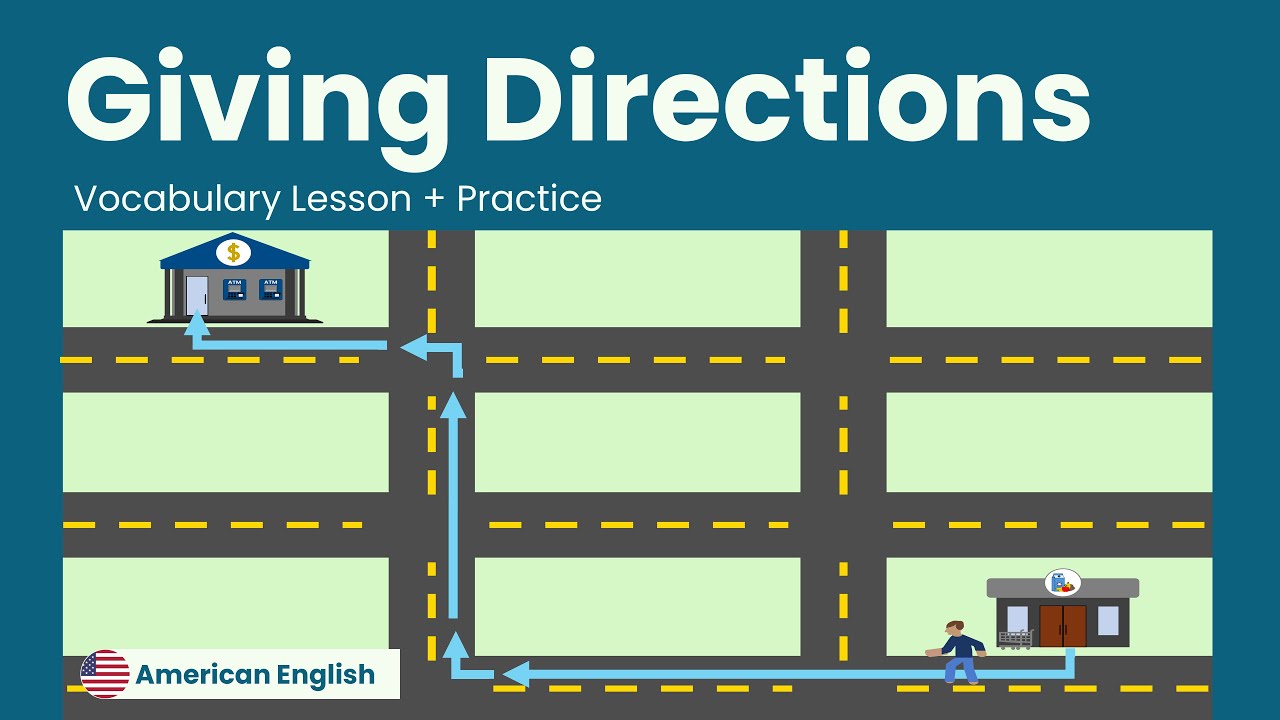
In today's video, I want to show you ways to ask for and give directions.
在今天的视频中,我想向大家展示如何询问和提供路线指引。
For example, if you're going to travel to another country; or travelers are in your city, and they need some help — you can help them.
例如,如果你要前往另一个国家旅行;或者游客在你的城市,需要一些帮助——你可以帮他们。
It's a little bit of a beginner lesson, so I'll speak a little bit more slowly.
这是一堂入门级的课程,所以我会说得稍微慢一点。
And I'm going to give you a set of questions, I'm going to give you some vocabulary.
我将给大家一组问题,还会提供一些词汇。
And the most important thing you need to understand is the verbs that you're going to have to use in order to help somebody find their way.
你需要理解的最重要的事情是,为了帮助某人找到路,你必须使用的动词。
And I'll look at those in a moment.
我稍后会详细讲解这些动词。
So, we're going to start with the questions.
那么,我们将从问题开始。
Now, again, in English — just as in any other language — there are many ways to ask for anything, really.
再说一次,在英语中——就像任何其他语言一样——真的有很多方式可以询问任何事情。
Right?
对吧?
But these are the main questions that you need to know, in order to get directions and in order to understand someone who needs directions from you.
但这些都是你需要了解的主要问题,以便获取路线指引,并理解那些需要你提供指引的人。
So, the more common...
所以,更常见的……
most common question is: "How can I get to..."
最常见的问题是:“怎么去……?”
whatever place it is.
无论是什么地方。
"How can I get to the train station?", "How can I get to the museum?", "How can I get to" whatever is a tourist attraction in a city; your city, other cities, etcetera.
“怎么去火车站?”、“怎么去博物馆?”、“怎么去”城市里的任何旅游景点;你的城市、其他城市等等。
Or, more direct: "Where is something?"
或者,更直接一点:“某物在哪里?”
Now, a little bit, you have to keep in mind that if you're in certain countries...
现在,有一点你需要记住,那就是如果你在某些国家……
for example, in Canada, you can't really go up to a person and say: "Where is the train station?"
例如,在加拿大,你真的不能随便走到一个人面前说:“火车站在哪里?”
Canadians are a little bit more polite, I guess you could say; a little bit softer, so it's better to have an indirect question, like this one: "Can you tell me where something is?"
我觉得你可以这么说,加拿大人更有礼貌一点;语气更柔和一些,所以最好使用间接问句,比如这个:“你能告诉我某物在哪里吗?”
Or: "Can you tell me how to get to?"
或者:“你能告诉我去那里的方法吗?”
Now, very important to remember: If you're asking a direct question, like just the question: "Where is the place?"
现在,非常重要的一点要记住:如果你问的是一个直接问句,比如只是问:“那个地方在哪里?”
If you're asking an indirect question, this is actually the question word: "Can" or "Do".
如果你问的是一个间接问句,这实际上是疑问词:“Can”或“Do”。
So, this is now turned into a noun clause.
所以,这现在变成了一个名词性从句。
Right?
对吧?
So, then: "where something is", and the "is" comes after the place you're going to.
所以,然后是:“某物在哪里”,而“is”放在你要去的地方之后。
The "is" comes before the place you're going to, so make sure you understand the correct structure of the question.
“is”放在你要去的地方之前,所以要确保你理解问题的正确结构。
And...
而且……
but, ideally, use the indirect question; it's a little bit softer, a little bit more polite.
但理想情况下,请使用间接问句;这样语气更柔和,也更有礼貌。
So: "Can you tell me how to get to the train station?", "Do you know where the train station is?"
所以:“你能告诉我怎么去火车站吗?”“你知道火车站在哪里吗?”
Or you can use both of these clauses with either question.
或者,你可以将这两个从句与任意一种问法结合使用。
Now, another way to ask is: "What's the fastest way to get to...?"
现在,另一种问法是:“去……的最快路线是什么?”
You don't actually even have to use: "to get".
你实际上甚至不需要用“去(to get)”。
"What's the fastest way to the train station?"
“去火车站的最快路线是什么?”
is okay.
这样说是可以的。
But "to get" makes it a little bit more clear.
但加上“去”会让意思更清晰一些。
And when you ask someone: "What's the fastest way?"
当你问某人:“最快的路线是什么?”时
they understand that you want directions, and they will explain to you how to get to the place.
他们明白你想要路线指引,他们会向你解释如何到达那个地方。
Now, very, very important that you study these words.
现在,非常、非常重要的一点是你要学习这些词汇。
Okay?
好吗?
All of these are prepositions of place.
这些都是表示地点的介词。
You must understand how they are used and when they are used in order to understand directions.
你必须理解它们是如何使用的以及在何时使用,以便听懂路线指引。
So, when someone is explaining it to you, they're going to use all of these words; and a few other things that I'll mention in a moment.
所以,当有人向你解释时,他们会用到所有这些词;还有一些其他内容我稍后会提到。
So, I kind of ran out of room, so I put "past" at the top.
所以我空间有点不够了,就把“past(经过)”放在最上面。
But "past": "Go past the first building, and the second building is the one you want."
但是“past”:“走过第一栋建筑,第二栋就是你想要的。”
So, "past" means, like, after — that's one.
所以,“past”的意思就像“after(之后)”——这是一个例子。
"At or on the corner of A Street and B Street".
"在A街和B街的拐角处"。
"At the corner" means general area; "on the corner" means a specific corner.
"At the corner"指大概区域;"on the corner"指具体的某个角落。
But, again, that's a different lesson altogether.
但再说一次,这完全是另一回事了。
Both of these will work just fine.
这两种说法都没问题。
"Kitty corner".
"Kitty corner"(对角线对面)。
So, "kitty corner" is basically when you have a situation.
所以,“kitty corner”基本上是指当你处于某种情况时。
So, you...
所以,你……
you have an intersection.
你有一个十字路口。
Okay?
好吗?
If something is here, this is "kitty corner" — the opposite corner.
如果某物在这里,这就是“kitty corner”——对面的角落。
This is simply across the street.
这只是简单地隔着街道对面。
This is "kitty corner", when you're going in a diagonal.
这是“kitty corner”,当你沿着对角线方向走时。
Okay?
好吗?
So, that's important to remember.
所以,这一点很重要要记住。
Not everybody uses this particular expression, but some people might use it; it's good to understand it.
不是每个人都用这个特定的表达,但有些人可能会用;了解它很有好处。
"Next to", so "next to"; "beside" — same idea.
"Next to",也就是“next to”;“beside”——意思相同。
"Near".
"Near"(附近)。
"Near" is a little bit vague, so try not to use: "near" or "close to", but sometimes it's good enough, and you'll understand why in a moment.
"Near"有点模糊,所以尽量不要用:“near”或“close to”,但有时候这样也够了,你稍后就会明白原因。
"Not far from" — same.
"Not far from"(离……不远)——同上。
"In front of", "in front of", "behind", obviously.
"In front of"(在……前面),“in front of”,“behind”(在……后面),显然。
"Across the street from".
"Across the street from"(在街道对面)。
So, "across the street from" something.
所以,“across the street from”某物。
"Between the bank and the library is the building you're looking for."
"在银行和图书馆之间是你正在寻找的那栋建筑。"
So, "between" two things.
所以,“between”用于两个事物之间。
Make sure you always remember: "Between", "and" go together, when you're talking about relationship of place.
务必记住:在描述位置关系时,“Between”和“and”是固定搭配。
"On the left" or "on the right".
“On the left”或“on the right”。
So: "If you're walking down the street, you will see that store on your right; you will see that store on your left", depending where it is.
例如:“如果你沿着街道走,你会看到那家商店在你的右边;或者在你的左边”,具体取决于它的位置。
Where are we?
我们在哪里?
So, now, if you come to North America, for example — Canada, the US — most of the cities here are based on a grid.
现在,如果你来到北美,比如加拿大或美国——这里的大多数城市都是基于网格系统规划的。
A "grid" means that streets go one, two, three, four; one, two, three, four.
“Grid”(网格)意味着街道像数数一样排列:一、二、三、四;一、二、三、四。
It's very much like a Tic-Tac-Toe map; looks like.
这非常像井字棋的地图;看起来就是这样。
In Europe, streets go, like, bendy and winding, and all over the place.
在欧洲,街道蜿蜒曲折,到处都是。
So, in Europe, they don't really use: "to the north", "to the east", "west", etcetera.
所以在欧洲,他们不太使用“向北”、“向东”、“向西”等说法。
In North America, they use this a lot because it's much easier to explain: "Go north on Fifth Avenue, head east on Eighth Street, and you'll get to where you're going."
在北美,他们经常使用这种说法,因为这样解释起来更容易:“沿第五大道向北走,沿第八街向东走,你就能到达目的地。”
So, we use: "north", "east", "south", and "west" a lot, so make sure you understand how these directions work.
所以我们经常使用“north”(北)、“east”(东)、“south”(南)和“west”(西),因此请务必理解这些方向是如何运作的。
Mainly, what you need to understand is: Where is north?
主要你需要理解的是:北方在哪里?
So, when you're standing on a street, always try to get an idea of: "Where is north?"
所以,当你站在街上时,总是试着弄清楚:“北方在哪里?”
and then you know all the other ones.
然后你就知道其他方向了。
It's...
这……
this is called: "orientation".
这被称为:“orientation”(定向/方位感)。
So, when you go to a new city, become oriented with the layout of the...
所以,当你去一个新城市时,要熟悉……
of the map; of the grid.
地图的布局;网格系统的布局。
Always get a map, figure out: "Which way is north?"
一定要拿到地图,弄清楚:“哪个方向是北?”
and then you'll start to understand.
然后你就会开始理解了。
So, "to the north" means in the direction of north, "on the west side".
所以,“to the north”意味着朝北的方向,“on the west side”意味着在西侧。
So, sometimes somebody will say something is "at the intersection", but you want to be more specific, so they'll...
有时别人会说某物在“at the intersection”(十字路口处),但你想更具体一些,所以他们……
they will tell you: "It's on the northwest side of the intersection", because there are four.
他们会告诉你:“它在路口的西北角”,因为有四个角。
So, if they want to specify...
所以,如果他们想指定……
For example, if you're looking for a store, but the store doesn't have a sign on the street — it's inside a building, for example — so you'll say: "The store is on the buil-...
例如,如果你在找一家商店,但商店在街上没有招牌——比如在建筑物里面,那么你会说:“商店在建筑……”
is inside the building on the northwest corner, in the basement.
位于建筑物的西北角,地下室里。
Go there, and you'll find it no problem."
去那里,你肯定能找到。”
Okay?
好吗?
So, you must understand all of these words in order to give and receive instructions and directions.
所以,你必须理解所有这些词汇,才能给出和接收指令及方向指引。
Now, most importantly, you have to get comfortable with the verbs.
现在,最重要的是,你必须熟练掌握这些动词。
So, let's look at those next.
接下来我们看看这些动词。
Okay.
好的。
So, now, we actually get to the hard part; this is where people sometimes get lost.
现在,我们要进入难点部分了;这也是人们有时会感到困惑的地方。
Because, remember: If you are giving instructions, you can stick to one or two verbs, and just use it over and over again, and people will understand.
因为,请记住:如果你在给出指示,你可以坚持使用一个或两个动词,反复使用它们,人们就能理解。
But when you are the one asking for instructions, and you're asking a native-English speaker, there's many ways to describe or to give directions to describe how to get somewhere.
但当你需要询问指示,并且向以英语为母语的人提问时,有很多方法可以描述或给出如何到达某地的方向。
So, be a little bit more aware of all the different ways we can actually give you directions.
所以,要多留意我们可以实际给你指路的各种不同方式。
So, we're going to look at verbs.
现在,我们要来看动词。
Now, mostly, we're going to start with anything that is "walkable".
现在,我们主要先从任何“步行可达”的地方开始。
What this means is you can actually walk to the place; it's not very far.
这意味着你可以直接走到那个地方;距离并不远。
Some places are too far; you may need to take a bus, or a subway, or a taxi, etcetera.
有些地方太远了;你可能需要乘坐公交车、地铁或出租车等。
So, if it's walkable, just give them very simple directions.
所以,如果是步行可达的,就给他们非常简单的指示。
"Head" or "go".
"Head"(朝……走)或 "go"(去)。
"Head" and "go" are both verbs, and they essentially mean the same thing.
"Head"和"go"都是动词,它们本质上意思相同。
"Head straight" — just basically go straight; means the same idea.
"Head straight"(直走)——基本上就是直着走;意思是相同的。
"Head up" or "down", and the name of the street, if you know the name.
"Head up"或"down",加上街道名称,如果你知道名字的话。
Now, generally speaking — and again, in North America, where we have the grids — everything is in a line.
一般来说——再次强调,在北美,那里有网格状布局——一切都在一条线上。
"Up" means "north", "down" means "south".
"Up"意味着"north"(北),"down"意味着"south"(南)。
We don't really have "east" or "west".
我们实际上没有"east"(东)或"west"(西)。
"East" or "west" — say: "east" or "west".
"East"或"west"——说:"east"或"west"。
So: "Head up Fifth Avenue", "Head down Fifth Avenue", depending on the direction you're going.
例如:"Head up Fifth Avenue"(沿第五大道向北走),"Head down Fifth Avenue"(沿第五大道向南走),取决于你去的方向。
Or: "Go down", "go up", "Head north on Fifth Street" or "Main Street".
或者:"Go down","go up","Head north on Fifth Street"或"Main Street"(沿第五街或主街向北走)。
Again, "north", "south", "east", "west".
再次,"north"(北),"south"(南),"east"(东),"west"(西)。
"Go past".
"Go past"(经过)。
"Go past the National Bank building", which you'll...
"Go past the National Bank building"(经过国家银行大楼),你会……
you'll see easily because it's a landmark, but I'll talk about that in a second.
很容易看到它,因为它是一个地标,但我稍后会谈到这一点。
So, "head" or "go" — very commonly used.
所以,"head"或"go"——非常常用。
Some people also use the verb: "follow".
有些人也使用动词:"follow"(跟随)。
So: "Follow this street until you get to", but, again, that's a little bit more tricky because...
例如:"Follow this street until you get to"(沿着这条街走,直到你到达),但再次强调,这有点棘手,因为……
especially if...
特别是如果……
if streets are straight and all that, that's fine.
如果街道是直的等等,那没问题。
This is a little bit more common in non-grid cities.
这在非网格城市更常见一些。
So: "Follow this street" because this street bends, so just stay on the street and follow the bends until you get to somewhere.
例如:"Follow this street"(沿着这条街走),因为这条街弯曲,所以只需留在街上并跟随弯道,直到到达某处。
"Follow until", and then whatever is going to come up.
"Follow until"(跟随直到),然后接下来会发生什么。
Then there's: "turn".
然后是:"turn"(转弯)。
You can: "turn left", "turn right", "turn eastward" — means in the direction of east — "turn south".
你可以:"turn left"(左转),"turn right"(右转),"turn eastward"(向东转)——意思是向东的方向——"turn south"(向南转)。
You can say: "south" or "southward"; "east" or "eastward".
你可以说:"south"或"southward";"east"或"eastward"。
Both okay.
都可以。
Now, you could also say: "Take a right", "make a left".
现在,你也可以说:"Take a right"(向右转),"make a left"(向左转)。
These are only for left and right, that's why I put them in brackets.
这些仅用于左和右,这就是为什么我把它们放在括号里。
You can't say: "take south", "take eastward" — that doesn't work.
你不能说:"take south","take eastward"——这样不行。
"Take a right" basically means turn right.
“右转”基本上就是向右转。
"Make a left" basically means turn left.
“左转”基本上就是向左转。
This is especially for driving.
这主要用于驾驶场景。
So, if you're driving and somebody is sitting next to you and giving you instructions, they'll say: "Okay.
所以,如果你在开车,有人坐在你旁边给你指路,他们会说:“好的。”
Take a left over there.
在那边左转。”
Make a right at the next street" or "turn" — also okay.
在下一条街右转”或者“转弯”——也可以。
Now, if the place you're going to is not walkable; is not within walking distance, then you have to give some more instructions.
现在,如果你要去的地方不能步行到达;不在步行距离内,那么你需要给出更多的指示。
So, "Take the number one line" or "number ten line", or whatever the...
比如,“乘坐一号线”或“十号线”,或者不管地铁线路叫什么名字……
if there's a name for the subway line.
如果地铁线路有名称的话。
Generally speaking, when we talk about "line", we talk about...
一般来说,当我们谈论“线路”时,我们指的是……
we're talking about subway or train, if it's above ground.
我们指的是地铁或火车(如果是地面运行的)。
"Take the number three bus".
“乘坐三路公交车”。
I should put a "the" here.
这里我应该加一个“the”。
"Take the number three bus".
“乘坐三路公交车”。
Buses have numbers, so we don't really use lines; we just say the number of the bus.
公交车有编号,所以我们通常不使用“线路”这个词;我们只说公交车的号码。
Now, you have to be very careful about giving directions with bus or subway because in some countries, you might not be able to read the signs.
现在,在使用公交或地铁指路时要非常小心,因为在某些国家,你可能无法看懂标志牌。
If you're coming to an English-speaking country — no problem; if you're going to other places, but are still using English to get around, you might not know the names.
如果你去英语国家——没问题;如果你去其他地方,但仍用英语问路,你可能不知道那些地名。
So, it's helpful if somebody tells you how many stops to go, more or less.
所以,如果有人告诉你大概要坐几站,这会很有帮助。
So: "Go five stops.
比如:“坐五站。”
Get off at the name of the station", if you know it.
在车站名下车”,如果你知道的话。
Okay?
好吗?
Notice we use: "go" a lot.
注意我们经常使用“go”这个词。
Now, sometimes you'll come to an intersection or you'll come to a particular place where you're on the wrong side — just "cross the street" or "go across the street", "go across the intersection", "go across the park", whatever the case may be.
现在,有时你会遇到十字路口,或者来到某个特定的地方,而你处在错误的一侧——只需“过马路”或“穿过街道”、“穿过路口”、“穿过公园”,视具体情况而定。
Now, it's also very important that you understand the differences between street names.
现在,理解街道名称之间的区别也非常重要。
We can say: "Avenue", "Road", "Street", "Boulevard".
我们可以说:“Avenue(大道)”、“Road(路)”、“Street(街)”、“Boulevard(林荫大道)”。
These are the main names of streets.
这些是主要的街道名称。
There are smaller streets that you don't really need to worry about at the moment; these are the main ones you're going to come across.
还有一些较小的街道,你现在不需要太担心;这些是你主要会遇到的。
So: "Turn...
比如:“转弯……”
turn south at Fifth Avenue", "turn left on Main Street".
在第五大道向南转”,“在主街左转”。
You can also say: "onto".
你也可以说:“onto(到……上)”。
So, this is, again, more for driving: "Turn onto Main Street and go straight" or "go east", whatever the case may be.
所以,这再次主要用于驾驶:“转入主街并直行”或“向东走”,视具体情况而定。
Now, sometimes they're going to give you relative directions.
现在,有时他们会给你相对方向的指引。
They're going to tell you how to get to one place; and then from this place, they're going to give you further directions.
他们会告诉你如何到达第一个地方;然后从这个地方开始,他们会给你进一步的指引。
So: "When you get to the intersection", "when you get to the mall", "when you get to the park, turn left", "go straight", "head down", "look for".
比如:“当你到达十字路口时”、“当你到达商场时”、“当你到达公园时,左转”、“直行”、“往下走”、“寻找”。
"Look for" is very, very useful because now we're introducing "landmarks".
“Look for”非常有用,因为现在我们引入“地标”。
"Landmarks" are things, or objects, or situations that are very easy to see; very recognizable.
“地标”是指非常容易看到的事物、物体或场景,具有极高的辨识度。
The people who live in a place — everybody knows what this place is, so it's easy to point out.
当地居民——每个人都知道这个地方是什么,所以很容易指出来。
Now, "landmarks" can be "buildings"; and they're big, so they're easy to see.
现在,“地标”可以是“建筑物”;而且它们很大,所以很容易看到。
You can see them from a distance.
你可以从远处看到它们。
They can be "bridges" in some places, like in San Francisco: "The Golden Gate Bridge" is a landmark.
在某些地方,它们可以是“桥梁”,例如在旧金山:“金门大桥”就是一个地标。
They can be "monuments" — these are special constructions, like, to remember...
它们可以是“纪念碑”——这些是特殊的建筑,比如为了纪念……
to remember a war, or fallen soldiers; or just a special person from history, like a president or a local hero, etcetera.
纪念一场战争、阵亡士兵;或者仅仅是历史上的一位特殊人物,比如总统或当地英雄等等。
It could be "statues", it could be "plaques", it could be all kinds of things.
它可能是“雕像”,可能是“牌匾”,也可能是各种各样的东西。
Some "parks" are "landmarks".
一些“公园”也是“地标”。
If they're in the middle of a city — there's only one big park — that's the one people will relate their directions to, or any other landmark.
如果它们位于城市中心——只有一个大公园——人们就会参照这个公园或其他任何地标来描述路线。
So: "When you get to the park, cross the park and on the other side you will see", and then...
所以:“当你到达公园时,穿过公园,在另一边你会看到”,然后……
"So, if you're looking for, then you will see this", or "look for the tall, brown building; and next to that is the place you're looking for", for example.
“所以,如果你要找的地方,你就会看到这个”,或者“寻找那座高大的棕色建筑;而你要找的地方就在那旁边”,例如。
Or if you know that a place is a little bit difficult to get to, what you want to do is get the person moving in the general direction on the way to the place, and then say: "Once you get to the park, ask...
或者,如果你知道某个地方有点难找,你想做的是让朝着大致方向的人先走,然后说:“一旦你到达公园,问……”
ask again.
再问一次。
Ask somebody else for directions."
问别人要路。”
Because if I try to explain to you from here what to do after you get to the park, you will be very confused.
因为如果我试图从这里向你解释到达公园后该怎么做,你会非常困惑。
I'll just tell you: "Get to the park", then somebody else will tell you what to do next.
我只会告诉你:“去公园”,然后其他人会告诉你接下来该做什么。
That's the easiest way to do it.
这是最简单的方法。
And when we...
当我们……
some people say: "You can't miss it."
有些人会说:“你不会错过的。”
Now, people have a lot of problem with this word.
现在,人们对这个词有很多误解。
"Miss" doesn't mean, like, something like: "Oh, you're longing for.
“Miss”并不意味着像:“哦,你渴望。”
It's gone from you; you...
它离开了你;你……
you miss it".
你想念它”。
If your friend goes away for...
如果你的朋友离开……
from your city and you "miss" your friend — that's one thing.
离开你的城市,而你“想念”你的朋友——那是一回事。
Here, "miss" means not notice.
在这里,“miss”意味着没注意到。
So: "You can't miss it" means it's impossible not to see it.
所以:“You can't miss it”意味着不可能看不到它。
And, again, we're talking about "landmarks".
而且,再说一次,我们谈论的是“地标”。
So: "If you go to the park, go across the park; and you'll see a big, brown building.
所以:“如果你去公园,穿过公园;你会看到一座大的棕色建筑。
You can't miss it.
你不会错过的。
Once you see that big, brown building — go to the left of it", "go to the right of it", "go behind" wherever the situation may be.
一旦你看到那座大的棕色建筑——从它的左边过去”,“从它的右边过去”,“从它后面过去”,无论情况如何。
Okay?
好吗?
So, there.
所以,在那里。
There you go.
就这样吧。
Those are some key vocabulary and key expressions that you need in order to give and understand directions.
这些是一些关键的词汇和表达,你需要掌握它们才能给出和理解方向。
Okay?
好吗?
Very important if you want to go traveling.
如果你想去旅行,这非常重要。
And keep in mind: If you're going to tourist areas anywhere in the world, people there speak English, so they will be giving you these kinds of instructions.
请记住:如果你去世界任何地方的旅游区,那里的人说英语,所以他们会给你这类指示。
They've practiced doing this for the tourists.
他们为了游客已经练习过这样做。
Okay?
好的?
And so that's it for today; just to get you started on directions.
今天就到这里;只是让你开始了解指路。
If you have any questions about any of this, please go to www.engvid.com, and there's a comment section you can ask me questions.
如果你对此有任何疑问,请访问 www.engvid.com,那里有一个评论区你可以向我提问。
I'll be happy to give you whatever answers I can.
我很乐意尽我所能给你答案。
There's also a quiz that you can try to understand what we learned here today.
还有一个测验,你可以尝试理解我们今天学到的内容。
And that's it.
就这样。
I hope you like this video.
我希望你喜欢这个视频。
If you did, please give me a like.
如果你喜欢,请给我点赞。
Don't forget to subscribe to my channel, and ring the bell for notifications of future videos.
别忘了订阅我的频道,并点击铃铛以接收未来视频的通知。
And come back next time; I'll give you more useful tips to improve your English journey.
下次回来;我会给你更多有用的建议来改善你的英语学习之旅。
I'll see you again soon.
我很快会再见到你。
Bye.
再见。