Hello, everyone, and welcome back to The English Habit.
नमस्ते सभी लोगों का, और 'द एंग्लिश हैबिट' में वापसी पर स्वागत है।
I'm Nina.
मैं निना हूं।
And I'm Jack.
और मैं जैक हूं।
We're so excited to have you join us today for an episode that's going to make your English conversations much more dynamic and natural, especially when you need to share your opinion.
आज हमारे साथ जुड़ने के लिए हम बहुत उत्साहित हैं, एक ऐसे एपिसोड के लिए जो आपकी अंग्रेजी बातचीत को बहुत अधिक गतिशील और प्राकृतिक बना देगा, खासकर जब आपको अपनी राय साझा करने की आवश्यकता हो।
Jack, you know how it is.
जैक, तुम्हें पता है कि क्या होता है।
Sometimes in English, it feels like we only have, yes, I agree, or no, I don't agree.
कभी-कभी अंग्रेजी में ऐसा लगता है कि हमारे पास केवल हाँ, मैं सहमत हूं, या नहीं, मैं सहमत नहीं हूं, ही है।
But native speakers use so many different ways to show they agree or disagree, right?
लेकिन मातृभाषी speakers सहमत या असहमत दिखाने के लिए इतने अलग तरीके इस्तेमाल करते हैं, है ना?
It's all about nuance.
यह सब सूक्ष्मता के बारे में है।
Absolutely, Nina.
बिल्कुल, निना।
It's not just about being right or wrong.
यह सिर्फ सही या गलत होने के बारे में नहीं है।
It's about showing politeness, enthusiasm, or even strong feelings.
यह विनम्रता, उत्साह, या यहां तक कि प्रबल भावनाओं को दिखाने के बारे में है।
Knowing these phrases makes your English sound much more sophisticated and fluent.
इन वाक्यांशों को जानने से आपकी अंग्रेजी बहुत अधिक परिष्कृत और प्रवाहमय लगती है।
And let's be honest, sometimes you just really want to disagree.
और ईमानदारी से कहें तो, कभी-कभी आपको बस असहमति जतानी होती है।
That's right.
बिल्कुल सही।
Today we're sharing 20 must-know English phrases that native speakers use every single day to agree and disagree.
आज हम 20 ऐसे आवश्यक अंग्रेजी वाक्यांश साझा कर रहे हैं जो स्थानीय लोग रोज़ाना सहमत होने या असहमत होने के लिए उपयोग करते हैं।
We'll give you natural examples and even many situations so you know exactly how to use them.
हम आपको प्राकृतिक उदाहरण और कई स्थितियाँ देंगे ताकि आप इनका सटीक उपयोग कैसे करें, यह आपको पता चले।
So, whether you're totally on board or completely against an idea, grab a drink and let's dive into the art of agreeing and disagreeing in English.
तो, चाहे आप किसी विचार से पूरी तरह सहमत हों या बिल्कुल विरोध करें, एक पेय लें और अंग्रेजी में सहमत होने और असहमत होने की कला में डुबकी लगाएं।
Part one, strong agreement.
भाग एक, मज़बूत सहमति।
All right, Jack, let's start with ways to show you're completely in sync with someone.
ठीक है, जैक, आइए इस बात से शुरू करें कि किसी से पूरी तरह सहमत होने का तरीका क्या है।
You really, really agree.
आप वास्तव में, वास्तव में सहमत हैं।
What's our first strong agreement phrase?
हमारा पहला मज़बूत सहमति वाला वाक्यांश कौन सा है?
First up, a very common and strong one.
सबसे पहले, एक बहुत ही आम और मज़बूत वाक्यांश।
Exactly.
बिल्कुल सही।
This means that's precisely what I think.
इसका मतलब है कि यही मेरा विचार है।
You took the words right out of my mouth.
आपने मेरे मुंह से शब्द निकाल दिए।
It's short, punchy, and confident.
यह छोटा, प्रभावशाली और आत्मविश्वास से भरा है।
Example.
उदाहरण।
I think learning phrases is more important than memorizing single words.
मुझे लगता है कि वाक्यांश सीखना अकेले शब्द याद करने से ज्यादा महत्वपूर्ण है।
Yeah, exactly.
हाँ, बिल्कुल सही।
That's what we always say.
यही हम हमेशा कहते हैं।
Yes, that's a go-to.
हाँ, यह एक बेहतरीन विकल्प है।
For phrase number two, when you really understand and feel the same way, maybe about a problem or a difficult situation, I couldn't agree more.
वाक्यांश संख्या दो के लिए, जब आप वास्तव में समझते हैं और उसी तरह महसूस करते हैं, शायद किसी समस्या या मुश्किल स्थिति के बारे में, 'I couldn't agree more' (मैं इससे ज्यादा सहमत नहीं हो सकता)।
This is stronger than just I agree.
यह सिर्फ 'I agree' (मैं सहमत हूं) से ज्यादा मज़बूत है।
Example.
उदाहरण।
The traffic this morning was absolutely terrible.
आज सुबह की ट्रैफिक बिल्कुल भयानक थी।
I couldn't agree more.
मैं इससे ज्यादा सहमत नहीं हो सकता।
It took me an hour to get here.
मुझे यहां पहुंचने में एक घंटा लगा।
Phrase number three, a casual but very emphatic way to agree, especially when you share the same experience or frustration.
वाक्यांश संख्या तीन, सहमत होने का एक अनौपचारिक लेकिन बहुत जोरदार तरीका, खासकर जब आप वही अनुभव या नाराज़गी साझा करते हैं।
Tell me about it.
इसके बारे में मुझे बताओ।
This means I completely agree.
इसका मतलब है कि मैं पूरी तरह सहमत हूं।
I know exactly what you mean because I have experienced it too.
मुझे ठीक-ठीक पता है कि आप क्या कहना चाह रहे हैं क्योंकि मैंने भी ऐसा अनुभव किया है।
Example, working from home can be really distracting sometimes.
उदाहरण, घर से काम करना कभी-कभी वास्तव में ध्यान भटका सकता है।
Tell me about it.
इसके बारे में मुझे बताओ।
My cat keeps walking on my keyboard.
मेरी बिल्ली बार-बार मेरे कीबोर्ड पर चल रही है।
And for phrase number four, very common in everyday casual talk, showing you share the same feeling or opinion.
और वाक्यांश संख्या चार के लिए, जो दैनिक अनौपचारिक बातचीत में बहुत आम है, यह दिखाता है कि आप वही भावना या राय साझा करते हैं।
I know, right?
मुझे पता है, है ना?
It's like asking for confirmation of your shared thought.
यह अपने साझा विचार की पुष्टि मांगने जैसा है।
Example, this new coffee shop has the best lattes.
उदाहरण, यह नया कॉफी शॉप सबसे अच्छे लैटेस बनाता है।
I know, right?
मुझे पता है, है ना?
I get one every morning.
मैं हर सुबह एक पीता हूं।
Finally, phrase number five, if something is just obviously true, almost painfully true, or you're very tired of hearing about it, you can say that again.
अंत में, वाक्यांश संख्या पांच, अगर कोई बात बिल्कुल सच है, लगभग दर्दनाक रूप से सच है, या आप इसके बारे में सुनने से थक चुके हैं, तो आप 'You can say that again' (आप इसे फिर से कह सकते हैं) कह सकते हैं।
This means I totally agree, it's so true, and I probably feel the same way.
इसका मतलब है कि मैं पूरी तरह सहमत हूँ, यह बहुत सच है, और मुझे लगता है कि मेरा भी वही अनुभव है।
Example.
उदाहरण।
It's been so hot and humid this week.
इस हफ्ते मौसम बहुत गर्म और आर्द्र रहा है।
You can say that again.
बिल्कुल सही कहा आपने।
I can't wait for cooler weather.
मुझे ठंडे मौसम का बेसब्री से इंतज़ार है।
These phrases really convey strong agreement beyond a simple yes.
ये वाक्यांश साधारण 'हाँ' के आगे जाकर मजबूत सहमति जताते हैं।
But what if you agree, but maybe not that strongly, or you want to be a bit more polite?
लेकिन अगर आप सहमत तो हैं, पर शायद उतनी तेज़ी से नहीं, या थोड़ा अधिक विनम्र बनना चाहते हैं?
Part two, moderate agreement.
भाग दो, मध्यम सहमति।
All right, Nina, let's move to moderate agreement.
ठीक है, निना, चलो मध्यम सहमति की ओर बढ़ते हैं।
You agree, but perhaps it's not a super strong feeling, or you want to be more formal.
आप सहमत हैं, लेकिन शायद यह कोई अत्यधिक प्रबल भावना नहीं है, या आप अधिक औपचारिक होना चाहते हैं।
What's our sixth phrase?
हमारा छठा वाक्यांश क्या है?
Our sixth phrase, a classic that works in almost any situation, I agree with you.
हमारा छठा वाक्यांश, जो एक क्लासिक है और लगभग हर स्थिति में काम करता है: मैं आपसे सहमत हूँ।
Simple, direct, always polite, and universally understood.
सरल, सीधा, हमेशा विनम्र, और सर्वत्र समझा जाने वाला।
You can use it in a meeting or with a friend.
आप इसका उपयोग बैठक में या दोस्त के साथ कर सकते हैं।
Example.
उदाहरण।
I think we should start the project next week.
मुझे लगता है कि हमें प्रोजेक्ट अगले हफ्ते शुरू करना चाहिए।
I agree with you.
मैं आपसे सहमत हूँ।
That sounds like a good plan.
यह एक अच्छी योजना लग रही है।
For phrase number seven, when you see their point.
वाक्यांम नंबर सात के लिए, जब आप उनकी बात समझते हैं।
I see your point.
मुझे आपकी बात समझ आ रही है।
This means you understand their opinion, even if you don't fully agree with every detail.
इसका मतलब है कि आप उनकी राय को समझते हैं, भले ही आप हर बिंदु पर पूरी तरह सहमत न हों।
Example, the movie was a bit too long for me.
उदाहरण, मुझे फिल्म थोड़ी लंबी लगी।
I see your point.
मुझे आपकी बात समझ आ रही है।
It could have been shorter, but I enjoyed the story.
यह छोटी हो सकती थी, लेकिन मुझे कहानी पसंद आई।
Yes, or if you think they've made a valid or clever observation, phrase number eight, that's a good point.
हाँ, या यदि आपको लगता है कि उन्होंने कोई वैध या बुद्धिमान टिप्पणी की है, तो वाक्यांश नंबर आठ: यह अच्छा बिंदु है।
This acknowledges their valid argument.
यह उनकी वैध तर्क को स्वीकार करता है।
Example.
उदाहरण।
Maybe we should consider the cost before making a decision.
शायद हमें निर्णय लेने से पहले लागत पर विचार करना चाहिए।
That's a good point.
यह अच्छा बिंदु है।
We need to check our budget first.
हमें पहले अपने बजट की जांच करनी चाहिए।
Praise number nine.
वाक्यांश नंबर नौ।
Very common and versatile.
बहुत आम और बहुमुखी।
Use when someone expresses an opinion you already shared or were about to share.
इसका उपयोग तब करें जब कोई व्यक्ति ऐसी राय व्यक्त करे जिसे आपने पहले ही साझा किया हो या साझा करने वाले हों।
I think so, too.
मुझे भी ऐसा ही लगता है।
You've probably heard this a lot.
आपने शायद इसे कई बार सुना होगा।
Example.
उदाहरण।
I feel like this restaurant is a bit overpriced.
मुझे लगता है कि यह रेस्तरां थोड़ा महंगा है।
I think so, too.
मुझे भी ऐसा ही लगता है।
The food is good, but it's expensive.
खाना अच्छा है, लेकिन यह महंगा है।
And finally for this section, phrase number 10, when you generally agree with an idea, perhaps reluctantly or without strong enthusiasm, I suppose so.
और अंत में इस खंड के लिए, वाक्यांश नंबर दस, जब आप किसी विचार से सामान्य रूप से सहमत होते हैं, शायद अनिच्छा से या बिना किसी प्रबल उत्साह के: मुझे लगता है कि ऐसा ही होगा।
It's a bit less enthusiastic but still shows agreement.
थोड़ा कम उत्साहपूर्ण है, लेकिन फिर भी सहमति दर्शाता है।
Example, do you think we should go to the party tonight even though it's raining?
उदाहरण के लिए, क्या आपको लगता है कि हमें आज रात पार्टी में जाना चाहिए, भले ही बारिश हो रही हो?
I suppose so.
मुझे लगता है ऐसा ही होगा। / शायद ऐसा ही है।
We said we would.
हमने कहा था कि हम जाएंगे।
These phrases are great for maintaining harmony in a conversation.
ये वाक्य बातचीत में सामंजस्य बनाए रखने के लिए बहुत अच्छे हैं।
But now for the trickier part, disagreeing.
लेकिन अब थोड़ी मुश्किल हिस्से पर आते हैं, मतभेद व्यक्त करना।
Quick pause here, everyone.
यहाँ एक छोटा सा विराम, सभी दोस्तों।
If these phrases are already making your English conversations feel more natural and confident, please hit that like button wherever you're listening.
अगर ये वाक्य आपकी अंग्रेजी की बातचीत को और प्राकृतिक व आत्मविश्वास से भर देने वाले लग रहे हैं, तो कृपया जहाँ भी आप सुन रहे हैं, वहां लाइक बटन दबाएं।
It really helps our podcast grow.
इससे हमारे पॉडकास्ट के बढ़ने में सचमुच मदद मिलती है।
And if you want more natural English tips for real-life situations, make sure to subscribe to The English Habit and ring that notification bell.
और अगर आप रियल-लाइफ स्थितियों के लिए और प्राकृतिक अंग्रेजी टिप्स चाहते हैं, तो 'The English Habit' को सब्सक्राइब करना न भूलें और नोटिफिकेशन घंटी बजाएं।
You won't want to miss our future episodes.
आप हमारी आगामी एपिसोड्स को मिस नहीं करना चाहेंगे।
Now, let's dive into how to disagree politely and sometimes more strongly.
अब, आइए इसमें गहराई से उतरें कि कैसे विनम्रता से और कभी-कभी अधिक जोश के साथ असहमति जताई जाए।
Part 3.
भाग 3।
Polite Disagreement All right, Jack, disagreeing can be sensitive, especially in English.
विनम्र असहमति ठीक है, जैक, असहमति जताना संवेदनशील हो सकता है, खासकर अंग्रेजी में।
So let's start with polite ways to do it.
तो चलिए इसे करने के विनम्र तरीकों से शुरू करते हैं।
What's our 11th phrase?
हमारा 11वां वाक्य क्या है?
Our 11th phrase, a very diplomatic one, especially if you're uncertain or don't want to directly contradict someone.
हमारा 11वां वाक्य, एक बहुत ही कूटनीतिक वाक्य, खासकर अगर आप अनिश्चित हैं या किसी का सीधे खंडन नहीं करना चाहते हैं।
I'm not sure about that.
मुझे उस बारे में यकीन नहीं है।
This shows you disagree without being too direct or rude.
यह दिखाता है कि आप बिना बहुत सीधे या अपमानजनक हुए असहमति जता रहे हैं।
Example, I think the new system will solve all our problems.
उदाहरण, मुझे लगता है कि नया सिस्टम हमारी सभी समस्याओं को हल कर देगा।
I'm not sure about that.
मुझे उस बारे में यकीन नहीं है।
It might create new ones.
वह नई समस्याएं पैदा कर सकता है।
Similar to that, phrase number 12, a soft way to express a different opinion without sounding aggressive.
उसी तरह, वाक्य नंबर 12, एक अलग राय व्यक्त करने का कोमल तरीका, जिसमें आक्रामकता नहीं लगती।
I don't think so.
मुझे ऐसा नहीं लगता।
Example, is it going to rain tomorrow?
उदाहरण, क्या कल बारिश होगी?
Hmm, I don't think so.
हम्म, मुझे ऐसा नहीं लगता।
The sky looks pretty clear.
आसमान काफी साफ दिख रहा है।
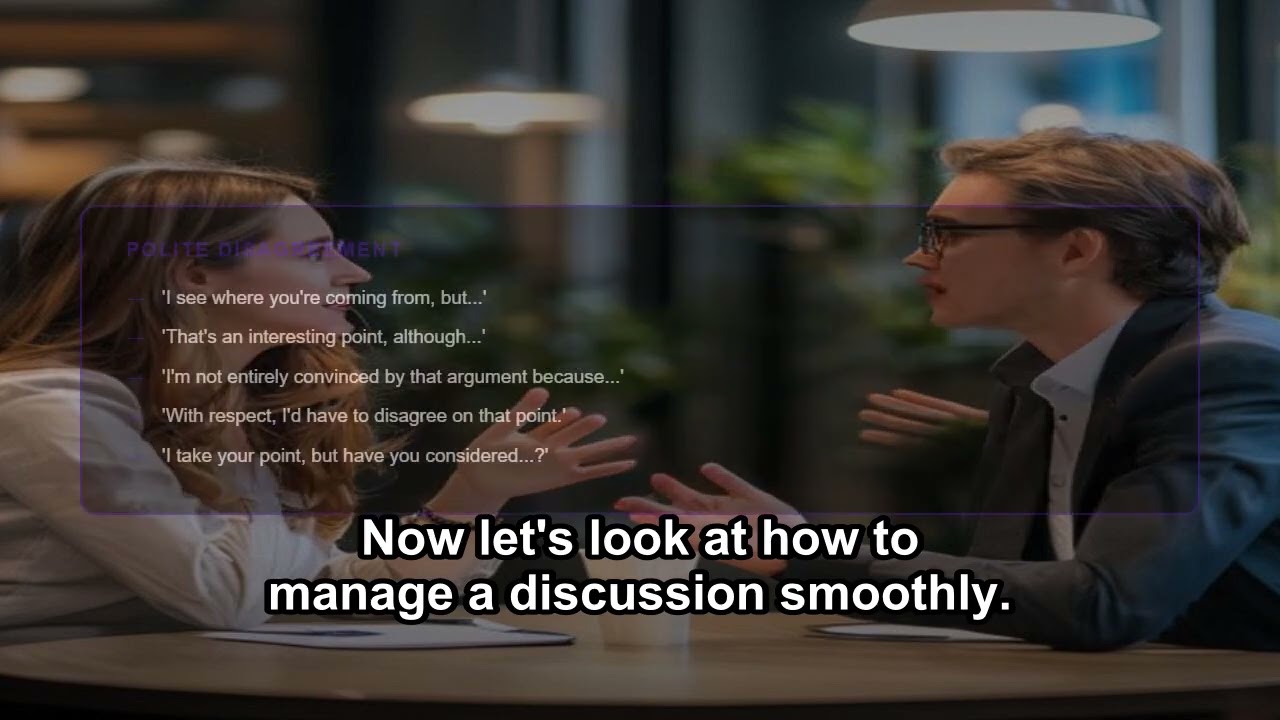
Phrase number 13, when you understand their side but still differ, it's a great way to start your counter argument politely.
वाक्य नंबर 13, जब आप उनकी तरफ समझते हैं लेकिन फिर भी अलग राय रखते हैं, यह अपने तर्क को विनम्रता से शुरू करने का एक बेहतरीन तरीका है।
I see where you're coming from, but...
मुझे समझ आ रहा है कि आप कहाँ से आ रहे हैं, लेकिन...
Example, I understand your point about needing more budget, but we really need to cut costs right now.
उदाहरण, मुझे आपके उस बिंदु को समझ आ रहा है कि आपको अधिक बजट की जरूरत है, लेकिन हमें अभी लागत कम करने की सचमुच जरूरत है।
A right-coming way to introduce a different view, phrase number 14.
एक अलग दृष्टिकोण पेश करने का एक उपयुक्त तरीका, वाक्य नंबर 14।
On the other hand, this signals you're about to present a contrasting idea, often to show a balanced perspective.
दूसरी ओर, यह संकेत देता है कि आप एक विरोधाभासी विचार पेश करने वाले हैं, अक्सर एक संतुलित दृष्टिकोण दिखाने के लिए।
Example, the new rules are stricter, but on the other hand, they might improve safety.
उदाहरण, नए नियम अधिक सख्त हैं, लेकिन दूसरी ओर, वे सुरक्षा में सुधार कर सकते हैं।
And finally, for this section, phrase number 15, for when you simply have a different opinion.
और अंत में, इस खंड के लिए, वाक्य नंबर 15, जब आपके पास बस एक अलग राय हो।
It's direct, but still quite polite and clear.
यह सीधा है, लेकिन फिर भी काफी विनम्र और स्पष्ट है।
I don't really agree.
मुझे सचमुच सहमति नहीं है।
Example, I think pineapple belongs on pizza.
उदाहरण, मुझे लगता है कि पिज्जा पर अनानास होना चाहिए।
I don't really agree.
मुझे सचमुच सहमति नहीं है।
I prefer it without pineapple.
मैं इसे अनानास के बिना ज्यादा पसंद करता हूं।
These are excellent for maintaining harmony in the conversation.
ये बातचीत में सामंजस्य बनाए रखने के लिए उत्कृष्ट हैं।
But what if you disagree more strongly or you want to challenge an idea directly?
लेकिन अगर आप अधिक मजबूती से असहमति जताते हैं या किसी विचार को सीधे चुनौती देना चाहते हैं तो क्या होगा?
Part four, strong disagreement and challenging ideas.
भाग चार, मजबूत असहमति और विचारों को चुनौती देना।
All right, Jack, sometimes you need to express stronger disagreement or challenge an idea.
ठीक है, जैक, कभी-कभी आपको अधिक मजबूत असहमति व्यक्त करने या किसी विचार को चुनौती देने की आवश्यकता होती है।
What's our 16th phrase?
हमारा सोलहवां वाक्यांश क्या है?
For phrase number 16, when you simply don't think something is correct, often used to correct a factual error or a strong opinion you believe is wrong, that's not right.
वाक्यांश संख्या 16 के लिए, जब आपको बस लगता है कि कोई बात सही नहीं है, अक्सर तथ्यात्मक त्रुटि को सुधारने या एक ऐसे मजबूत विचार को जो आप गलत मानते हैं, इसके लिए 'यह सही नहीं है' का उपयोग किया जाता है।
It's direct and clear.
यह सीधा और स्पष्ट है।
Or if you think an idea or statement is completely wrong and you want to be very firm, I totally disagree.
या यदि आपको लगता है कि कोई विचार या कथन पूरी तरह से गलत है और आप बहुत दृढ़ता से कहना चाहते हैं, तो मैं पूरी तरह से असहमत हूं।
This is a strong, firm statement.
यह एक मजबूत और दृढ़ कथन है।
Example, learning English is impossible without living abroad.
उदाहरण के लिए, विदेश में रहने के बिना अंग्रेजी सीखना असंभव है।
I totally disagree.
मैं पूरी तरह से असहमत हूं।
You can learn a lot from home with the right methods.
सही तरीकों के साथ आप घर से भी बहुत कुछ सीख सकते हैं।
Phrase number 18, when you want to directly counter a point, often used in more formal discussions or debates, I beg to differ.
वाक्यांश संख्या 18, जब आप किसी बिंदु को सीधे खंडन करना चाहते हैं, अक्सर अधिक औपचारिक चर्चाओं या बहसों में उपयोग किया जाता है, मैं भिन्न मत रखता हूं (I beg to differ)।
This is a more formal but still common way to say I disagree.
यह 'मैं असहमत हूं' कहने का एक अधिक औपचारिक लेकिन फिर भी सामान्य तरीका है।
Example, our data shows that sales are increasing.
उदाहरण के लिए, हमारे डेटा से पता चलता है कि बिक्री बढ़ रही है।
Well, I beg to differ.
अच्छा, मैं भिन्न मत रखता हूं।
My report shows a slight decline.
मेरी रिपोर्ट में थोड़ी कमी दिखाई गई है।
For phrase number 19, when you find an idea unbelievable or completely wrong, often used informally with a strong emotional reaction.
वाक्यांश संख्या 19 के लिए, जब आपको कोई विचार अविश्वसनीय या पूरी तरह से गलत लगे, अक्सर यह प्रबल भावनात्मक प्रतिक्रिया के साथ अनौपचारिक रूप से उपयोग किया जाता है।
No way.
बिल्कुल नहीं / ऐसा हो ही नहीं सकता (No way)।
This is very casual and often used in strong emotional disagreement.
यह बहुत अनौपचारिक है और अक्सर प्रबल भावनात्मक असहमति में उपयोग किया जाता है।
Example, they're canceling our favorite show.
उदाहरण के लिए, वे हमारी पसंदीदा शो रद्द कर रहे हैं।
No way.
बिल्कुल नहीं / ऐसा हो ही नहीं सकता (No way)।
That's terrible news.
यह बहुत बुरी खबर है।
Phrase number 20, when you think an argument has a flaw, allowing you to acknowledge their point before showing its weakness or missing piece.
वाक्यांश संख्या 20, जब आपको लगता है कि किसी तर्क में कमजोरी है, जिससे आप उनके बिंदु को स्वीकार करते हुए उसकी कमजोरी या छूटे हुए पहलू को उजागर कर सकते हैं।
That's a good point, but it doesn't take into account.
यह एक अच्छा बिंदु है, लेकिन इसमें यह ध्यान में नहीं लिया गया है।
Example, your plan saves money, but it doesn't take into account the extra time we'll need.
उदाहरण के लिए, आपकी योजना में पैसा बचता है, लेकिन इसमें हमें जो अतिरिक्त समय चाहिए, उसका ध्यान नहीं रखा गया है।
With these 20 phrases, you're now equipped to handle almost any conversation, whether you agree or not, and sound natural doing it.
इन 20 वाक्यांशों के साथ, अब आप हर बातचीत को संभालने के लिए तैयार हैं, चाहे आप सहमत हों या न हों, और इसे स्वाभाविक तरीके से बोलें।
Wow, Nina, we've covered a wide range of phrases for agreeing and disagreeing today.
वाह, निना, आज हमने सहमत होने और असहमत होने के लिए वाक्यांशों की एक विस्तृत श्रृंखला पर चर्चा की है।
This is going to make our listeners' English conversations so much more rich and authentic.
इससे हमारे श्रोताओं की अंग्रेजी बातचीत बहुत अधिक समृद्ध और प्रामाणिक हो जाएगी।
Absolutely.
बिल्कुल।
Let's quickly recap all of these key phrases.
आइए इन सभी मुख्य वाक्यांशों का त्वरित पुनरावलोकन करें।
Listen and try to say them after us and think about how you can use them in your next English discussion.
सुनें और हमारे बाद उन्हें बोलने का प्रयास करें और सोचें कि आप अपनी अगली अंग्रेजी चर्चा में उनका उपयोग कैसे कर सकते हैं।
Phrases number one.
वाक्यांश संख्या एक।
Exactly.
बिल्कुल सही (Exactly)।
Two.
दो।
I couldn't agree more.
मैं इससे अधिक सहमत नहीं हो सकता (I couldn't agree more)।
Three.
तीन।
Tell me about it.
इसके बारे में मुझे बताओ (Tell me about it)।
Four.
चार।
I know, right?
मुझे पता है, है ना? (I know, right?)
Five.
पाँच।
You can say that again.
बिल्कुल सही कहा।
6.
छह।
I agree with you.
मैं आपसे सहमत हूँ।
7.
सात।
I see your point.
आपकी बात समझ आ रही है।
8.
आठ।
That's a good point.
यह एक अच्छी बात है।
9.
नौ।
I think so, too.
मुझे भी ऐसा ही लगता है।
10.
दस।
I suppose so.
शायद ऐसा ही हो।
11.
ग्यारह।
I'm not sure about that.
मुझे इसमें शक है।
12.
बारह।
I don't think so.
मुझे नहीं लगता।
13.
तेरह।
I see where you're coming from, but...
मुझे समझ आ रहा है कि आप कहाँ से आ रहे हैं, लेकिन...
14.
चौदह।
14.
चौदह।
On the other hand.
दूसरी ओर।
Fifteen.
पंद्रह।
I don't really agree.
मुझे वास्तव में सहमत नहीं है।
Sixteen.
सोलह।
That's not right.
यह सही नहीं है।
Seventeen.
सत्रह।
I totally disagree.
मैं पूरी तरह से असहमत हूँ।
Eighteen.
अट्ठाईस।
I beg to differ.
मेरा मत अलग है।
Nineteen.
उन्नीस।
No way.
बिल्कुल नहीं।
Twenty.
बीस।
That's a good point, but it doesn't take into account...
यह एक अच्छी बात है, लेकिन इसमें यह ध्यान में नहीं रखा गया है...
Great job, everybody.
शाबाश, सबने बहुत अच्छा किया।
Remember, listen to these phrases, try to imitate our pronunciation, and then actively try to use them in your own English practice.
याद रखें, इन वाक्यांशों को सुनें, हमारे उच्चारण की नकल करने का प्रयास करें और फिर अपनी अंग्रेजी अभ्यास में इन्हें सक्रिय रूप से उपयोग करने का प्रयास करें।
All right, let's wrap this up.
ठीक है, चलिए इसे यहीं समाप्त करते हैं।
Today you learned 20 essential English phrases to competently agree and disagree, from polite nuances to strong statements.
आज आपने 20 आवश्यक अंग्रेजी वाक्यांश सीखे हैं जो विनम्र सूक्ष्मताओं से लेकर मजबूत बयानों तक, कुशलतापूर्वक सहमत या असहमत होने के लिए हैं।
These phrases will help you sound much more natural and expressive in any conversation.
ये वाक्यांश किसी भी बातचीत में आपको अधिक प्राकृतिक और अभिव्यक्तिपूर्ण बनने में मदद करेंगे।
Now we're curious.
अब हम जिज्ञासु हैं।
Which of these phrases, for agreeing or disagreeing, do you find most useful?
इनमें से कौन सा वाक्यांश, सहमत या असहमत होने के लिए, आपको सबसे अधिक उपयोगी लगता है?
or which one will you try to use in your next English conversation?
या आप अपनी अगली अंग्रेजी बातचीत में किसका उपयोग करने की कोशिश करेंगे?
Drop your answers in the comments below.
नीचे कमेंट्स में अपने जवाब लिखें।
We love hearing from you.
हम आपसे बात सुनना पसंद करते हैं।
If this episode helped you feel more confident about expressing your opinions in English, please smash that like button wherever you're listening, subscribe to The English Habit for more amazing content, and ring that notification bell.
यदि इस एपिसोड ने अंग्रेजी में अपनी राय व्यक्त करने के बारे में आपको अधिक आत्मविश्वास महसूस करवाया है, तो कृपया जहां भी आप सुन रहे हैं वहां 'लाइक' बटन दबाएं, और अधिक शानदार सामग्री के लिए 'The English Habit' को सब्सक्राइब करें और नोटिफिकेशन घंटी बजाएं।
Thanks for listening, and remember, don't be afraid to voice your opinions in English.
सुनने के लिए धन्यवाद, और याद रखें, अंग्रेजी में अपनी राय व्यक्त करने से डरें नहीं।
See you in the next one.
अगली बार मिलते हैं।
Bye.
बाय।